

In this module, you’ll explore how the Founders understood the pursuit of happiness and why they believed virtue was essential to both personal fulfillment and civic life.
Curriculum – Get Started!What the Founders Meant by Happiness: A Journey Through Virtue and Character
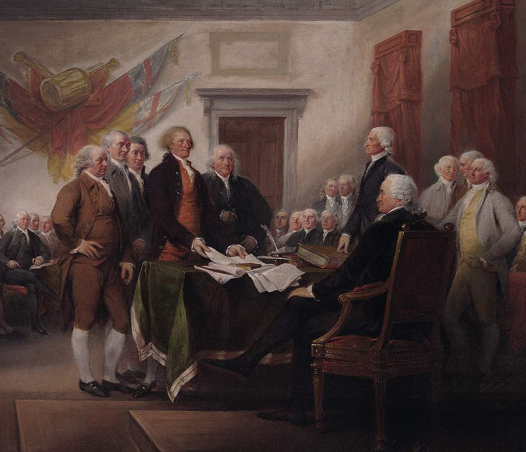
This course provides learners of all ages with a deeper understanding of what the Founders meant by happiness and why they considered it essential to both personal fulfillment and self-government. Drawing on the lives and writings of the Founders and their successors, classical Greek and Roman philosophy, and Enlightenment thought, learners will explore how happiness was understood as the pursuit of virtue, character, and self-mastery rather than pleasure or comfort.
Through close engagement with primary source texts, letters, speeches, and philosophical works, participants will examine how key figures of American history, such as Benjamin Franklin, John and Abigail Adams, Thomas Jefferson, George Washington, Phillis Wheatley, Frederick Douglass, and Abraham Lincoln grappled with the virtues—and vices—that shaped their private lives and public actions. Learners will also develop the skills to think historically and philosophically, analyzing how ideas about virtue, reason, and moral responsibility informed the American experiment in self-government.
Each module includes primary source readings, interpretive essays, and guided reflection activities designed to connect historical ideas to contemporary questions about citizenship, character, and the common good. This course is entirely self-paced, allowing learners to progress on their own schedule.
Created in partnership with Arizona State University
This course is based off of The Pursuit of Happiness: How Classical Writers on Virtue Inspired the Lives of the Founders and Defined America, written by Jeffrey Rosen, CEO Emeritus of the National Constitution Center. It combines Arizona State University’s Principled Innovation framework, with the NCC’s deep scholarly expertise and longstanding commitment to constitutional and civic education. Together, these perspectives will equip you with a richer understanding of American history and the enduring values necessary to sustain a constitutional democracy.
The course is also available through ASU’s Articulate Rise platform that offers an optional digital credential of completion.
A guided exploration of happiness, virtue, and democracy
What does it mean to live a virtuous life in a free society? This course invites learners to explore happiness not as the personal pursuit of feeling good but as an idea closely tied to character, civic responsibility, leadership, and participation in a constitutional democracy. At the heart of this is the belief that self-government begins with the government of the self.
Through letters, speeches, essays, and stories from the founding era, learners see how key figures in American history understood happiness as the cultivation of virtue and self-mastery, and how they wrestled- often imperfectly- with questions of moral judgement in both public and private life.
By engaging with these historical examples, learners consider how ideas about character, leadership, moral responsibility, and civic duty shaped the American experiment in self-government and continue to resonate in our civic life today.
Self-Paced Modules
Each module combines primary sources texts, interpretive essays, and guided inquiry to support reflection on how ideas from the past can inform judgement, responsibility, and participation in a constitutional democracy today, including:
- What does it mean to pursue happiness in a society shaped by competing values and interests?
- How should character and virtue shape leadership, citizenship, and public decision-making?
- What responsibilities accompany individual freedom in a democratic society?
- How can virtue formation, historical understanding, and self government strengthen civil dialogue and civic life, rather than deepen polarization?
In his 1735 essay On True Happiness, Benjamin Franklin advises: “all true happiness, as all that is truly beautiful, can only result from order.” To Franklin and the founding generation, order was a core prerequisite for the pursuit of happiness. In this module, we will trace an intellectual history of order and self-mastery, looking first to the Roman Stoics, through the Founding generation.
Curriculum – Get Started!This lesson explores how Franklin systematically approached self-improvement, placing temperance at the forefront of his virtues. We’ll also consider the deeper philosophical roots of temperance and why the Founders saw it as an essential, ongoing practice for both personal growth and the health of the nation.
Curriculum – Get Started!This lesson will help you understand how humility shaped the lives and leadership of John and Abigail Adams. You’ll explore its philosophical roots and discover why humility is vital for civic life and personal development.
Curriculum – Get Started!Thomas Jefferson’s life was defined by an insatiable curiosity and a disciplined commitment to self-education. This lesson explores how Jefferson’s industrious study habits and wide-ranging intellectual pursuits shaped not only his personal philosophy but also the foundations of American political life. By examining his reading list and the habits that fueled his achievements, we’ll discover how industry became a driving force in both his private growth and public service.
Curriculum – Get Started!This lesson explores the paradox of two influential Founders—James Wilson and George Mason—whose public achievements stood in stark contrast to their private financial struggles. By examining their lives, we’ll uncover how the virtue of frugality was understood in the Founders’ era and why its absence can have lasting consequences for both individuals and the nation. Their stories offer a cautionary tale about the importance of balancing ambition with discipline in American civic life.
Curriculum – Get Started!This lesson will help you understand how Phillis Wheatley embodied sincerity, how her era was marked by both virtue and vice, and how sincere expression can challenge injustice. You’ll explore the contrast between Wheatley’s moral clarity and the avarice of her time, and consider the relevance of sincerity in civic life today.
Curriculum – Get Started!This lesson will help you understand how George Washington cultivated resolution, the philosophical traditions that influenced his self-command, and why these qualities were essential for leadership and the founding of the United States.
Curriculum – Get Started!This lesson explores how James Madison and Alexander Hamilton viewed moderation as essential for both individual character and the design of a stable, deliberative republic. By examining their philosophies and the constitutional structures they helped create, we’ll see how moderation serves as a safeguard for civic stability and personal integrity.
Curriculum – Get Started!This lesson will help you understand the virtue of tranquility through the story of Adams and Jefferson’s reconciliation. You’ll explore how their journey from rivalry to friendship demonstrates the power of healing and forgiveness, and why tranquility is vital for both personal growth and civic flourishing.
Curriculum – Get Started!This lesson explores how Adams’s commitment to composure extended beyond physical tidiness to encompass psychological and civic cleanliness. By examining his habits and public service, we’ll discover how the virtue of cleanliness can shape both personal character and the health of a democracy.
Curriculum – Get Started!This lesson will help you understand how Frederick Douglass and Abraham Lincoln embodied justice and self-reliance, and why these virtues are central to the American story. You’ll explore their actions, philosophies, and the enduring impact of their leadership on the nation’s moral direction.
Curriculum – Get Started!In an age that often rewards speed and instant reaction, this module explores silence as a civic discipline essential to self-government. Through the jurisprudence of Louis Brandeis and the example of Ruth Bader Ginsburg, we examine how deliberate pause, reasoned reflection, and restraint before speech protect both liberty and the inner life.
Curriculum – Get Started!In this final lesson, you will integrate the key themes from the course by relating them to your personal experiences and considering how they can guide your future actions. This synthesis will help solidify your understanding and encourage meaningful application in your own life.
Curriculum – Get Started!Find More Classroom Resources
Search our library by grade level, topics or resource type to find more lesson plans, videos, and interactives.