


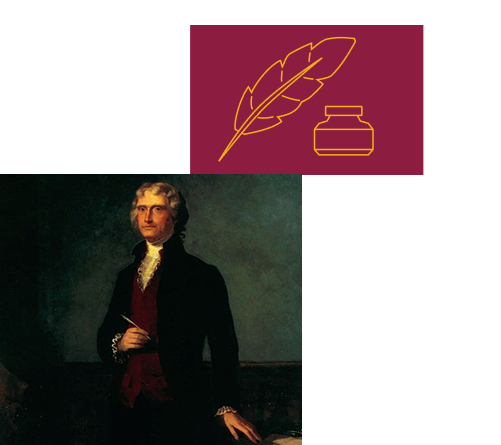

For Thomas Jefferson, industry was a form of steady self-discipline essential to the cultivation of character. It meant the careful ordering of daily life, devoted to reading, writing, observation, and correspondence, and the continuous exercise of judgment. Through these disciplined habits, Jefferson believed individuals developed perseverance, responsibility, and the capacity for reasoned self-government. Industry, in this sense, was not merely personal diligence but preparation for the duties of civic life.
Seen through the lens of Jefferson’s understanding of character formation, industry functioned as a moral framework rather than a measure of productivity alone. It guided the alignment of action with principle, shaping how ambition was restrained by judgment and purpose. Jefferson understood such self-discipline as a foundation for lifelong learning and for the exercise of citizenship in a constitutional democracy that depended on the character of its people.