



Frugality, as understood by the American Founders, was far more than simple thriftiness. It was a profound principle of self-restraint and moral clarity, essential for both personal integrity and the health of a constitutional democracy. This exploration delves into the Founders' perspective on frugality and its enduring significance.
When Prosperity Tests Virtue: Frugality in the Founding Era
Grounded in History
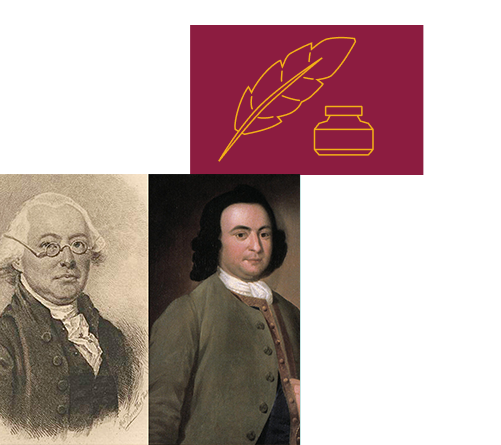
In this video, we examine frugality as a Founding-era virtue that restrained greed, ambition, and the abuse of power. By following James Wilson and George Mason, we’ll see how neglecting frugality damaged both personal character and the health of the constitutional democracy.
Frugality: A Personal Discipline and a Civic Virtue
Click below to delve deeper into the meaning and concept of frugality, as perceived by the Founding Fathers.
For the Founders, frugality was a form of self-government. It required individuals to weigh immediate desires against long-term interests and to resist temptations that could cloud judgment. Practicing restraint, delaying gratification, and accepting limits were seen as essential for achieving moral clarity and inner stability. This discipline was especially critical in a constitutional democracy, where citizens needed to govern their own appetites to wisely govern a free society.
Despite their advocacy for frugality, many Founders struggled to embody this virtue. Some overextended themselves through land speculation, while others relied on enslaved labor to sustain their lifestyles. These shortcomings highlight the difficulty of practicing frugality, as it demands the sacrifice of comforts and conveniences. Nevertheless, their failures do not diminish the importance of this demanding virtue.
James Wilson: Frugality, Ambition, and the Tragedy of Death
In the case of James Wilson, we can better understand the virtue of frugality by separating what he believed, how he behaved, and the consequences that followed. This framework helps reveal how failures of self-governance can undermine public trust and republican leadership.
- Beliefs:
Happiness, Virtue, and Legitimate Government
James Wilson, a key intellectual and political leader of the Founding era, believed that government existed to promote the happiness of the governed. He argued that lawful authority must rest on consent, which can only be granted to governments that enhance public happiness. Wilson emphasized that true happiness stemmed from long-term virtue, with civic virtues like frugality, temperance, and industry being essential for a free republic. Without virtue, he warned, liberty would devolve into disorder and despotism.
- Behavior:
Ambition Without Restraint
Despite his articulated commitments to moral restraint and civic virtue, James Wilson struggled to practice the frugality he praised. During the financial crises of the 1790s, he lived beyond his means and became deeply involved in land speculation. His ambitions and optimism, combined with extensive borrowing, placed him under growing financial strain. Wilson’s experience illustrates how even a sophisticated understanding of virtue could be tested, and sometimes undone, by economic pressure and personal aspiration.
- Consequences:
The Erosion of Trust and Authority
James Wilson’s difficulties with financial self-management had severe and public consequences. His debts became widely known, and critics questioned the contrast between his public arguments and his private circumstances. Even while serving as a Supreme Court justice, Wilson was arrested and briefly imprisoned for debt. His experience illustrates how financial dependence and unrestrained ambition could place strain on personal judgment and public credibility, complicating the exercise of republican leadership.
George Mason: Frugality, Principle, and Moral Limits
George Mason’s life illustrates how frugality, as a form of self-restraint, depends on the moral boundaries individuals set for themselves. As you explore the sections below, consider how Mason’s principles, choices, and omissions illuminate both the possibilities and the limits of self-government.
- Principle
George Mason believed that frugality was essential to preserving freedom. As the author of the Virginia Declaration of Rights, he argued that no free government could survive without justice, moderation, temperance, frugality, and virtue, supported by frequent returns to first principles.
Prosperity, Mason warned, was dangerous unless restrained by moral discipline. For Mason, frugality was not merely a personal habit. It was a civic safeguard designed to prevent luxury and power from corrupting republican government.
- Practice
In contrast to James Wilson, Mason practiced financial restraint in measurable ways. He avoided reckless land speculation, refused opportunities that would overextend him, and paid off his debts before his death.
By the standards of fiscal discipline, Mason largely lived within his means. This self-restraint allowed Mason to maintain independence and public credibility throughout his life, reinforcing his reputation as a principled republican.
- Moral Limits
Mason’s practice of frugality, however, revealed clear moral limits. His stable and comfortable life at Gunston Hall rested on enslaved labor, even as he condemned slavery as wrong in principle. While he exercised restraint within his own habits, he did not extend that restraint to the social and economic arrangements that sustained his way of life.
This tension points to a central challenge in the virtue of frugality. Mason curtailed personal excess, yet left unquestioned the injustices that made such restraint possible. His life illustrates how virtue could be practiced selectively, allowing moral discipline to coexist with inequality and placing strain on the republican ideal that private virtue should support public justice.
Check Your Understanding
The following activities will help you reinforce and assess your understanding of frugality as practiced—and neglected—by Wilson and Mason. Take a moment to reflect on what you’ve learned before moving forward.
According to the module, why did the Founders believe frugality was essential to a free constitutional democracy?
Concluding Module 6
What We Learned
In this module, you learned that for the Founders, frugality was essential to the pursuit of happiness, understood not as pleasure, but as self-command over time. Resisting luxury, living within limits, and maintaining independence from debt or dependence were seen as conditions for the tranquility and moral freedom that happiness required. The lives of James Wilson and George Mason reveal how difficult this ideal was to sustain. Ambition, financial dependence, and accepted systems of inequality repeatedly tested their ability to live according to the principles they articulated. Together, their examples suggest that the pursuit of happiness demands limits on desire, power, and self-justification, not simply careful attention to money.
Key Takeaways
- Frugality is the discipline that restrains greed, ambition, and addiction to luxury.
- The Founders believed public happiness depends on private virtue, especially moderation and self-control.
- James Wilson’s life demonstrates how ignoring frugality can undermine liberty and personal integrity.
- George Mason's life illustrates how moral insight existed alongside practices that fell far short of their stated principles.
- Without frugality, other virtues—justice, temperance, and industry—are difficult to sustain.
Food For Thought
- In contemporary life, what forms of comfort, convenience, or dependence might test our ability to maintain independence of judgment and self-command?
- Where is self-restraint most difficult to sustain today in financial choices, in the exercise of power, or in honest self-assessment, and why?
- How might individuals and governments cultivate restraint that supports freedom and responsibility without mistaking it for unnecessary deprivation?
Optional Reading
- Jeffrey Rosen, The Pursuit of Happiness, Chapter 5
- William Ewald, James Wilson and the Scottish Enlightenment, (opens in a new tab)12 U. Pa. J. Const. L. 1053 (2010).
- William Ewald, James Wilson and the Drafting of the Constitution (opens in a new tab), 10 U. Pa. J. Const. L. 901 (2008).
- The Virginia Declaration of Rights (1776) (opens in a new tab)
- James Wilson, Considerations on the Nature and the Extent of the Legislative Authority of the British Parliament (opens in a new tab)
- Algernon Sidney, Discourses Concerning Government (opens in a new tab)(1698)
Created in partnership with Arizona State University.