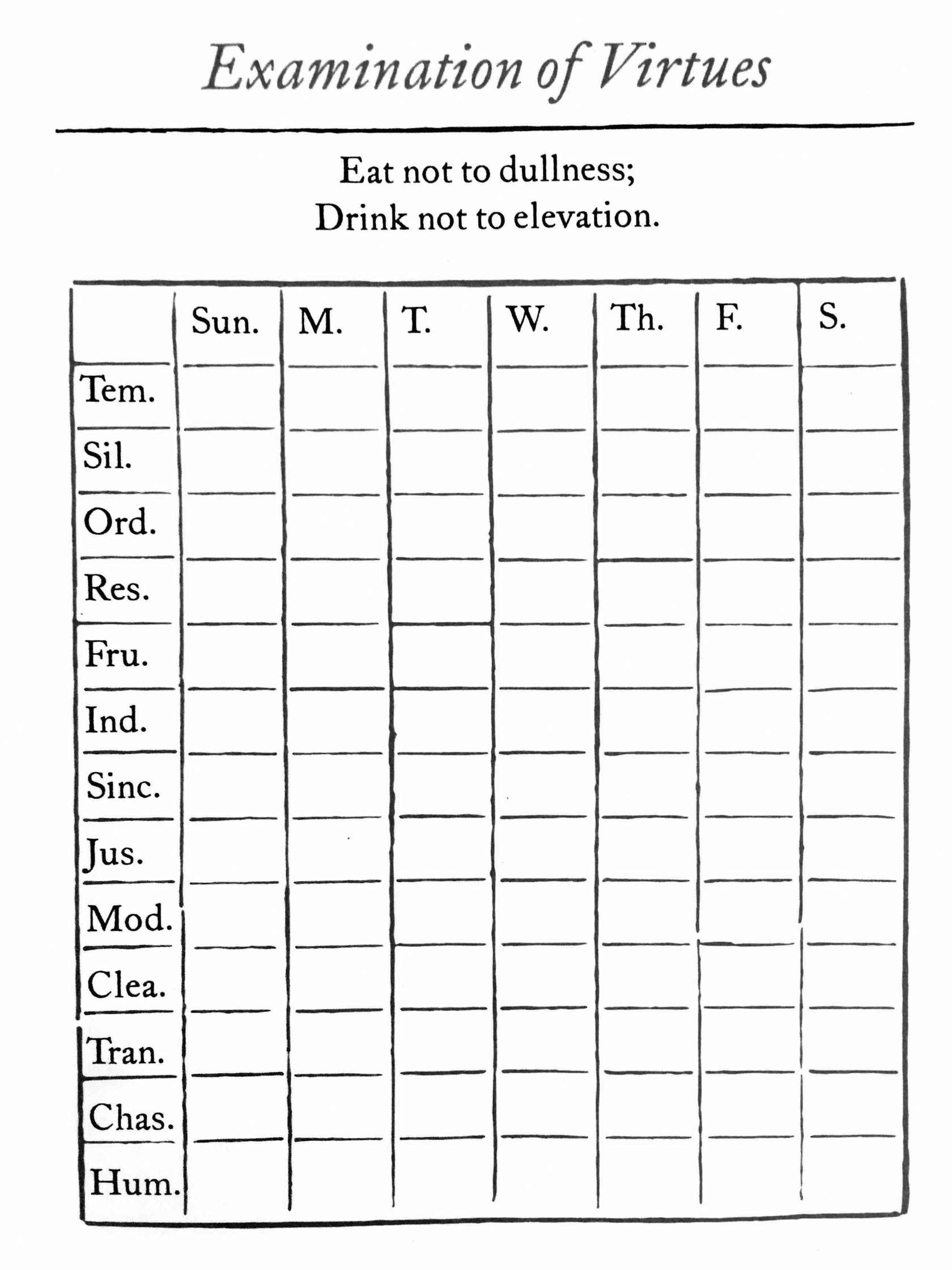
 Franklin practiced these virtues through a deliberate system of daily self-examination.
He focused on one virtue each week, tracked failures in a chart, and structured his day around work, reading, conversation, and reflection.





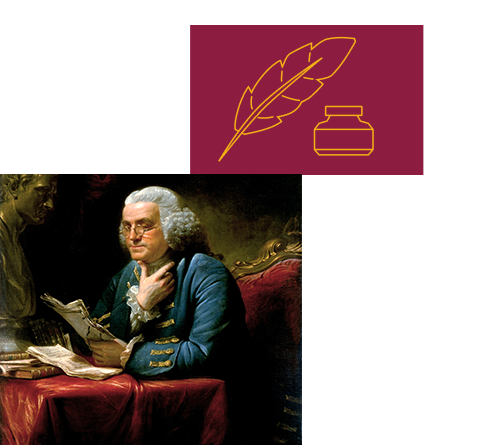

This module examines temperance through the life and thought of Benjamin Franklin, who believed that happiness comes not from pleasure or fame, but from disciplined character and steady self-command. By tracing Franklin’s habits, virtues, and lifelong efforts at self-improvement, the module explores how temperance was understood as the foundation of both personal happiness and a healthy constitutional democracy.
This video explores temperance through the life and thought of Benjamin Franklin, who believed that happiness comes from disciplined character rather than pleasure or fame. It shows how Franklin’s lifelong practice of self-examination and moderation shaped both his private life and his vision of a healthy constitutional democracy.
In his twenties, Franklin set out to practice the classical virtues but found that philosophers disagreed on how many virtues existed and how they should be defined. He resolved the problem by creating his own list of thirteen virtues, beginning with temperance and ending with humility.
Franklin practiced these virtues through a deliberate system of daily self-examination.
He focused on one virtue each week, tracked failures in a chart, and structured his day around work, reading, conversation, and reflection.
Franklin structured his day meticulously, balancing work, reading, conversation, and reflection. This routine supported his efforts to cultivate the virtues and maintain discipline in his life.
Although he eventually abandoned strict daily accounting, the habits of discipline and self-reflection endured. Franklin treated moral failure not as proof of depravity, but as an error to be corrected—“errata in a manuscript.” Character improvement, for him, was gradual, imperfect, and lifelong.
Franklin’s understanding of temperance was shaped by classical and Enlightenment thinkers such as Socrates, Cicero, Seneca, Epictetus, and the essays of Addison and Steele. Across these traditions, the core idea was consistent: reason must moderate passion.
Temperance governed not only appetite, but speech, judgment, and ambition. Franklin deliberately avoided dogmatic language, preferring phrases such as “it appears to me” in order to invite reason rather than provoke resistance. This temperate style made his proposals more persuasive.
Franklin’s Temperate Style
Phrasing:
“I conceive...”
“I imagine...”
“It appears to me...”
Result: Collaborative Reasoning
Aggressive Speech
Phrasing:
“I am right / You are wrong”
Result: Immediate Resistance
Franklin believed that disciplined minds were essential for deliberation. A constitutional democracy could only function if citizens and leaders were capable of moderating anger, vanity, and prejudice in favor of reflection and reasoned judgment.
Temperance, Moral Growth, and Public Life
Later in life, Franklin demonstrated how temperance could lead to moral growth over time. Although he once tolerated slavery and held racial prejudices, experience and evidence gradually altered his judgment. Through involvement in education for Black children and direct observation, he revised his views and ultimately became president of the Pennsylvania Society for the Abolition of Slavery.
In his final years, Franklin linked private virtue directly to public happiness. At the Constitutional Convention, he urged humility, doubt of one’s own infallibility, and cooperation despite disagreement. A government’s ability to secure happiness, he argued, depends on the people’s confidence in its wisdom and integrity—qualities sustained by temperate citizens and leaders.
Temperance, then, was not merely a personal habit. It was a civic necessity, enabling deliberation, trust, and the lifelong work of moral improvement.
The following activities will help you reinforce and assess your understanding of Franklin’s approach to temperance and its philosophical foundations. Take a moment to reflect on what you’ve learned before moving forward.
According to Benjamin Franklin, what best explains why temperance was the foundation of happiness?
This module explored Franklin’s lifelong pursuit of temperance as a pathway to happiness. Despite his extraordinary public achievements, Franklin measured success less by acclaim than by inner composure and steadiness of character. Through his virtues chart, disciplined daily schedule, wide intellectual influences, and institutions such as the Junto and early American colleges, he sought to cultivate habits that restrained desire and moderated passion. His later rejection of slavery and his calm, conciliatory leadership at the Constitutional Convention reflect his conviction that private self-government was essential to public deliberation and the preservation of civic trust.
Jeffrey Rosen, The Pursuit of Happiness, Chapter 2
Benjamin Franklin, Closing Speech at the Constitutional Convention (1787)(opens in a new tab)
Walter Isaacson, Benjamin Franklin: An American Life, Chapter 1(opens in a new tab)
Plutarch, The Lives of the Noble Greeks and Romans(opens in a new tab)
Pythagoras, Golden Verses




Engage in deep thinking and analysis of the Constitution and America’s founding principles.

Resources for families, educators, and lifelong learners that give you everything you need to explore the founding documents and the enduring vision they set in motion.
Discover primary texts and historical documents that span American history and have shaped the American constitutional tradition.