



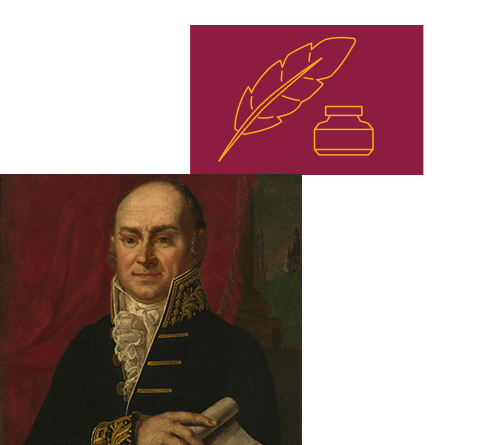

John Quincy Adams understood cleanliness as inner order rather than outward tidiness. For him, it meant disciplined self-command, maintaining clarity of mind, regulating emotion, and governing one’s passions so that public service could be guided by principle rather than impulse.
The Discipline of Cleanliness
Grounded in History
This video examines John Quincy Adams and his lifelong pursuit of cleanliness as inner composure grounded in self-command. Drawing on Stoic, classical, and Christian sources, Adams believed that governing the passions was a prerequisite to governing others. Through his daily journal, disciplined study, and principled public service, he worked to align private order with public duty, even amid grief, partisan conflict, and high expectations shaped by his father’s example. As you watch, consider these questions: How does Adams’ understanding of cleanliness express the classical idea that self-rule precedes public rule? In what ways did habits such as journaling, moral reading, and restraint help him maintain steadiness under pressure? What do Adams’ doubts, disappointments, and losses reveal about the demanding and imperfect work of sustaining virtue in public life?
John Quincy Adams’s Concept of Cleanliness
In this section, we will explore how John Quincy Adams understood cleanliness as more than physical hygiene. Focus on how he framed cleanliness as a form of mental and moral composure, and consider the implications of this broader definition.
For John Quincy Adams, cleanliness also meant moral integrity expressed through steady self-command. It required resisting corruption, subordinating ambition to principle, and holding oneself to exacting ethical standards through daily habits of journaling, moral reading, and honest self-examination.
Self-Discipline and Routine in Adams’ Life
Here, we will examine the daily habits and routines that John Quincy Adams used to maintain his composure and support his public service. Pay attention to how discipline over time shapes virtue in practice.
Introduction
John Quincy Adams adhered to a disciplined daily routine that emphasized mental, physical, and moral development. His practices offer valuable insights into the habits that contribute to personal growth and effective leadership.
Early Morning Study
Adams began each day with rigorous study and reflection, setting a tone of mental clarity and focus that carried through his work.
Structured Work Habits
He maintained a strict schedule for correspondence, reading, and writing, demonstrating how routine fosters consistent moral effort.
Physical Exercise and Health
Adams valued physical discipline as part of his overall composure, recognizing the connection between bodily health and mental steadiness.
Reflection and Self-Examination
Daily self-assessment helped Adams identify moments of weakness and recommit to his ideals, reinforcing the habit of moral vigilance.
Summary
John Quincy Adams' daily practices highlight the importance of discipline, routine, and self-awareness in achieving personal and professional excellence. His commitment to study, health, and moral reflection serves as an enduring example of how structured habits can lead to a balanced and purposeful life.
Challenges to Maintaining Composure
Let's explore the tensions John Quincy Adams faced between his public composure and private doubts. Focus on how these struggles reveal the moral complexity of maintaining virtue under pressure.
Public Composure
John Quincy Adams maintained a disciplined and composed public persona, demonstrating self-control and moral steadiness expected of a statesman.
Private Doubts
Despite his public image, Adams wrestled with self-doubt, the weight of his father’s legacy, and moments of personal uncertainty that tested his resolve.
Checking Your Knowledge
Which of the following best describes John Quincy Adams' understanding of cleanliness as a virtue?
Concluding Module 11
In this module, you examined how John Quincy Adams understood cleanliness as inner composure grounded in self-command. You saw how his daily habits of journaling, disciplined study, and moral reflection sustained his independence and endurance in public life, even amid grief, criticism, and self-doubt.
Finally, you considered how this virtue of composure might inform ethical judgment today. Adams’ example reminds us that public courage rests on private order, and that the steady governance of one’s own passions is the foundation of principled action.
Rethinking the Pursuit of Happiness
In this module, you examined how John Quincy Adams understood cleanliness as inner composure grounded in self-command. You saw how his daily habits of journaling, disciplined study, and moral reflection sustained his independence and endurance in public life, even amid grief, criticism, and self-doubt.
Finally, you considered how this virtue of composure might inform ethical judgment today. Adams’s example reminds us that public courage rests on private order, and that the steady governance of one’s own passions is the foundation of principled action.
Key Takeaways
- John Quincy Adams understood cleanliness as inner order and self-command, not mere outward tidiness. It required clarity of mind and steady regulation of the passions.
- He sustained this virtue through daily habits such as journaling, disciplined study, and principled decision-making. Routine was essential to composure in public life.
- His diaries reveal the strain between personal doubt and public responsibility, showing that composure demanded continual effort amid grief and conflict.
- Virtue, for Adams, was not perfection but practice, renewed through constant self-examination.
- Bringing this understanding of cleanliness into modern dilemmas reminds us that sound judgment begins with disciplined self-rule.
Food For Thought
- If cleanliness means governing your passions before attempting to influence others, what daily habits could help you cultivate greater mental clarity and moral composure?
- How might steady habits such as reflection, disciplined reading, measured speech, and thoughtful decision-making strengthen your capacity to meet personal and civic responsibilities with composure and integrity?
- What does recognizing the tension between outward leadership and inward struggle teach you about the demanding and imperfect work of sustaining virtue in public life?
Optional Reading
- Jeffrey Rosen, The Pursuit of Happiness, Chapter 10
- Paul Nagel, John Quincy Adams: A Public Life, A Private Life, Introduction (opens in a new tab)
- John Quincy Adams, An Address Celebrating the Declaration of Independence
Created in partnership with Arizona State University.