

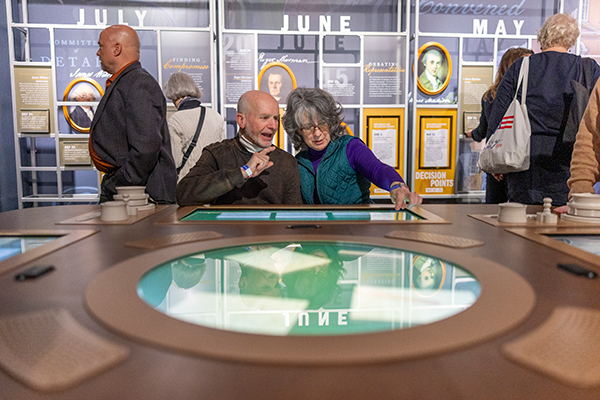

At the National Constitution Center, we value civil dialogue, which empowers students to speak about constitutional and historical topics in ways that remain civil, respectful, and reflective. As you prepare to discuss these topics in your classroom, we encourage you to establish norms such as:
- Stay calm
- Listen patiently
- Listen actively
- Don’t speak twice until everybody has spoken once
You can find more support for establishing norms and civil dialogue practices in our Civil Dialogue Toolkit.
Media Asset
National Constitution Center’s Constitution Daily Blog – New Supreme Court term features First Amendment, other challenges, by Scott Bomboy
Big Constitutional Question
What is the difference between the Supreme Court’s original and appellate jurisdiction, and how does Article III decide which path a case takes?
Headline Story
The Supreme Court has announced the cases it will hear from October through early December 2026. They cover a wide range of constitutional questions, including religious liberty, the Second Amendment, the Eighth Amendment, and voting laws.
These cases started in different places, from a state supreme court to various federal appeals courts. That raises a key question: When can a case start at the Supreme Court, and when must it come from another court?
Matters of Debate: Article III, Section 2 (Original v. Appellate Jurisdiction)
Article III gives the Supreme Court two kinds of power to hear cases. Under original jurisdiction, a few types of cases start at the Supreme Court. Under appellate jurisdiction, which covers nearly all cases, the Court reviews decisions from lower courts, and Congress can make exceptions.
Unlike most Matters of Debate essays, where each scholar argues a different side, this section draws on the Common Interpretation. For these essays, the scholars wrote together to explain the points they agree on. In the Common Interpretations Essay in the Interactive Constitution for Article III, Section 2, Scholars Judith Resnik (Yale Law School) and Kevin C. Walsh (Catholic University) explain what each type of jurisdiction means and how cases reach the Court through each path.
Original Jurisdiction
Appellate Jurisdiction
What It Means
A case starts at the Supreme Court
The Supreme Court reviews a case another court has already decided.
Which Cases
Cases involving ambassadors, other public ministers, and consuls, and cases where a state is a party
All other kinds of cases listed in Article III.
For example: Cases about the Constitution, federal laws, and treaties; cases involving ships and the sea; cases where the United States is a party; and disputes between people from different states or countries.
How Often It Happens
Rarely, It's a very small part of the Court's work today.
Nearly all of the Court's work.
Sources: Article III, Section 2 of the U.S. Constitution; “Common Interpretation” by Judith Resnik and Kevin C. Walsh, National Constitution Center; “New Supreme Court term features First Amendment, other challenges” by Scott Bomboy, National Constitution Center.
Reflection Questions
- What is the difference between original jurisdiction and appellate jurisdiction? Which type of jurisdiction applied in the cases discussed in the blog post? How can you tell?
- Choose one case from the blog post. Where did the case start, and what path did it take to reach the Supreme Court? Is it a case about the Constitution or federal law? Is it a case involving parties from different states?
- According to Article III, Section 2, the Constitution lets Congress make exceptions to the Supreme Court’s appellate jurisdiction. In Johnson v. United States Congress, the Court will decide whether a law passed by Congress keeps some courts from hearing certain challenges. What are the possible benefits and potential drawbacks of letting Congress decide which cases federal courts can hear?
Extension Activities
- Constitution 101: Now that we understand the types of cases the Supreme Court can hear, how does a case move through the court system? Using Activity 9.5 from Constitution 101 (High School), students read the Info Brief: How Does a Case Get to the Supreme Court for additional background information. Next, they work in groups to build a road map showing how an historic case reached the Supreme Court, using the Supreme Court Cases Library to choose their case. Finally, groups compare their roadmap to the path of one case from the blog post.
- NCC Education Protocols: Using the National Constitution Center’s Consensogram protocol, students take a position on a constitutional statement on a scale from strongly disagree to strongly agree, then write a few sentences explaining their reasoning on a sticky note or notebook. Next, they join a small group and whole group discussions. After the discussion, students return to the scale, mark their final position with a different color or symbol (it could be the same), and briefly explain what influenced their thinking.
- Example constitutional statement: Congress should have the power to limit which cases the Supreme Court can hear on appeal. (Suggested Evidence: Article III, Section 2 (the Exceptions Clause and Johnson v. United States Congress from the blog post.)
- A Case’s Journey: Students choose from the blog post and tell the story of its path to the Supreme Court from the case’s point of view. They can make a comic strip, a short story, a travel journal, or a short podcast episode. Their project should include:
- Where the case started and who brought it
- Each court it passed through
- Why it was eligible for the Supreme Court to hear, using Article III vocabulary like appellate jurisdiction
- What question the Court will answer
- Classroom-Ready Resource: Supreme Court Docket Tracker, 2026-2027
Beyond the Headlines
- NCC Resources
- Interactive Constitution
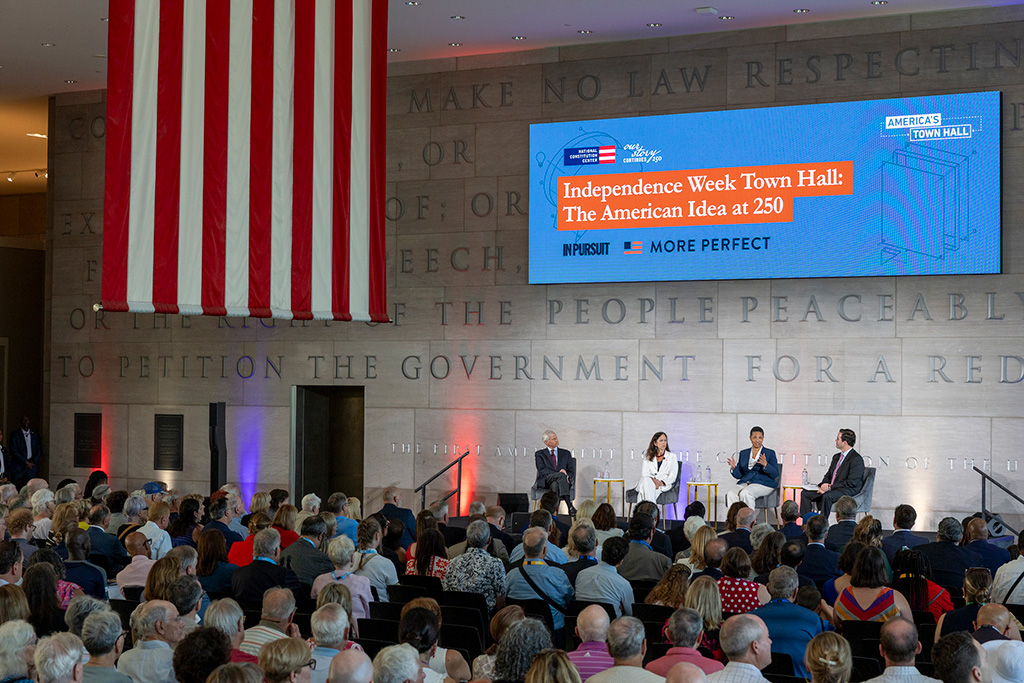
- America’s Town Hall
- Previewing the Supreme Court’s 2026-2027 Term, September 30, 2026
- Supreme Court Cases Library
- Constitution Daily Blog
- The Supreme Court in Review: Another Landmark Term, July 9, 2025
- A look back at the Supreme Court in 2025, December 17, 2025
- Classroom Resources
- Constitution in the Headlines
- Constitution 101
- Lesson Plans & Resources
- Classroom Resources by Topic