


The Supreme Court has announced which cases and controversies it will consider during arguments from October to December 2026.
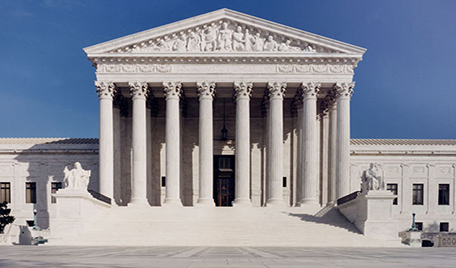 Two major cases to be heard in December focus on religious rights with a significant Second Amendment challenge also scheduled for argument that month. In addition, the question of voter ID laws will reach the Court this fall, along with controversies about climate change, and two Eighth Amendment challenges.
The first case of the October Term 2026 is one with potentially major implications. The justices will hear arguments in Suncor Energy (U.S.A.) Inc. v. Commissioners of Boulder County (25-170), which it added to its docket in February 2026.
Energy giants Suncor Energy and Exxon Mobil Corporation have appealed a divided ruling from the Colorado Supreme Court in favor of the City of Boulder and Boulder County, Colorado. Boulder sued over claims relating to the alleged local negative effects of greenhouse-gas emissions on their governments. Suncor Energy is arguing that federal precedents prevent Boulder from suing over damage caused by emissions from outside of the region.
Johnson v. United States Congress (25-735) will also be heard on the first Monday of October. In this dispute, the Court will consider whether the Veterans’ Judicial Review Act blocks district courts from hearing challenges about the constitutionality of acts of Congress affecting veterans’ benefits. The petitioners have asked the Supreme Court to decide whether its precedent in Johnson v. Robison (1974) allows district courts to consider such challenges.
Other cases in the first session include Beaird v. United States (25-5343), which considers whether the Court’s precedent in Stinson v. United States defines the level of deference in criminal sentencing related to the Commentary of the Federal Sentencing Guidelines. In this case, Beaird contested a sentence that he received for possession of a semiautomatic weapon with a large capacity magazine. Also, in Salazar v. Paramount Global (25-459), the Supreme Court will consider whether Paramount can be liable for sharing with Facebook “personally identifiable information” gathered from email campaigns promoting its own video products.
The Supreme Court has scheduled seven sets of arguments for early November 2026. The highest-profile case is St. Mary Catholic Parish v. Roy (25-581).
The petitioners, Catholic preschools in the Archdiocese of Denver, claim religious discrimination when they were denied state funding under a Colorado universal preschool program that pays for families to send their children to public or private preschools.
The U.S. Court of Appeals for the Tenth Circuit agreed with a lower court ruling that the state could deny funding to the schools. It cited Supreme Court precedent in Employment Division v. Smith (1990), stating the Colorado program and law were generally applicable and did not target the preschools.
In accepting St. Mary Catholic Parish, the Supreme Court will not consider whether Employment Division v. Smith should be overturned. Instead, it will consider how Supreme Court precedents apply when lower courts consider if a government is explicitly excluding religious people and institutions from public benefits.
Also on the early November argument calendar is Nielsen v. Watanabe (25-417), where the respondent alleged that he suffered a fractured coccyx in a prison gang fight, causing chronic pain due to mistreatment. The question is whether the case should be considered as an Eighth Amendment claim of deliberate indifference to medical needs, as established in Carlson v. Green (1980).
Arguments running from Nov. 30, 2026, until Dec. 9, 2026, include several major cases. In Jouppi v. Alaska (25-246), the justices will consider a dispute from Alaska over the Eighth Amendment’s Excessive Fines Clause, where state police arrested pilot Ken Jouppi and his lone passenger on Jouppi’s local air-taxi transport plane. The plane was bound for a town that had banned the consumption of alcohol. The police spotted a six-pack of Budweiser on top of the passenger’s luggage and subsequently found three cases of beer.
Alaska has tried to seize Jouppi’s Cessna aircraft under a forfeiture statute. The question presented to the Supreme Court is “whether, in determining whether a fine contravenes the Excessive Fines Clause, courts may consider the gravity of the underlying offense purely in the abstract or should consider the gravity of the specific defendant's wrongdoing.”
In Republican National Committee v. Mi Familia Vota (25-1017) the Supreme Court will turn to the National Voter Registration Act, which allows voters to register to vote at the same time they apply for a driver's license, whether by mail or in person. Arizona passed laws requiring new voter registrants to provide physical “documentary proof of citizenship” and for county recorders to conduct citizenship audits of voter registration rolls against state and federal databases. Mi Familia Vota and others have sued to block these laws from going into effect.
In Viramontes v. Cook County (25-238) and Grant v. Higgins (25-566), the Supreme Court will consider challenges to laws that place restrictions on the possession of assault rifles. The constitutional question is whether these laws conflict with the Second Amendment and 14th Amendment of the Constitution. In Viramontes, Cutberto Viramontes and others are appealing a Seventh Circuit ruling upholding Cook County’s ban on AR-15 rifles. Viramontes sought to acquire such a rifle. Cook County criminalizes the sale, transfer, or possession of any “assault weapon” including AR-15s.
The circuit court concluded that rifles like the semiautomatic AR-15 rifle “are not ‘Arms’ under the Second Amendment,” citing Bevis v. City of Naperville, another Seventh Circuit decision from 2023. The Bevis court undertook a Bruen-style analysis to decide the case, using a frame from the Supreme Court’s landmark ruling in New York State Rifle & Pistol Association v. Bruen (2022). The Bruen test requires a court to look at history and tradition when considering appeals about laws that restrict firearms ownership.
In his appeal, Viramontes said the appeals court misapplied Bruen and did not consider another key Supreme Court precedent, District of Columbia v. Heller (2008).
In Grand v. City of University Heights, Daniel Grand, an Orthodox Jew, invited 15 of his friends over to pray with a “minyan,” in the privacy of his home in University Heights, Ohio. Grand was then contacted by the town’s mayor and its law director before the minyan. They told Grand that praying in a residential home constituted a “synagogue” under the University Heights zoning code, which required a special-use permit. Grand also received a cease-and-desist letter.
Grand sued the city, its mayor, and its law director in federal court. The district court ruled that Grand lacked standing to sue on First Amendment grounds and dismissed his case for lack of ripeness. It cited the Supreme Court’s precedent in Williamson County Regional Planning Commission v. Hamilton Bank of Johnson City (1985), as requiring Grand to get a final zoning board decision before pursuing his claim. The Sixth Circuit upheld the lower court's decision.
The question accepted by the Supreme Court is whether “a credible government threat that deters the exercise of fundamental rights” is displaced by Williamson County’s land-use finality requirement when a plaintiff alleges that government threats both before and after a Planning Commission meeting chilled his religious exercise, worship, and assembly.
Scott Bomboy is the editor in chief of the National Constitution Center.