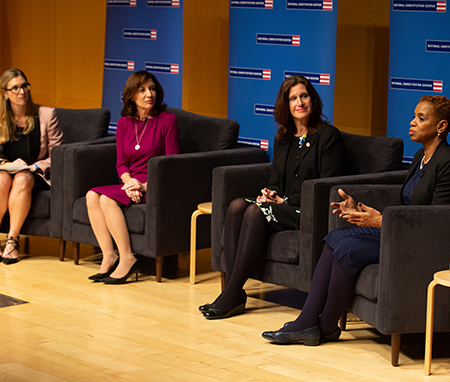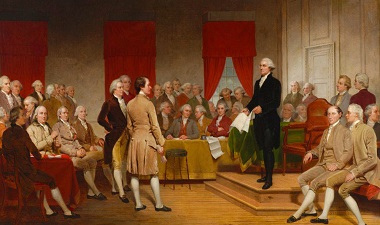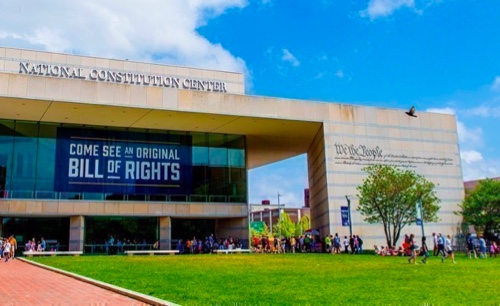

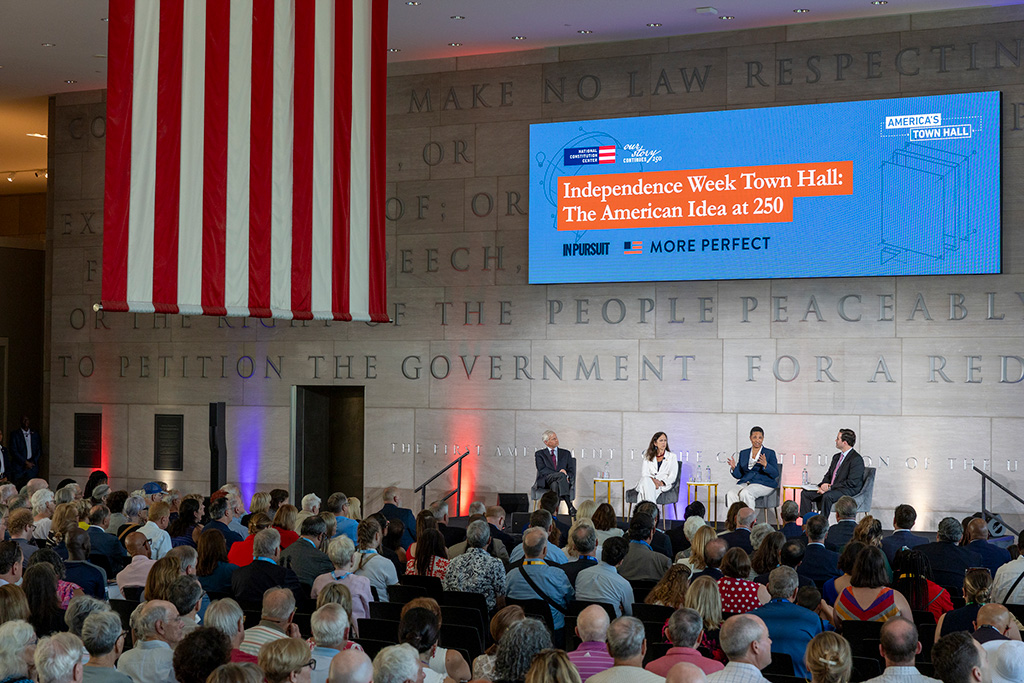


The National Constitution Center and the Center on the Structural Constitution at Texas A&M University School of Law present the 2026 Supreme Court Review, featuring leading constitutional law scholars and commentators. Three panels featuring scholars with differing perspectives examine the Court’s 2025-26 term, the Court’s approach to executive power, and the issue of civil discourse within and concerning the Court.
Video
Panel 1: The Supreme Court’s 2025-26 Term
- Sarah Isgur, senior editor, SCOTUSblog; legal analyst, ABC News
- Frederick Lawrence, distinguished lecturer, Georgetown University Law Center
- Kannon Shanmugam, partner, Davis Polk & Wardwell
- Keith Whittington, David Boies Professor of Law, Yale Law School
- Moderator: Neil Siegel, professor of law and co-director of the Center on the Structural Constitution, Texas A&M University School of Law
Panel 2: The Supreme Court and Executive Power
- Gillian Metzger, Harlan Fiske Stone Professor of Constitutional Law, Columbia Law School
- Julian Mortenson, James G. Phillipp Professor of Law, The University of Michigan Law School
- Ilya Somin, professor of law, George Mason University Antonin Scalia Law School
- Moderator: Thomas Donnelly, lead scholar, National Constitution Center
Podcast
Panel 3: Civil Discourse and the Supreme Court
- Jonathan Adler, Tazewell Taylor Professor of Law, William & Mary Law School
- Greg Garre, partner, Latham & Watkins
- Katherine Mims Crocker, professor of law, Cornell Law School
- Howard M. Wasserman, professor of law and associate dean, Florida International University Law School
- Moderator: Julie Silverbrook, chief content and learning officer, National Constitution Center
Podcast
This program is presented in partnership with the Center on the Structural Constitution at Texas A&M University School of Law
Participants
Jonathan Adler is the Cabell Research Professor and Tazewell Taylor Professor of Law at William & Mary Law School. He is the author or editor of seven books, including Business and the Roberts Court. Adler is a regular contributor to the legal blog The Volokh Conspiracy, and often appears on popular television and radio programs to discuss constitutional and regulatory issues.
Katherine Mims Crocker is professor of law at Cornell Law School. Previously, she taught at the Texas A&M University School of Law and William & Mary Law School, and served as the inaugural faculty director of the Texas A&M Center on the Structural Constitution. Before entering academia, Crocker clerked for U.S. Supreme Court Justice Antonin Scalia and Judge J. Harvie Wilkinson III of the U.S. Court of Appeals for the Fourth Circuit.
Thomas Donnelly is lead scholar at the National Constitution Center. Prior to joining the Center in 2016, he served as counsel at the Constitutional Accountability Center, as a Climenko Fellow and lecturer on law at Harvard Law School, and as a law clerk for Judge Thomas Ambro on the U.S. Court of Appeals for the Third Circuit.
Gregory Garre is a partner at Latham & Watkins. He has served as the 44th Solicitor General of the United States (2008-2009), the Principal Deputy Solicitor General (2005-2008), and as an Assistant to the Solicitor General (2000-2004); the only person to have held all of those positions within the Office of the Solicitor General. Garre has argued 51 cases before the Supreme Court and has briefed and served as counsel of record in hundreds of additional cases before the Court at both the merits and certiorari stage.
Sarah Isgur is the senior editor of SCOTUSblog, host of the legal podcast Advisory Opinions, and an ABC News contributor. She previously worked on three presidential campaigns and in every branch of the federal government.
Frederick Lawrence is the 10th secretary and CEO of the Phi Beta Kappa Society. He is a distinguished lecturer at the Georgetown Law Center, and has previously served as president of Brandeis University, dean of the George Washington University Law School, and visiting professor and senior research scholar at Yale Law School.
Gillian Metzger is the Harlan Fiske Stone Professor of Constitutional Law at Columbia Law School, where she also serves as faculty director of the Center for Constitutional Governance. She has co-authored and filed numerous amicus briefs in major constitutional and administrative law challenges before the Supreme Court, and previously served as acting assistant attorney general and deputy assistant attorney general in the Office of Legal Counsel at the Department of Justice.
Julian Mortenson is the James G. Phillipp Professor of Law at The University of Michigan Law School. He is a legal historian, constitutional litigator, and award-winning teacher who specializes in the constitutional and political history of early America. Mortenson’s constitutional law casebook, Constitutional Law: An Integrated Approach, has been widely adopted. He is at work on a new book examining presidential power at the American founding.
Kannon Shanmugam is a partner at Davis Polk & Wardwell. He has argued 40 cases before the U.S. Supreme Court and more than 150 appeals in courts across the country, including every federal court of appeals and numerous state courts. Before entering private practice, Shanmugam served as an Assistant to the Solicitor General at the U.S. Department of Justice.
Neil Siegel is professor of law and co-director of the Center on the Structural Constitution, Texas A&M University School of Law. He is also Professor Emeritus of Law at Duke Law School, where he taught for 21 years. Siegel’s research and teaching fall primarily in the areas of U.S. constitutional law and federal courts.
Julie Silverbrook is chief content and learning officer at the National Constitution Center, where she leads the strategy, development, and delivery of the Center’s content, public programs, and educational initiatives, advancing its mission of nonpartisan constitutional education and civil dialogue. She oversees the creation of public-facing constitutional content and works to ensure the Center’s programs, scholarly engagement, and educational resources operate as a coordinated national strategy serving students, educators, families, and lifelong learners across the country.
Ilya Somin is a professor of law at George Mason University, the B. Kenneth Simon Chair in Constitutional Studies at the Cato Institute. His most recent book is Free to Move: Foot Voting, Migration and Political Freedom. Together with the Liberty Justice Center and others, he was co-counsel in V.O.S. Selections v. Trump, one of the tariff cases decided by the Supreme Court.
Howard Wasserman is professor of law and associate dean for research and faculty development at Florida International University Law School, where he teaches civil procedure, evidence, federal courts, civil rights, and First Amendment. He blogs at PrawfsBlawg, is the section editor for the Courts Law Section of JOTWELL, and is a contributor at SCOTUSBlog.
Keith Whittington is the David Boies Professor of Law at Yale Law School. Previously, he served as the William Nelson Cromwell Professor of Politics at Princeton University. Whittington has also held visiting appointments at Georgetown University Law Center, Harvard Law School, and the University of Texas School of Law. He is the author of numerous books, and his writing appears frequently in prominent law journals, newspapers, and magazines.
Thomas Donnelly is lead scholar at the National Constitution Center. Prior to joining the Center in 2016, he served as counsel at the Constitutional Accountability Center, as a Climenko Fellow and lecturer on law at Harvard Law School, and as a law clerk for Judge Thomas Ambro on the U.S. Court of Appeals for the Third Circuit.
Stay Connected and Learn More
- Questions or comments? Email [email protected]
- Join us for another upcoming live programs from the NCC.
- Follow @ConstitutionCtr on social media and subscribe to receive Constitution Weekly, our email roundup of constitutional news and debate.
- Support our important work by making a donation today.