

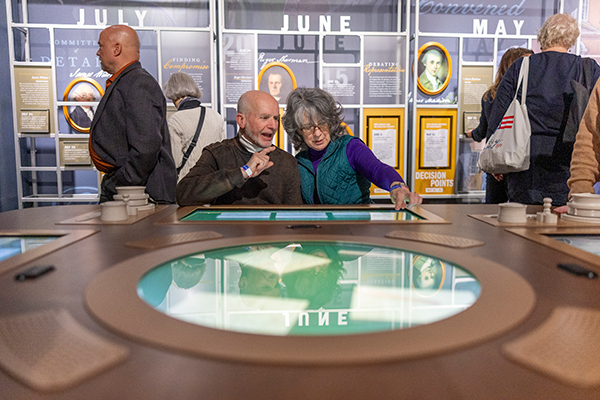

At the National Constitution Center, we value civil dialogue, which empowers students to speak about constitutional and historical topics in ways that remain civil, respectful, and reflective. As you prepare to discuss these topics in your classroom, we encourage you to establish norms such as:
- Stay calm
- Listen patiently
- Listen actively
- Don’t speak twice until everybody has spoken once
You can find more support for establishing norms and civil dialogue practices in our Civil Dialogue Toolkit.
Media Asset
- National Constitution Center's Constitution Daily Blog – Supreme Court hears historic birthright citizenship arguments, by Scott Bomboy
- Decision by SCOTUS on June 30, 2026: Supreme Court strikes down Trump’s birthright citizenship executive order in landmark decision, by Scott Bomboy
Big Constitutional Question
To whom does the 14th Amendment's Citizenship Clause apply?
Headline Story
On Wednesday, April 1st, 2026, the Supreme Court considered a case on the concept of birthright citizenship. During two hours of debate, the justices raised several key questions about an executive order’s definition of a right established in the 14th Amendment. Citizenship Clause. This clause reads, “All persons born or naturalized in the United States, and subject to the jurisdiction thereof, are citizens of the United States and of the State wherein they reside.”
The justices heard arguments in Trump v. Barbara. At issue was President Trump’s executive order No. 14,160, Protecting the Meaning and Value of American Citizenship, which claims that birthright citizenship does not apply in several situations traditionally understood to be protected by the 14th Amendment’s Citizenship Clause.
One question was the meaning of United States v. Wong Kim Ark (1898), a longstanding ruling that defines the citizenship rights of people born in territory controlled by the United States. Another was the role of English common law as the basis for the Citizenship Clause—and how best to understand its lessons.
A final decision from the Court is not expected until at least late June 2026.
Amendment / Clause Focus
|
Scholar |
Key Ideas & Quote |
Why It Matters |
|
Akhil Reed Amar Sterling Professor of Law and Political Science at Yale University and John C. Harrison James Madison Distinguished Professor of Law at the University of Virginia Law School |
“The basic principle of a federal rule of race-blind citizenship based on birth (and naturalization) was not in much dispute, although there was some debate about the restriction of the grant of citizenship to persons subject to the jurisdiction of the United States.” - Common Interpretation Essay from the Interactive Constitution To add more context, the Common Interpretation Essay continues to explain the debate over how the phrase “subject to the jurisdiction thereof” might be understood: “When adopted, that clause which was drafted against the backdrop of the Civil Rights Act of 1866, was clearly understood to withhold birthright citizenship from American-born children of foreign diplomats present in this country, because under international law, diplomats and their families were largely immune from the legal control and the cost of their host country. The limiting clause also was understood not to grant birthright citizenship to various members of Indian tribes whose political relations with the United States at that time limited its authority over the tribes’ members. The scope of the limiting clause is a matter of political controversy today.” |
There is a general understanding that the Citizenship Clause envisions birthright citizenship. However, the core arguments are about how far it extends — emphasizing the importance of the interpretation of the phrase "subject to the jurisdiction thereof" in the 14th Amendment. |
|
Solicitor General D. John Sauer Department of Justice on behalf of President Trump |
“The clause [“subject to the jurisdiction thereof”] thus does not extend citizenship to the children of temporary visa holders or illegal aliens...Those visitors lack direct and immediate allegiance to the United States. For aliens, lawful domicile is the status that creates the requisite allegiance, and the text of the clause presupposes domicile.” | The quote from Solicitor General Sauer is important because it highlights the position of the petitioners that argue for a narrower interpretation of birthright citizenship. He suggests that “subject to the jurisdiction thereof” requires domicile (allegiance) to the United States for citizenship rather than mere physical presence at birth. |
|
Cecillia D. Wang, Esq. Lawyer for the American Civil Liberties Union |
“Thirty years after ratification, this Court held that the Fourteenth Amendment embodies the English common law rule. Virtually everyone born on U.S. soil is subject to its jurisdiction and is a citizen. It excludes only those cloaked with a fiction of extraterritoriality because they are subject to another sovereign's jurisdiction even when they're in the United States, a closed set of exceptions to an otherwise universal rule.” | The quote from the opening statement by Cecillia Wong, attorney on behalf of the respondents, is important because it frames the case as a defense of settled precedent via Wong Kim Ark. She presents Wong Kim Ark as embodying the English common-law and a long-settled universal rule. |
Primary Source Spotlights
- Dred Scott v. Sandford (1857)
- Elk v. Wilkins (1884)
- United States v. Wong Kim Ark (1898)
- Trump v. Barbara (2026)
Download Think, Talk, Create PDF
Student Questions
- One of the arguments in this case focused on the word “domiciled” and the phrase in the text of the 14th Amendment’s Citizenship Clause, “subject to the jurisdiction thereof.” Use the blog post and the quotes from the Scholar Perspectives to help you define these in your own words and explain why they are important to the case.
- The other argument was rooted in the precedent set by the case United States v. Wong Kim Ark (1898). Why is precedent important? Should it always be followed?
- Several justices asked whether the Court should account for situations that didn’t exist when the 14th Amendment was drafted in 1868. Should modern circumstances influence how we interpret the Citizenship Clause—and, if so, in what way? Support your response with evidence from the blog post.
Student Choice Options
- Using the Retell in Rhyme protocol, turn your understanding of the current arguments about birthright citizenship into a poem.
- Listen to the opening statements from the oral arguments (General Sauer, :00-2:09; Cecillia Wang, 1:09:04 – 1:11:41) from Trump v. Barbara (2026) or read them in the transcripts (General Sauer, pages 3-6; Celia Wang, pages 80-83). As you review, make a T-chart that outlines the arguments for both sides. Optional: continue to listen to or read the arguments and annotate the arguments with the questions from the Justice’s to assess the constitutional questions at the heart of this case.
- To promote a civil dialogue, have students engage with the Supreme Court Case, United States v. Wong Kim Ark (1898). Collectively review the facts of the case and read the summary in the Supreme Court Cases Library. Then, half the class should read the majority opinion written by Justice Horace Gray, and the other half should read the dissent authored by Chief Justice Melville W. Fuller. Then discuss: To whom does the 14th Amendment’s Citizenship Clause apply?
Beyond the Headlines
- Interactive Constitution
- 14th Amendment (Section I, Citizenship Clause)
- Trump v. Barbara (2026)
- Executive Order No. 14, 160 (Protecting the Meaning and Value of American Citizenship)
- Precedent Birthright Citizenship Cases
- Dred Scott v. Sandford (1857)
- Elk V. Wilkins (1884)
- United States v. Wong Kim Ark (1898)
- Constitution Daily Blog
- Supreme Court to finally merits arguments on birthright citizenship (March 27, 2026)
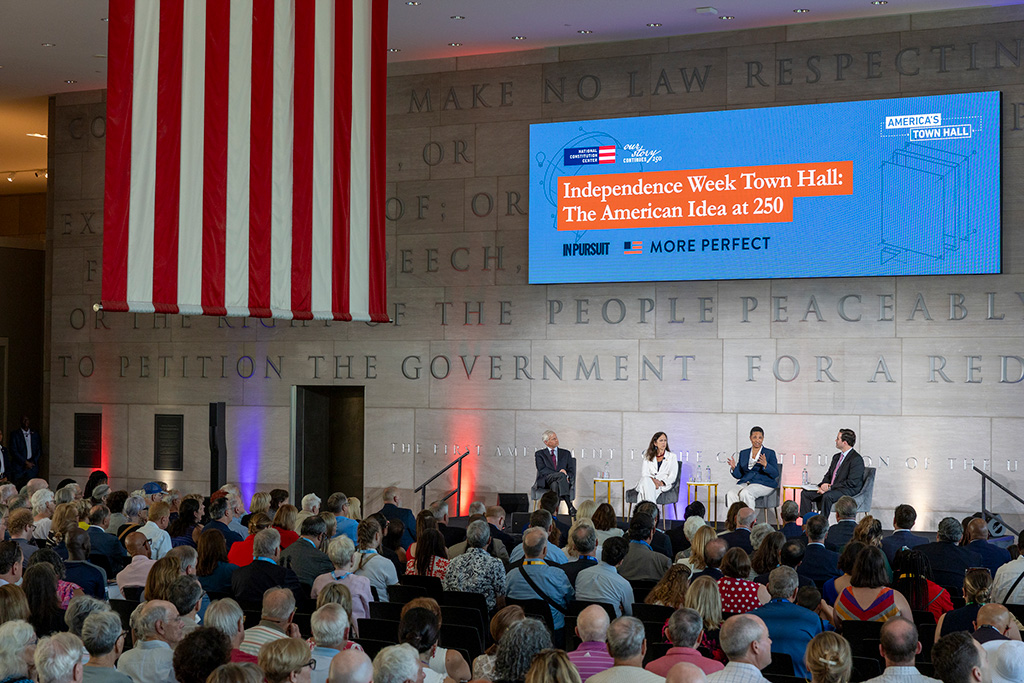
- America's Town Hall