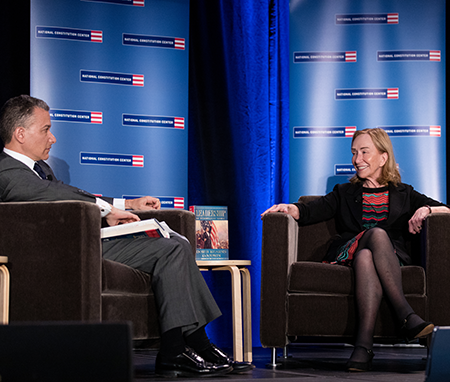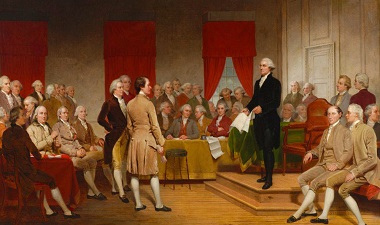

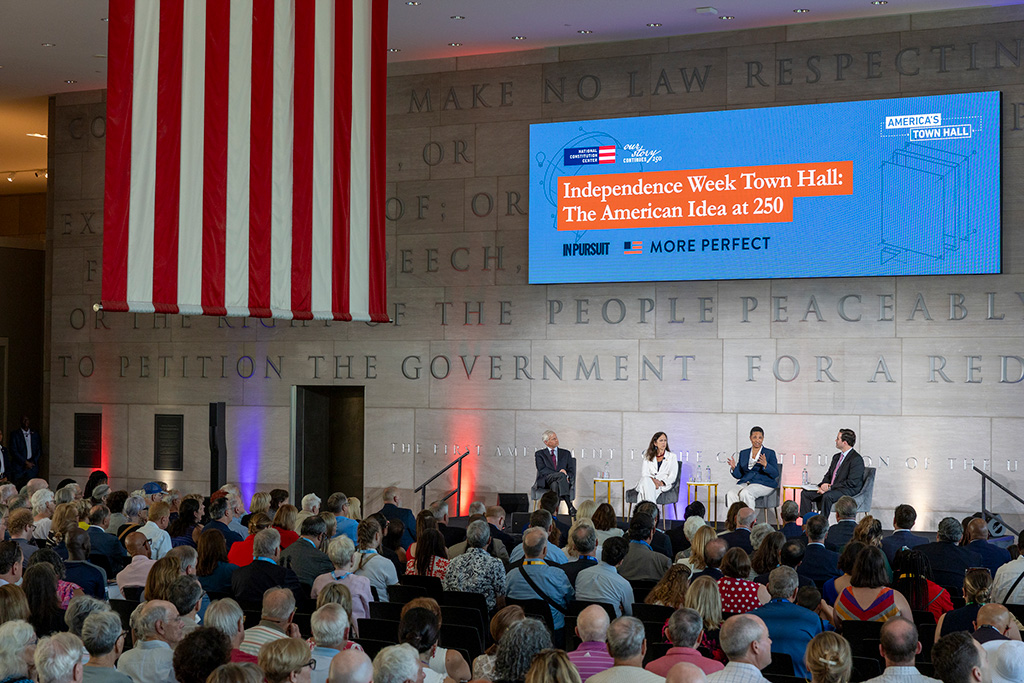


In celebration of Women’s History Month, award-winning historian Ellen DuBois, author of Elizabeth Cady Stanton: A Revolutionary Life, joins to discuss the life, ideas, and legacy of Elizabeth Cady Stanton and the decades-long struggle for women’s suffrage. Thomas Donnelly, lead scholar of the National Constitution Center, moderates.
This conversation was originally streamed live as part of the NCC’s America’s Town Hall series on March 23, 2026.
Follow We the People, Live at the National Constitution Center, and Pursuit: The Founders’ Guide to Happiness on Apple Podcasts, Spotify, or your favorite podcast app.
This episode was produced and mixed by Bill Pollock. With production support from Charles Sahm. Research was provided by Anna Salvatore, Trey Sullivan, and Tristan Worsham.
Participants
Ellen Carol DuBois, distinguished professor of history at UCLA, is the author of Elizabeth Cady Stanton: A Revolutionary Life. Her other pioneering works on the woman suffrage movement in the United States include Feminism and Suffrage: The Emergence of an Independent Women’s Movement in America, 1848–1869; Harriot Stanton Blatch and the Winning of Woman Suffrage; and Suffrage: Women’s Long Battle for the Vote.
Thomas Donnelly is lead scholar at the National Constitution Center. Prior to joining the Center in 2016, he served as counsel at the Constitutional Accountability Center, as a Climenko Fellow and Lecturer on Law at Harvard Law School, and as a law clerk for Judge Thomas Ambro on the U.S. Court of Appeals for the Third Circuit.
Additional Resources
- Ellen Carol DuBois, Elizabeth Cady Stanton: A Revolutionary Life (2026)
- Ellen Carol DuBois, Suffrage: Women’s Long Battle for the Vote (2020)
- Ellen Carol DuBois, Eighty Years and More: Reminiscences 1815-1897 (2020)
- Minor v. Happersett (1875)
- National Constitution Center, The 19th Amendment
Excerpt from interview: Ellen DuBois on Elizabeth Cady Stanton's broad understanding of women's rights.
Ellen DuBois: What is consistent is complete commitment to women's freedom in the broadest way possible, not limited to political and civil rights, but to things that we as 21st-century people concerned with women's rights pay attention to, the body and all of that, sexual and reproductive freedom, to the degree she could see it in the 19th century. But she was also a completely dedicated liberal. By that, I mean what it really means, which is she was dedicated to individual liberty. Liberty resided in the individual, and liberty meant, for the most part, freedom. Although she understood that there were people who needed public assistance, help, she learned that during Reconstruction. So she wasn't somebody who was afraid of government at all. But she was concerned that the people, most certainly including women, were there to hold the government to its most advanced and democratic possibilities.
Full Transcript
View Transcript (PDF)
This transcript may not be in its final form, accuracy may vary, and it may be updated or revised in the future.
Stay Connected and Learn More
- Questions or comments about the show? Email us at [email protected]
- Continue the conversation by following us on social media @ConstitutionCtr
- Explore the America at 250 Civic Toolkit
- Sign up to receive Constitution Weekly, our email roundup of constitutional news and debate
- Subscribe, rate, and review wherever you listen
- Join us for an upcoming live program or watch recordings on YouTube
- Support our important work