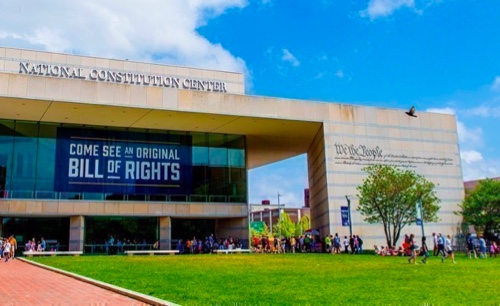
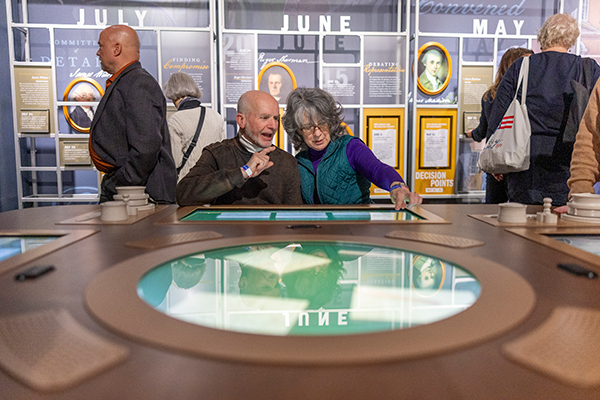
The 1,500-square-foot exhibit features more than 20 artifacts highlighting all five freedoms. Combined, these items capture how these rights have been defended over time, and the lengths some have gone to in order to ensure their protection. These pieces include a draft opinion with handwritten edits from U.S. Supreme Court Justice Louis Brandeis; an anti-Vietnam War armband worn by the Tinker family and associated with the landmark student speech case, Tinker v. Des Moines; The New York Times’ 1971 publication of the classified “Pentagon Papers”; and a pennant from the 1963 March on Washington for Jobs and Freedom. Visitors are invited to challenge their knowledge of the First Amendment through interactive elements and games.
The First Amendment
Discover how the First Amendment guarantees five core freedoms—religious liberty, free speech, a free press, the freedom of assembly, and the right to petition—and how it impacts us today.
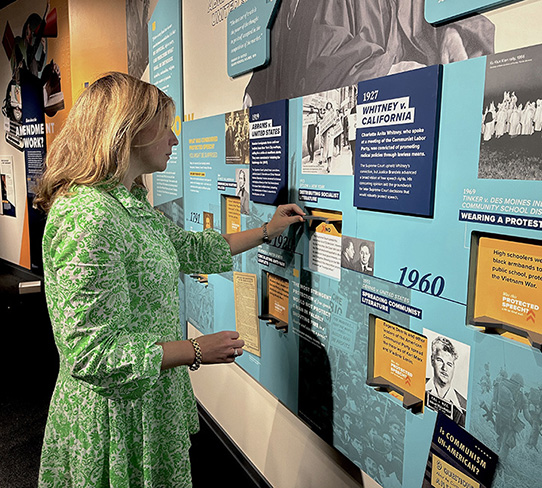
Protecting some of our most cherished freedoms—religious liberty, free speech, a free press, the freedom of assembly, and the right to petition—the First Amendment is a pillar of democracy and the American way.
Explore the Exhibit
Check out highlights from the gallery. Please note, artifacts are rotated and subject to change.
1 of 10
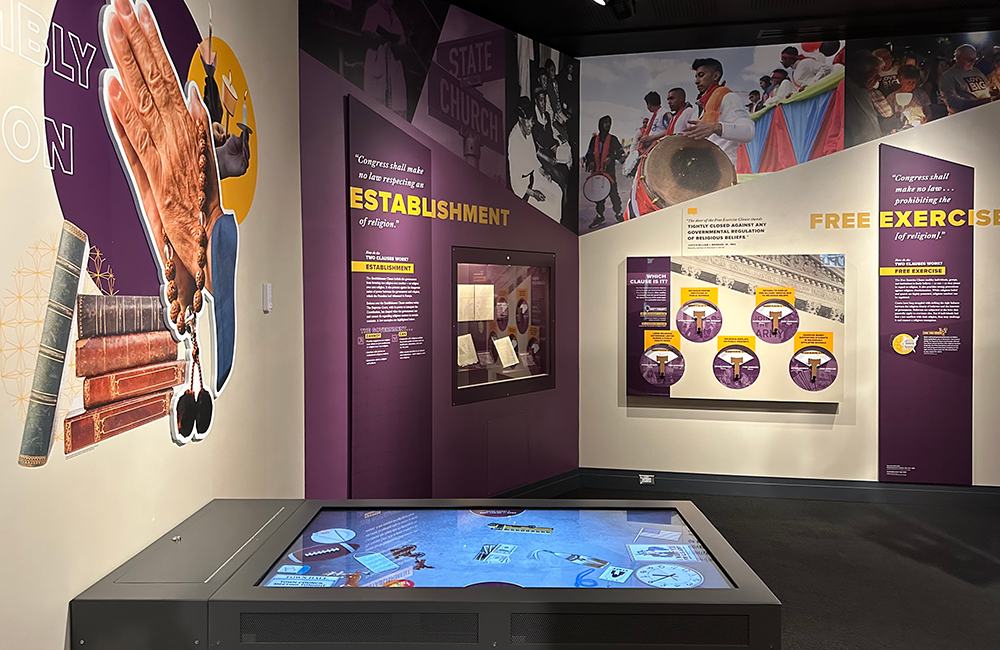
Freedom of ReligionPhoto courtesy of the National Constitution Center by Jason E. Miczek
2 of 10
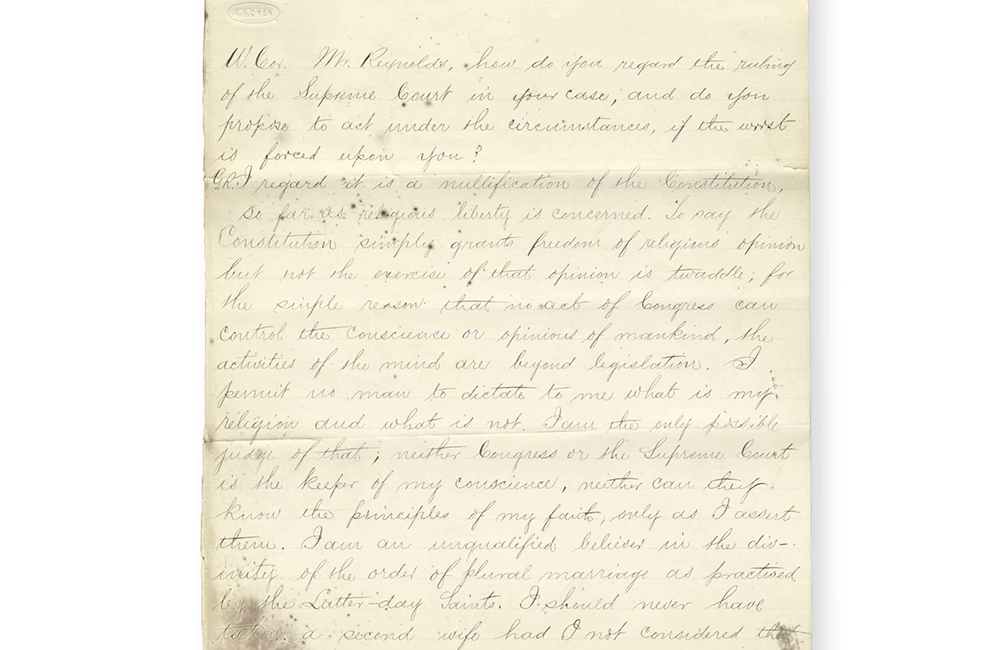
Interview with plaintiff in Reynolds v. United States, the first Free Exercise Clause case, ca. 1879George Reynolds papers; V MSS 10; L. Tom Perry Special Collections, Harold B. Lee Library, Brigham Young University, Provo, Utah
3 of 10
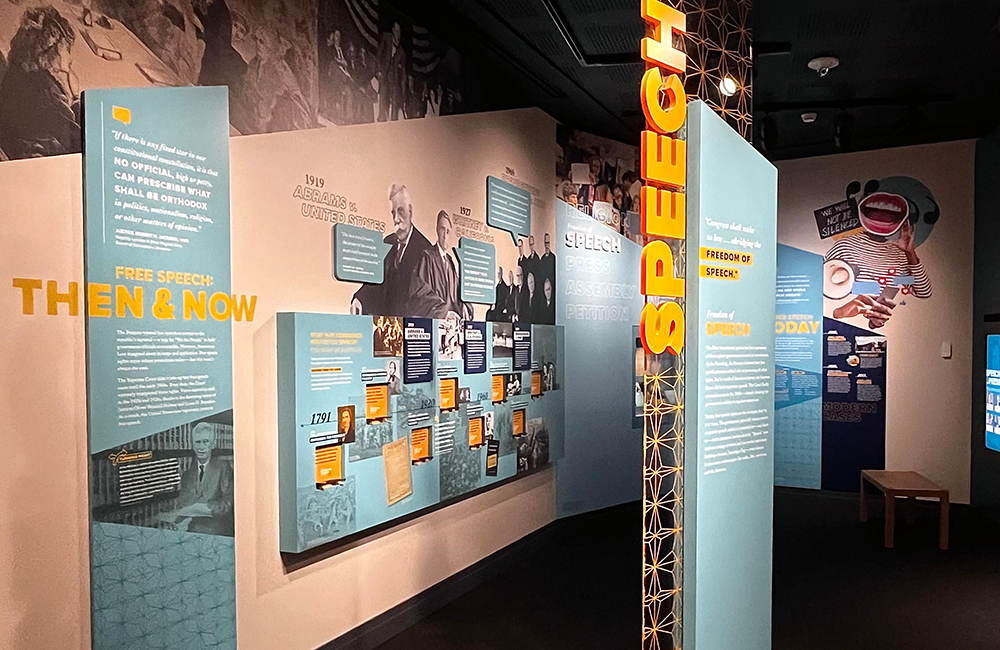
Freedom of SpeechPhoto courtesy of the National Constitution Center by Jason E. Miczek
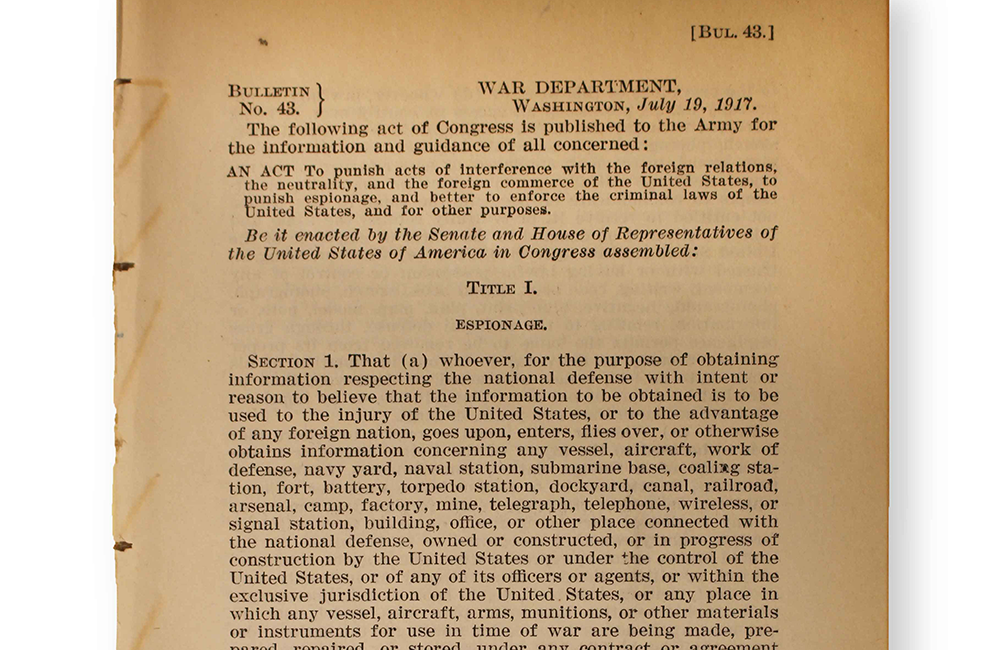
4 of 10
Espionage Act, 1917Frank Amari, Jr.
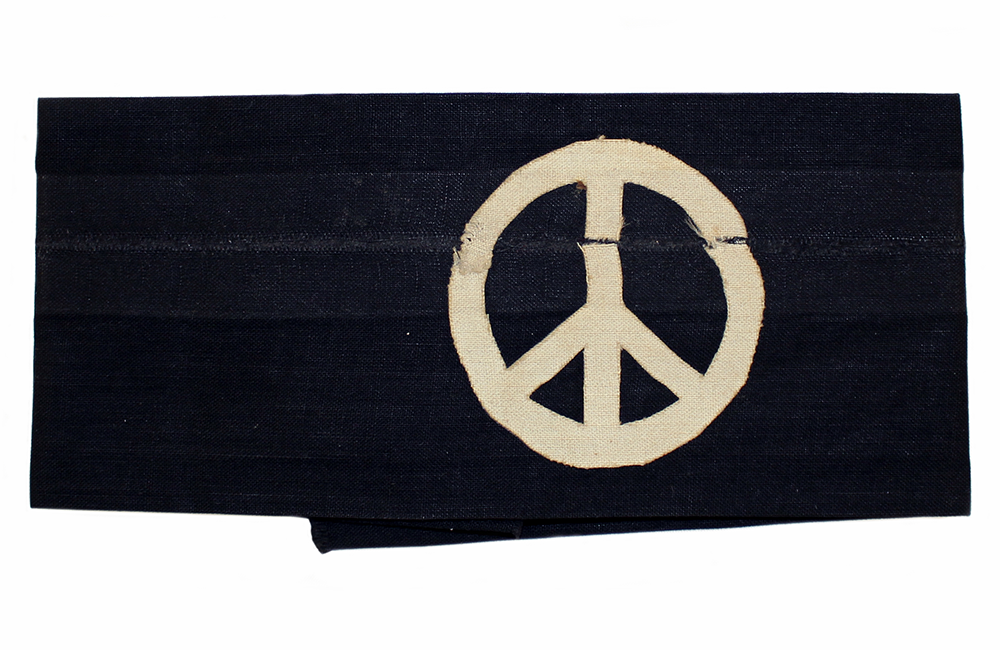
5 of 10
Anti-Vietnam War armband worn by the Tinker family, whose landmark case, Tinker v. Des Moines (1969), defined free speech rights for students.Mary Beth Tinker Family
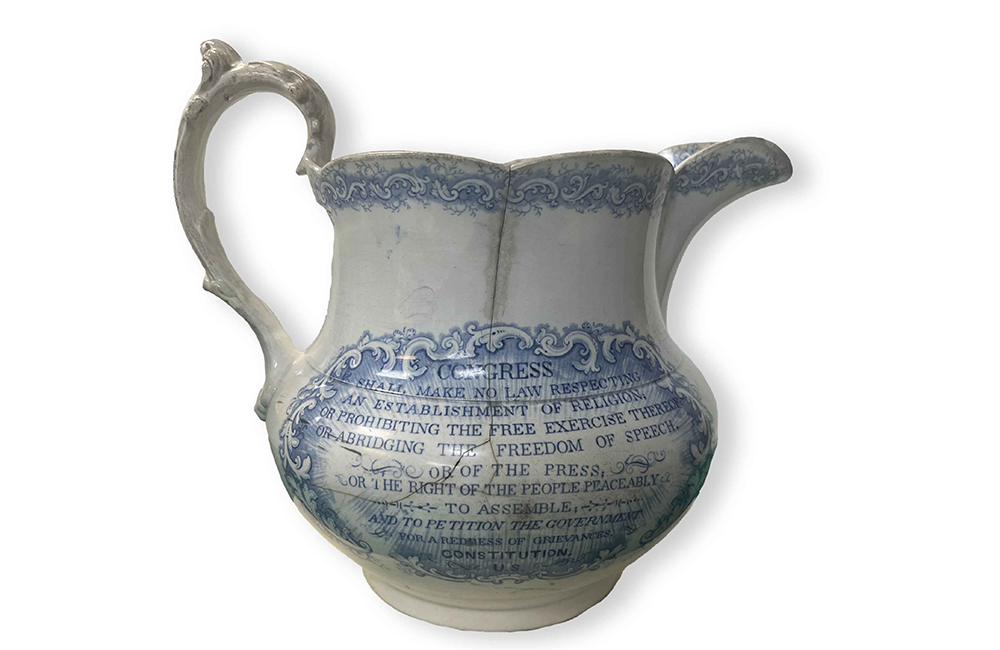
6 of 10
Pitcher inscribed with the words of the First Amendment, memorializing Elijah Lovejoy, an anti-slavery newspaper editor, ca. 1840Museum of the American Revolution, Philadelphia
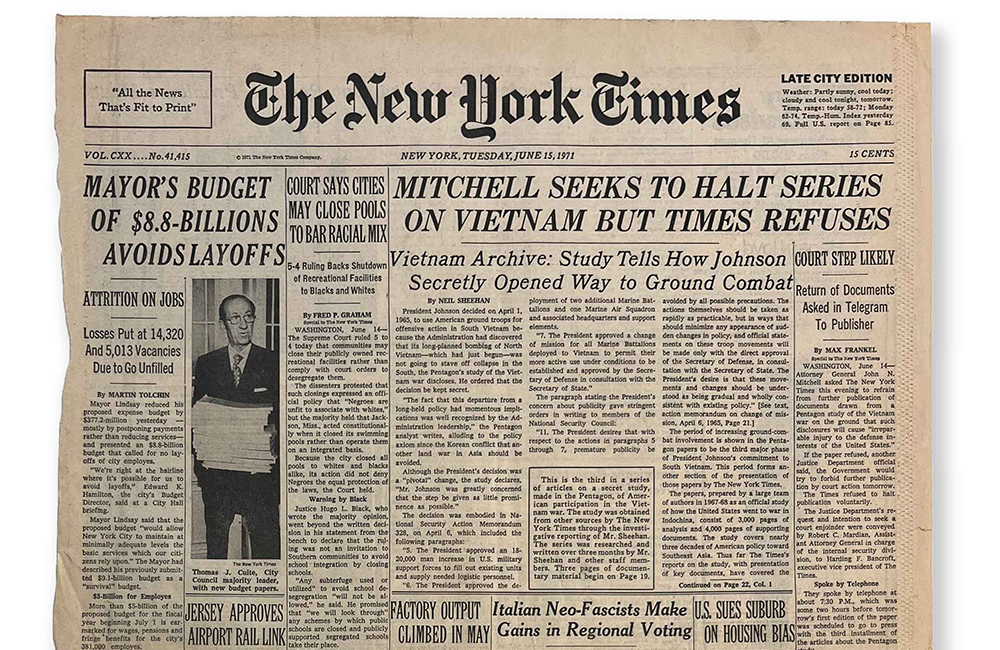
7 of 10
The top-secret “Pentagon Papers” published in the New York Times, 1971Loan, Freedom Forum’s Newseum Collection
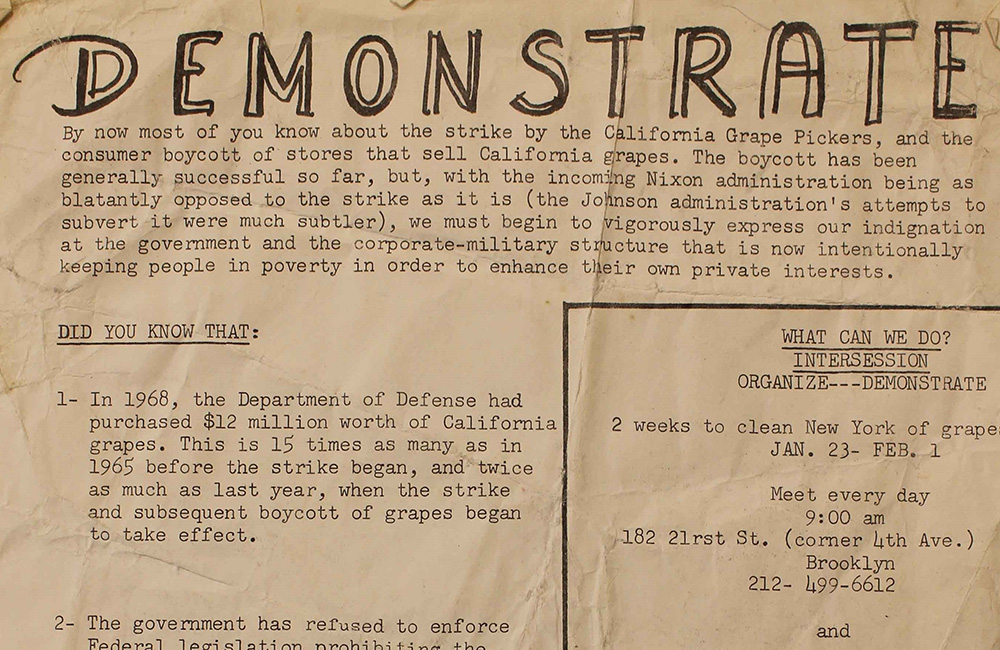
8 of 10
Demonstration flier in support of the Delano Grape Strike, ca. 1969 National Constitution Center Collection
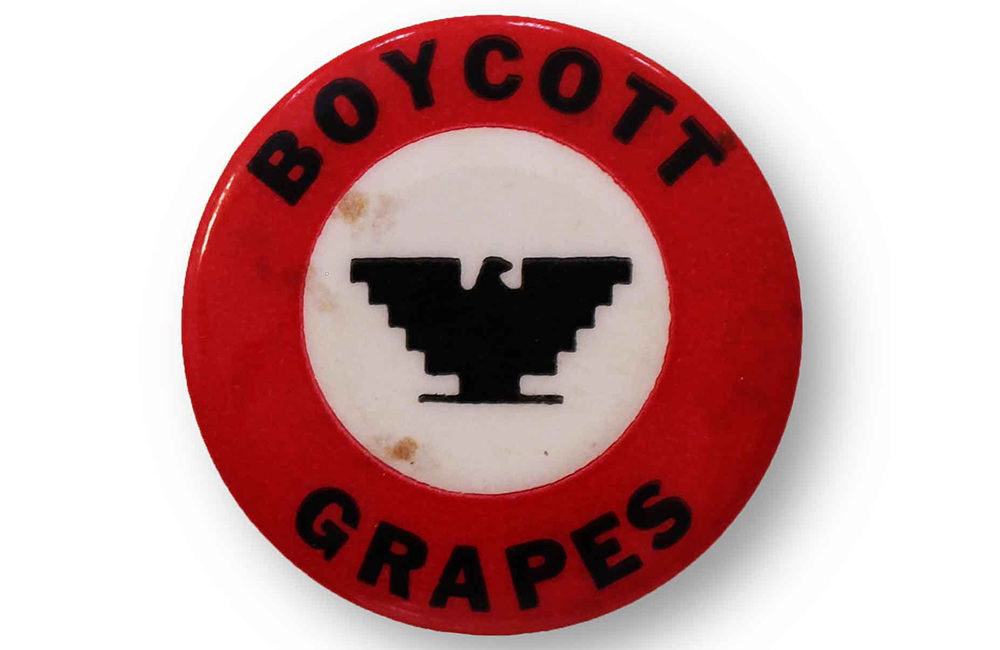
9 of 10
Button supporting the Delano Grape Strike and Boycott, 1966-1970National Constitution Center Collection
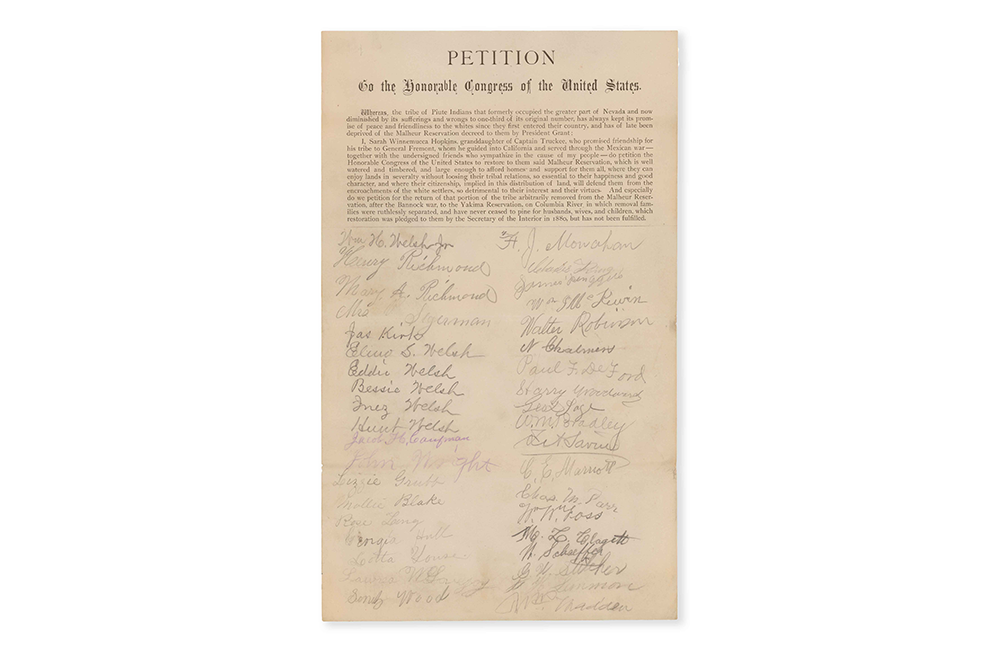
10 of 10
Petition on behalf of the Paiute tribe, 1884Courtesy, National Archives & Records Administration, Washington, D.C.
Exhibit Interactives
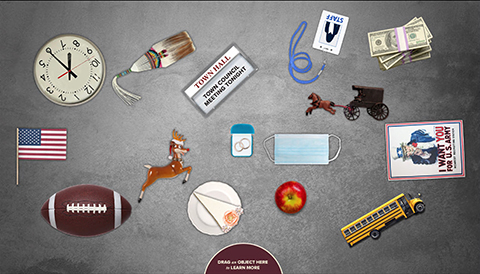
Is It Protected?
Test your First Amendment knowledge by playing this quiz!
Religion Table
Explore Supreme Court cases interpreting religious liberty.
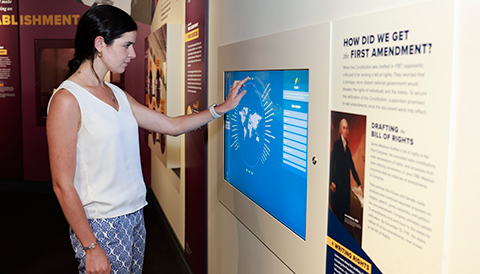
Writing Rights
Explore an important set of documents that shaped the first ten amendments to the U.S. Constitution.
On View in the First Amendment Gallery
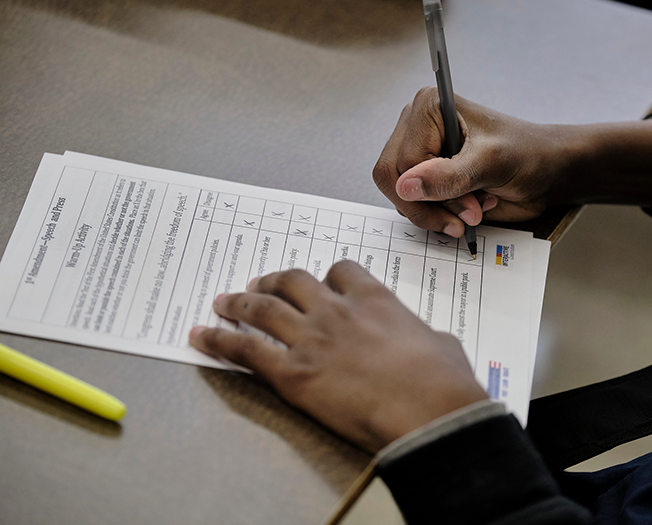
First Amendment Resources
Teach This Topic in Your Classroom
Explore our no-cost, innovative classroom teaching tools and resources on the First Amendment, including lesson plans, activities, interactive videos, and more!
The First Amendment is made possible through the generous underwriting of:
The George Family Foundation and Lilly Endowment Inc.
And through the generous support of:
The Horace W. Goldsmith Foundation
The McLean Contributionship
Explore more about the First Amendment
Podcast

Frederick Douglass and Free Speech
How Douglass connected freedom of speech to abolition, equal citizenship, and the practice of self-government
Town Hall Video

The Holy Experiment: Religious Liberty, Pennsylvania, and the Making of America
University of Pennsylvania Professor Marci Hamilton and St. Joseph’s University Professor Emeritus Randall Miller explore how Pennsylvania’s founding shaped the nation’s understanding of religious liberty, what William Penn’s vision achieved and what this history can teach us about sustaining constitutional democracy today.
Blog Post

Mahmoud Khalil’s Supreme Court appeal is latest immigration challenge
The Supreme Court already has weighed in on aspects of President Donald Trump’s immigration policies. Now a new case centered on college campuses is headed the justices’ way.
We the People Podcast
Unpacking the Supreme Courts Tech Term
Several recent cases before the Supreme Court have raised important questions at the intersection of technology and law. In this episode, Alex Abdo of the Knight First Amendment Institute, Clay Calvert of the American Enterprise Institute, and David Greene of the Electronic Frontier Foundation, join Jeffrey Rosen for a conversation exploring key tech cases.