




After the American Revolution, the United States was governed under the Articles of Confederation, the nation’s first system of government. Written during the war and officially approved in 1781, the Articles were shaped by the colonists’ fear of strong central power. They created a loose partnership among the states, with a national Congress but no president, no national courts, and very limited authority. Congress could declare war, make treaties, and manage western lands, but it could not raise taxes, control trade between states, or make states follow its decisions. This protected state independence, but it also made it hard for the country to work together or solve big problems.
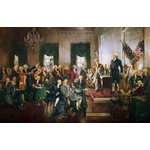
By the late 1780s, many leaders like George Washington, Alexander Hamilton, and James Madison worried that this system wasn’t strong enough to hold the new nation together. In 1787, delegates from most states (Rhode Island stayed home!) gathered in Philadelphia for the Constitutional Convention. Their original goal was to improve the Articles of Confederation, but as they talked things through, they realized small changes wouldn’t be enough. Instead, they decided to create a brand-new plan for government, one they hoped would make the country stronger while still limiting national power and giving states an important role in government.