


The Declaration of Independence was a bold statement made on July 4, 1776, when the American colonies decided to break away from Great Britain. It stated that everyone is born equal, governments should derive their power from the consent of the governed, and those governments should protect people’s natural rights like life, liberty, and the pursuit of happiness. By putting these principles first, the Declaration challenged the idea that kings should have complete control and that power should be hereditary. The authors included 27 complaints against King George III, explaining how British rule had been unfair and how it had limited their ability to govern themselves. Together, these ideas made independence official and gave the colonists new language to stand up for their rights.
Mission 6
No Turning Back
Congratulations, Civic Explorers!
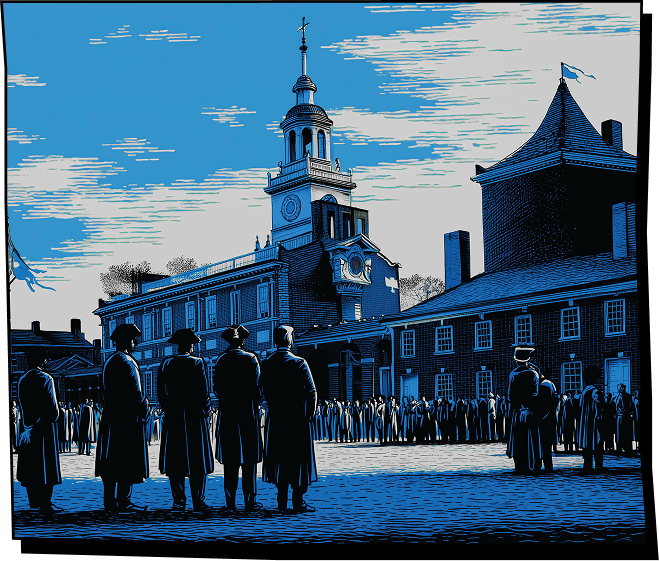
You’ve completed Mission 6 and stepped into one of the most famous moments in American history: the writing and signing of the Declaration of Independence. This bold decision changed the course of world history, reshaping ideas about freedom. Now it’s time to take a closer look at how the Declaration came to be, meet the people involved, and explore how the civic strength of vision helped turn powerful ideas into action.

Mission Deep Dive
Many colonists who supported independence greeted the Declaration with celebration. Public readings were held in town centers, bells rang, and crowds gathered to hear the words that formally announced the birth of a new nation. For these colonists, the Declaration helped unite the colonies around a shared purpose and strengthened their commitment to the American Revolution.
Not everyone agreed. Loyalists, those colonists who remained loyal to the crown, were alarmed and feared chaos or more punishment. Families, neighbors, and whole communities were divided, and some Loyalists fled or were chased out of town by mobs of patriots (those supporting independence). In Britain, leaders viewed the Declaration as an act of rebellion and treason. King George III rejected it, and the British government prepared to expand the war, determined to take back control over the colonies. The Declaration made clear that there was no turning back.
This mission highlights the civic strength of vision: the ability to imagine a better future and take steps to make it real. The people involved in drafting and signing the Declaration looked beyond the risks they faced and imagined a nation and world where people could govern themselves, be treated equally, and elect a government that protected their rights.
The ideas in the Declaration didn’t end in 1776. Early Americans believed that the country could improve, and they were right. Throughout the text of the U.S. Constitution, signed in 1787 and ratified in 1788, we see this vision in action: protections for natural rights, the rule of law, and government by consent, all reflect the visionary ideals that inspired the Declaration of Independence.
About the People
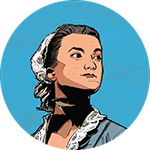
Abigail Adams
Abigail Adams was a writer, political thinker, and the nation’s second First Lady and first Second Lady, living in Massachusetts during the American Revolution. Although she could not vote or hold office, she closely followed events and exchanged detailed letters with revolutionary leaders, especially her husband, John Adams. As the Declaration was being debated, she urged leaders to “remember the ladies,” arguing that a new nation built on liberty should also consider the rights of women. Her words show that the Declaration’s ideas immediately sparked debates about who should be included in its promises.
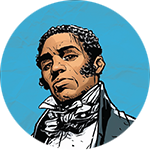
James Forten
James Forten was a free African American man and skilled sailmaker who grew up in Philadelphia during the American Revolution. As a teenager, he supported the patriot cause as a privateer and later became a successful businessman. Inspired by the Declaration’s assertion that “all men are created equal,” Forten became a voice for abolition who wrote and spoke out against slavery. His life shows how the Declaration’s words motivated people not originally included in its promises at the time it was written to fight for the nation to more fully live up to its ideals.
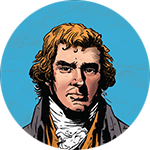
Thomas Jefferson
Thomas Jefferson was a well-educated Virginia lawyer, political leader, and third president of the United States, who believed strongly in ideas about freedom, reason, and self-government. As one of the youngest members of the Continental Congress, he was chosen to write the Declaration of Independence because he could clearly explain big ideas, including equality, government by consent, and natural rights like life, liberty, and the pursuit of happiness. As president, Jefferson oversaw the Louisiana Purchase, which doubled the size of the country and gave the United States more land to grow. Jefferson helped imagine a nation where government would exist only with the consent of the governed, even though, as a slaveholder himself, he was not able to fully live up to those ideals in his own lifetime. His words became a starting point used by later generations to push the country closer to the promises he helped put on paper.
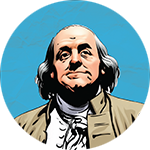
Benjamin Franklin
Benjamin Franklin was born in Boston to a working-class family and largely educated himself, starting as an apprentice printer and becoming one of the most famous thinkers of his time. He became well known as a writer, inventor, and community leader. During the American Revolution, Franklin served in the Continental Congress and helped edit the Declaration of Independence, offering guidance during tense debates. He also served as an important diplomat. Franklin believed strongly in cooperation and compromise, believing that the new nation’s success depended on people working together to protect and promote their shared vision and values.
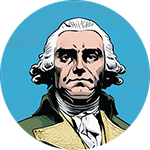
William Franklin
William Franklin was the royal governor of New Jersey and the son of Benjamin Franklin. Unlike his father, he believed the colonies should remain loyal to Britain and strongly opposed independence. When the Declaration was adopted, William refused to support it and was later arrested and imprisoned by patriots. His story shows how the Declaration divided not only colonies, but also families and close personal relationships.
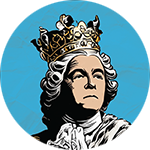
King George III
King George III was the king of Great Britain during the American Revolution and the symbol of British authority in the colonies. Although Parliament passed most of the laws colonists opposed, the Declaration addressed its grievances directly to the king as the head of the government. The document accused him of ignoring colonial concerns and violating their rights. By calling out King George III, the Declaration made clear that the colonies were rejecting his rule and claiming the right to govern themselves.
Behind the Clues: Primary Sources from the Mission
We used real historical artifacts as inspiration for the modified versions you encountered during your mission. Here, you can explore the original sources as they appeared, without any added clues.
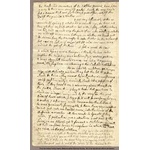
Letters from Abigail Adams
Her correspondence reveals how women engaged with revolutionary ideas and pushed leaders to think more broadly about equality.
Learn more about this artifactFamily Conversation Starters
Q: How can imagining a better future guide the choices we make today?
The people who supported the Declaration took great risks because they believed in a vision of something better. How can vision help you make decisions, even when the outcome is uncertain?

Questions About Civic Quest?
Find answers to frequently asked questions about the Civic Quest game, missions, and learning experience.
Add Your Family's Story
Create Your Time Capsule
Civic Quest is just the beginning. Share your family’s civic story and help shape the future through the Time Capsule Challenge.
More Family Learning Resources

Trivial Pursuit
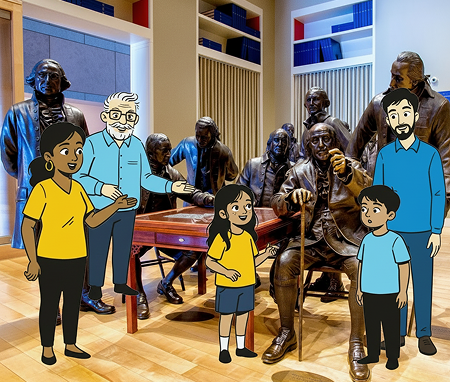
Created for families to play together, this special edition includes 600 total questions, with 300 written for kids and 300 for adults, making it easy for everyone at the table to participate. Questions span six civic categories: American Revolution, Know Your State, Voices from History, We the People, Branches of Government, and History Happened Here.
Civic Stories
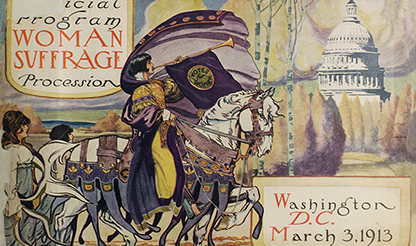
Civic Stories are free, virtual programs that bring history to life for kids through real artifacts and the powerful stories behind them. Led by the National Constitution Center’s Education team, these interactive sessions help young learners connect the Constitution to their own lives, communities, and the world around them.

Family Programs at the Center
Experience the museum through special events designed for families including, Sensory-Friendly Days, Family Fun Nights, Scouts Days, civic holiday celebrations, and weekend activities. These shared experiences invite families to explore big civic ideas together, connect across generations, and engage with the history and stories of the Constitution.