


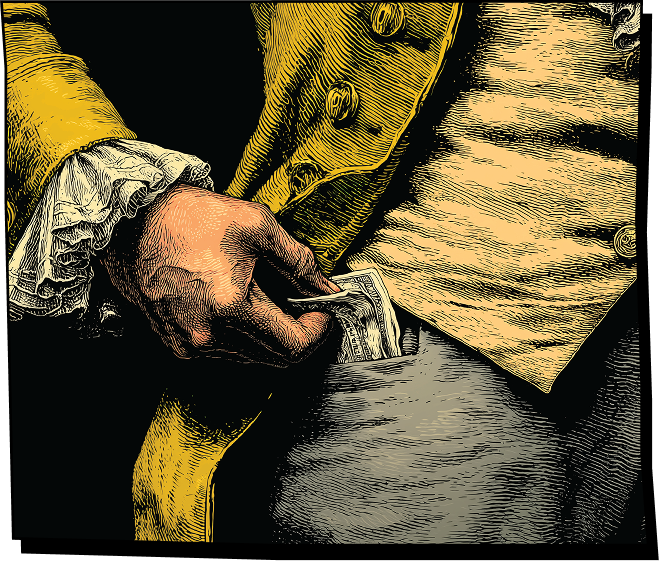
In 1765, Parliament passed a new law called the Stamp Act. Colonists had to buy special stamped paper for everyday items like newspapers, legal papers, and even playing cards. This was the first direct tax Parliament had ever placed on the colonies, and it touched the colonists’ everyday lives—what they read, played, and used to do business.
Mission 1
Coins and Consequences
Congratulations, Civic Explorers!
You’ve completed Mission 1, and now it’s time to dig a little deeper. Explore more about what unfolded during this moment of history, get better acquainted with the people who shaped it, and further explore the ideas that continue to define our story today.

Mission Deep Dive
The Stamp Act caused outrage across the colonies. Protests spread quickly and leaders from nine colonies gathered in New York for the Stamp Act Congress, the first major step toward the colonies acting together. The backlash was so strong that many stamp distributors quit before the law even went into effect. Colonists also used bold symbols to show their anger, printing skulls and crossbones and holding mock funerals for “Liberty.”
Representation means that people choose others to speak and vote on their behalf in government, so their voices are included in important decisions. During the Stamp Act, the colonists worked hard to make their voices heard, even though the people making the rules were far away and they themselves had no representation in Parliament.
When the framers wrote the Constitution in 1787, they included systems to make sure that citizens would have real representation in government. We see this in Article I of the Constitution, where citizens in each state directly elected members to the House of Representatives to represent their voices in Congress, which allows ordinary people to have a say in laws and taxes. The 17th Amendment later extended direct elections to the Senate.
About the People

King George III
King George III became king of Britain at just 22 years old and ruled during a time of big changes and challenges, including the costly French and Indian War. King George III believed that the American colonies should help pay for Britain’s debts, so he supported Parliament’s plan to tax the colonies through the Stamp Act. While he didn’t write the laws himself, his approval gave them power, and many of the colonists blamed him directly for the new taxes.

George Grenville
George Grenville was Britain’s prime minister when the Stamp Act was passed. After the expensive French and Indian War, he believed it was fair for the American colonies to help pay part of Britain’s debt, and thought Parliament had just as much a right to tax them just as they taxed the people in Britain. His plan for the Stamp Act turned him into a unpopular symbol of British control that the colonists wanted to resist.

James Otis
James Otis was a lawyer in Massachusetts who spoke out against the Stamp Act. He argued it was unfair for Britain to tax the colonies when they had no representation in Parliament. He gave many speeches that inspired people to resist and is remembered for helping popularize the famous rallying cry of “taxation without representation is tyranny!” He cared about the colonists’ rights and worked to make sure the law treated them fairly, becoming one of the first big leaders to stand up to British control.

Patrick Henry
Patrick Henry was a lawyer and politician in Virginia known for his fiery speeches. He argued in the Virginia House of Burgesses that only colonial governments could tax people, not Parliament. He was not afraid to stand up to authority, and his ideas and words inspired other colonies to protest the Stamp Act. He encouraged people to stand up for their rights and became one of the loudest voices of the Revolution.
Behind the Clues: Primary Sources from the Mission
We used real historical artifacts as inspiration for the modified versions you encountered during your mission. Here, you can explore the original artifacts as they actually appeared, without any added clues.
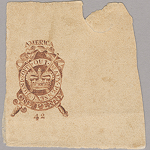
1765 British One-penny Stamp Proof
This is a proof of a 1765 British one-penny stamp made for the Stamp Act. In protest, many colonists refused to use the stamps and very few of these original stamps were ever made, and even fewer exist today.
Learn more about this artifact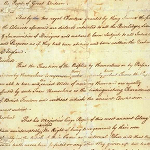
Patrick Henry’s Handwritten Copy of the Five Resolutions
This is Patrick Henry’s own handwritten copy of the five resolutions he wrote opposing the Stamp Act, which he presented to the House of Burgesses in May of 1765.
Learn more about this artifactFamily Conversation Starters
Q: What if someone made important decisions for you without asking how you thought?
That’s what Britain did in 1765 with the Stamp Act, and it made the colonists ask themselves: is it ever okay for others to decide things for us without hearing what we think?
Talk with your family. Can you think of a time when someone made a decision for you without asking your opinion? What did you do? How did you feel?

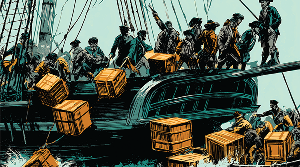
Questions About Civic Quest?
Find answers to frequently asked questions about the Civic Quest game, missions, and learning experience.
Add Your Family's Story
Create Your Time Capsule
Civic Quest is just the beginning. Share your family’s civic story and help shape the future through the Time Capsule Challenge.
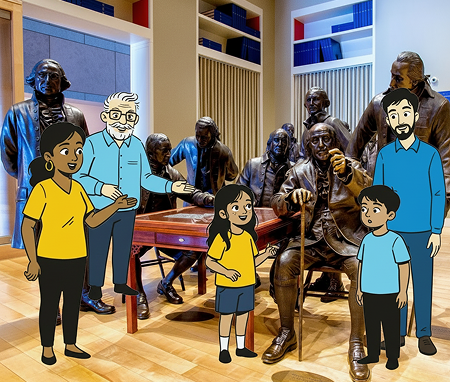
More Family Learning Resources
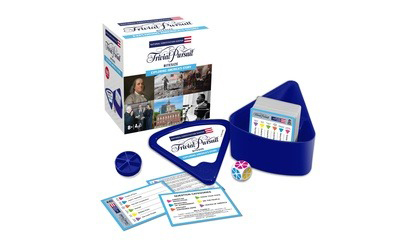
Trivial Pursuit
Created for families to play together, this special edition includes 600 total questions, with 300 written for kids and 300 for adults, making it easy for everyone at the table to participate. Questions span six civic categories: American Revolution, Know Your State, Voices from History, We the People, Branches of Government, and History Happened Here.
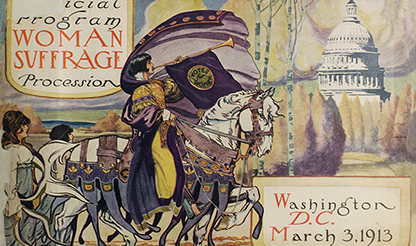
Civic Stories
Civic Stories are free, virtual programs that bring history to life for kids through real artifacts and the powerful stories behind them. Led by the National Constitution Center’s Education team, these interactive sessions help young learners connect the Constitution to their own lives, communities, and the world around them.

Family Programs at the Center
Experience the museum through special events designed for families including, Sensory-Friendly Days, Family Fun Nights, Scouts Days, civic holiday celebrations, and weekend activities. These shared experiences invite families to explore big civic ideas together, connect across generations, and engage with the history and stories of the Constitution.