

Today, William Penn is remembered for his role as the founder of the colony of Pennsylvania. But his influence as a voice for basic constitutional rights extended well before his arrival in America in 1682 and echoed for decades later.
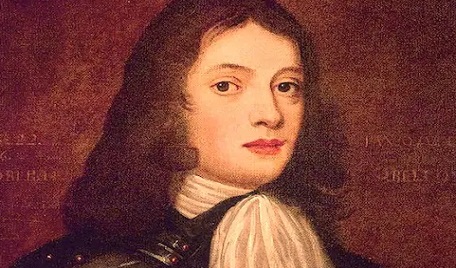 Penn’s basic story is well known. Born to Admiral Sir William Penn, a prominent naval officer and politician, the younger Penn attended Christ Church College at Oxford, where he was expelled because he refused to conform to Anglican worship requirements. Penn then studied in France and read law at Lincoln’s Inn back home, where he did not complete his legal training. Penn soon became a leader in the Society of Friends movement, now known as the Quakers.
Penn arrived in America in late 1682 after receiving a large land grant from the crown as a repayment of debt to his father. As proprietor, he established a colony named after himself with a liberal form of government. In his lifetime, Penn only visited the colony of Pennsylvania twice, and upon departing for Great Britain in 1701, he and the colony’s assembly established the Charter of Privileges. The 1701 charter foreshadowed parts of the federal constitution approved in Philadelphia in September 1787.
Penn’s legacy as a legal troublemaker
After his conversion to Quakerism in 1667, Penn became a prominent spokesperson for the movement. In return, Penn was imprisoned four times. The crown and Parliament did not tolerate religious acts that did not conform to the Anglican church. In 1664, Parliament passed the Conventicle Act, which barred groups of more than five people from gathering for religious meetings not approved by the Church of England.
By 1669, Penn had published several religious essays, including “No Cross, No Crown,” which challenged religious conventions held by the state church. Penn spent nine months in the Tower of London until James the Duke of York (the brother of King Charles II) secured his release. Penn and a fellow Quaker, William Mead, were then arrested for violating the Conventicle Act.
In 1670, Penn preached on the street outside of the locked Gracechurch Street Meeting House in London to an assembled group of between 300 and 400 people. Mead attended the service. Penn and Mead were brought before the court at the Old Bailey—overseen by a recorder and the mayor of London—on charges that they “unlawfully and tumultuously did Assemble and Congregate” to “Preach and Speak.” They had also infuriated the court by refusing to remove their hats in the courtroom.
Over the next four days, Penn sparred with the court over the scope of the Conventicle Act. Penn admitted in court that he did preach to a crowd, but he contended that the Act only barred “seditious” meetings. The court’s instructions to the jury stated that all meetings not approved by the church were inherently seditious, their content notwithstanding.
In his closing statement, Penn asked the jury to look beyond the court’s instructions. “However, this I leave upon your consciences, who are of the jury (and my sole judges,) that if these ancient fundamental laws, which relate to liberty and property, (and are not limited to particular persuasions in matters of religion) must not be indispensably maintained and observed, who can say he hath right to the coat upon his back?”
The jury returned a verdict that Penn and Mead had conducted a public meeting but declined to characterize it as unlawful. Despite numerous threats from the court, the jurors held firm. At one point, as the jury came under attack, Penn invoked the Magna Carta on its behalf. “It is intolerable that my Jury should be thus menaced: Is this according to the Fundamental Laws? Are not they my proper Judges by the great Charter of England?” The jury finally came back with a verdict of not guilty. The jury was fined by the court and jailed until payments were made.
One juror, Edward Bushel, petitioned for a writ of habeas corpus with the Court of Common Pleas to challenge his imprisonment. In Bushel’s Case, Chief Justice Sir John Vaughan ruled that jurors could not be fined or jailed for disagreeing with a judge’s assessment of the evidence. Bushel is considered a landmark case in establishing the independence and integrity of the jury trial system.
Penn’s other impact on the Founders
The Charter of Privileges of 1701 is a major part of Penn’s constitutional legacy. Penn and his colonial assembly agreed on a “frame” of government in 1683 that functioned as an early constitution, after the assembly had rejected a similar frame proposed by Penn in 1682.
In the preface to the 1682 frame, Penn set out the fundamental goal of his charter. “I know what is said by the several admirers of monarchy, aristocracy and democracy, which are the rule of one, a few, and many, and are the three common ideas of government, when men discourse on the subject. But I chuse to solve the controversy with this small distinction, and it belongs to all three: Any government is free to the people under it (whatever be the frame) where the laws rule, and the people are a party to those laws, and more than this is tyranny, oligarchy, or confusion.” The 1683 version broadened assembly participation beyond Quakers and strengthened the legislature’s independence.
After his first return to England in 1684, Penn experienced considerable upheaval in his public and personal lives. His patron, James the Duke of York, became King James II in 1685, but he was deposed in the Glorious Revolution just three years later. The new rulers of England, William and Mary, took away Penn’s proprietorship in 1692 and then restored it in 1694. Penn’s first wife died and he remarried quickly. He also became increasingly disconnected from colonial affairs in Pennsylvania.
In 1696, William Markham, the acting governor of Pennsylvania (and Penn’s cousin) proposed a revised frame of government that gave the lower assembly more power to initiate laws. Penn himself did not endorse the changes. On Penn’s return in 1699 to America, the need to reconcile the two frames of government became a concern, especially with the threat of the Parliament revoking Penn’s proprietorship in 1701.
The Charter of Privileges protected freedom of conscience and expression directly. “No People can be truly happy, though under the greatest Enjoyment of Civil Liberties, if abridged of the Freedom of their Consciences, as to their Religious Profession and Worship,” it read.
The charter also provided for a government with separation of powers, eliminated any public taxes that supported churches, allowed any Christian male to hold office without already owning property, and ended forced attendance at religious services. The legislature became more independent once it gained the power to initiate its own laws, and it embraced the concept of the consent of the governed, even if Penn retained a veto. Penn left Pennsylvania in late 1701 to address financial problems and the threat to his proprietorship. He never returned, and he died in 1718 in England after years of poor health.
Penn’s constitutional legacy continued long after his departure. In 1735, attorney Andrew Hamilton cited Penn’s sedition case in his defense of John Peter Zenger, who was found not guilty of libel in a landmark freedom of the press decision. The decision established a core principle later enshrined in the First Amendment that true statements criticizing the government cannot be punished.
In 1789, when the House of Representatives considered adding the Bill of Rights to the Constitution, Rep. Theodore Sedgwick of Massachusetts sought to strike the word “assemble” from what became the First Amendment. But Rep. John Page of Virginia invoked the Penn case of 1670 to resounding effect, and the House, which needed no reminder, rejected Sedgwick’s motion by a wide margin. The right of assembly entered the Constitution with Penn’s shadow upon it.
Also in 1825, Thomas Jefferson wrote to the American Philosophical Society about a ceremony honoring Penn’s arrival in America as “so justly due to the greatest lawgiver the world has produced, the first in either ancient or modern times who has laid the foundation of government in the pure and unadulterated principles of peace of reason and right” who understood “the only legitimate objects of government, the happiness of man.”
Scott Bomboy is the editor-in-chief of the National Constitution Center.