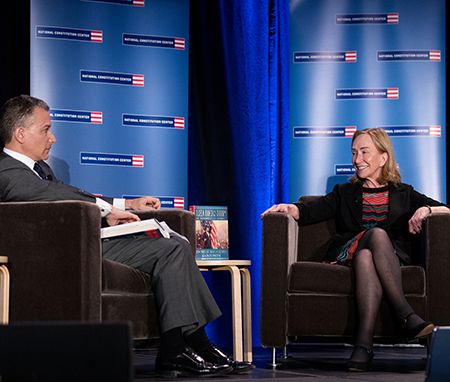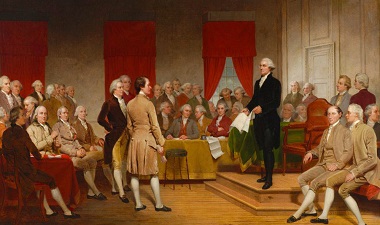

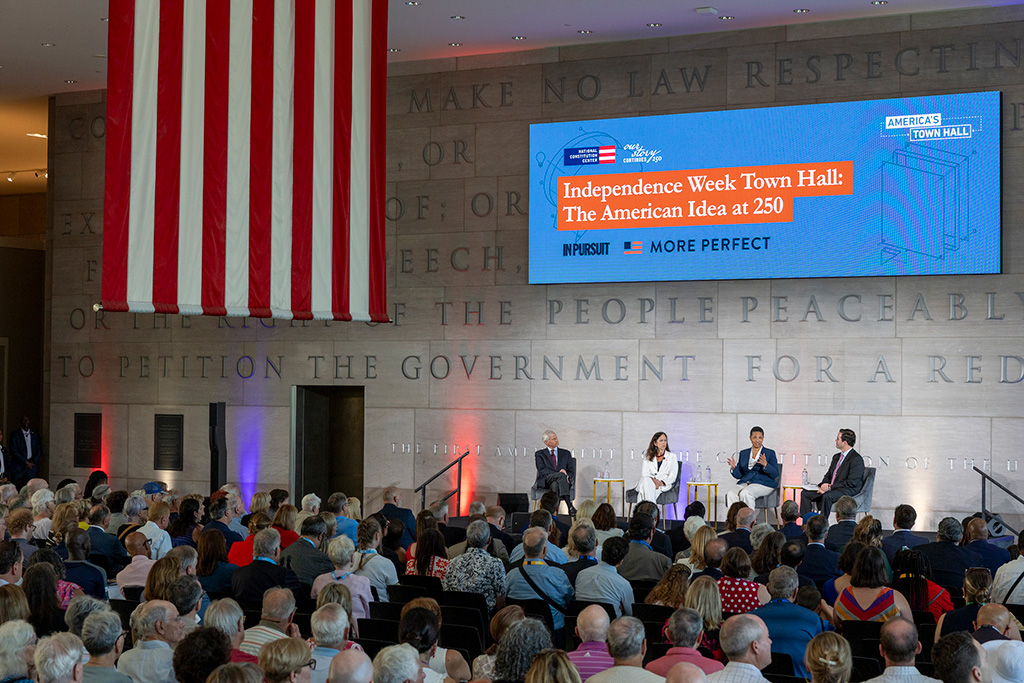


Article V of the U.S. Constitution establishes two methods for proposing constitutional amendments: a two-thirds vote in both houses of Congress or a convention called by two-thirds of state legislatures. Although all 27 ratified amendments have been proposed by Congress, and no Article V convention has ever been called, the convention process remains an alternative path to constitutional reform. In this episode, Lawrence Lessig of Harvard Law School and David A. Super of Georgetown University Law Center debate whether Article V conventions offer a necessary alternative to a politically gridlocked Congress or pose unacceptable risks to the constitutional order. They examine the history and purpose of Article V conventions, current movements to amend the Constitution, concerns about a runaway convention, and potential safeguards to ensure democratic accountability. Julie Silverbrook, chief content and learning officer at the National Constitution Center, moderates.
Follow We the People, Live at the National Constitution Center, and Civic Parenting on Apple Podcasts, Spotify, or your favorite podcast app.
This episode was produced and mixed by Bill Pollock. With production support from Charles Sahm. Research was provided by Anna Salvatore and Tristan Worsham.
Participants
Lawrence Lessig is the Roy L. Furman Professor of Law and Leadership at Harvard Law School and a leading scholar of constitutional law, the regulation of cyberspace, and the influence of money in politics. He founded Creative Commons and, later, Equal Citizens, and his books include Code and Other Laws of Cyberspace, Free Culture, Republic, Lost, and They Don’t Represent Us. He has argued before the U.S. Supreme Court and briefly sought the 2016 Democratic presidential nomination on a platform of democratic reform.
David A. Super is the Carmack Waterhouse Professor of Law and Economics at Georgetown University Law Center. At Georgetown, his research and teaching focuses on constitutional law, federal and state budgets, legislation, and property law, among other subjects. Prior to joining the academy, he was general counsel of the Center on Budget and Policy Priorities and a staff attorney for Community Legal Services of Philadelphia.
Julie Silverbrook is chief content and learning officer at the National Constitution Center, where she leads the strategy, development, and delivery of the Center’s content, public programs, and educational initiatives, advancing its mission of nonpartisan constitutional education and civil dialogue. She oversees the creation of public-facing constitutional content and works to ensure the Center’s programs, scholarly engagement, and educational resources operate as a coordinated national strategy serving students, educators, families, and lifelong learners across the country.
Additional Resources
- VthePeople, Harvard Law School
- “Debating another way to change the Constitution,” Rebecca Beyer, Harvard Law Today, Oct. 6, 2026
- “Making an Article V Convention Safe for Democracy,” Lawrence Lessig, New York Review, April 17, 2023
- “A constitutional convention is the last thing America needs,” David A. Super, Los Angeles Times, March 15, 2017
- Article V, Interactive Constitution, National Constitution Center
- Article V: Amending the Constitution, National Constitution Center
Stay Connected and Learn More
- Stay connected with We the People—follow, rate, and review the show wherever you listen.
- Questions or comments? Email [email protected].
- Follow @ConstitutionCtr on social media and sign up to receive Constitution Weekly, our email roundup of constitutional news and debate.
- Support our important work by making a donation today.