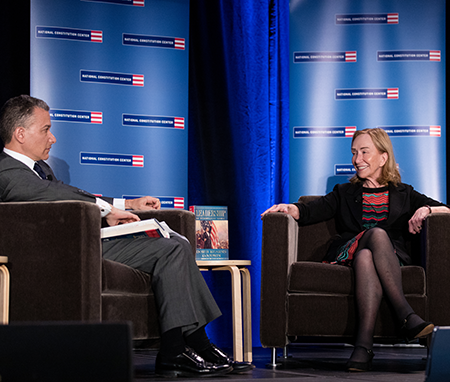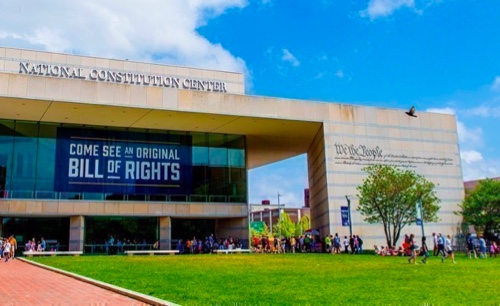

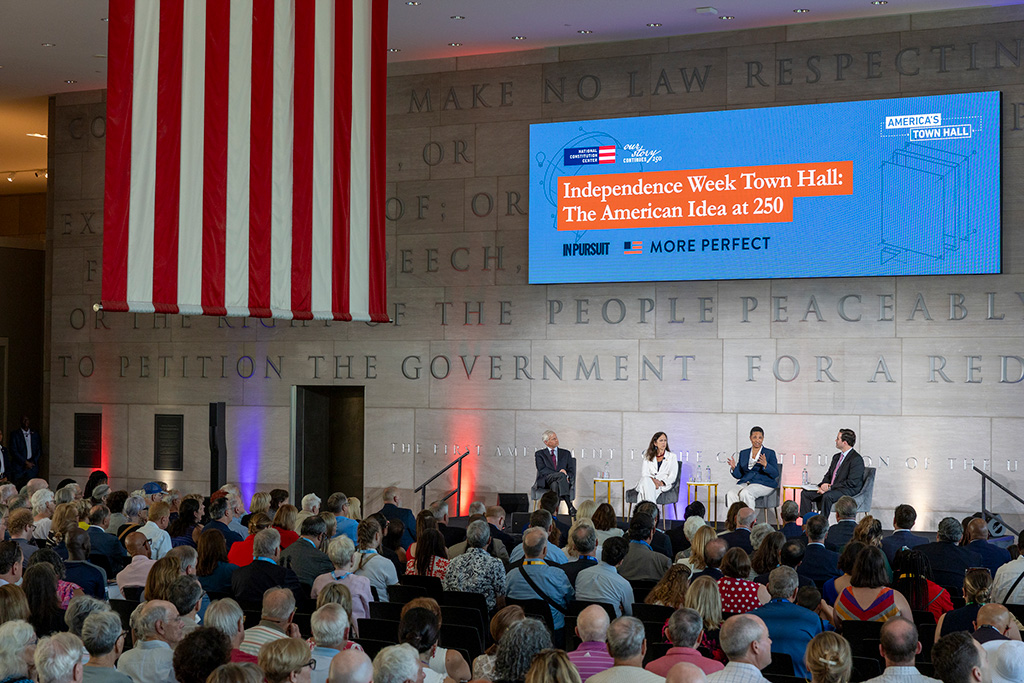


In a recent decision, the U.S. Supreme Court held that law enforcement’s use of a geofence warrant, which collected identity and location data from mobile phone users, violated the Fourth Amendment's protection against unreasonable searches and seizures. Professor Orin S. Kerr of Stanford University unpacks the decision in Chatrie v. United States and explores what it means for the future of the Fourth Amendment, privacy, and government surveillance in the digital age. Julie Silverbrook, chief content and learning officer at the National Constitution Center, moderates.
Follow We the People, Live at the National Constitution Center, and Civic Parenting on Apple Podcasts, Spotify, or your favorite podcast app.
This episode was produced and mixed by Bill Pollock. With production support from Charles Sahm. Research was provided by Anna Salvatore and Tristan Worsham.
Participants
Orin S. Kerr is the Stella W. & Ira S. Lillick Professor at Stanford Law School and a senior fellow at the Hoover Institution. He teaches and writes about criminal law and is widely considered a leading authority on the Fourth Amendment. Kerr has authored more than 75 law review articles, many of which have been cited in judicial opinions, including by the U.S. Supreme Court. He has also authored popular casebooks and co-authored the leading criminal procedure treatise. His most recent book is The Digital Fourth Amendment: Privacy and Policing in Our Online World.
Julie Silverbrook is chief content and learning officer at the National Constitution Center, where she leads the strategy, development, and delivery of the Center’s content, public programs, and educational initiatives, advancing its mission of nonpartisan constitutional education and civil dialogue. She oversees the creation of public-facing constitutional content and works to ensure the Center’s programs, scholarly engagement, and educational resources operate as a coordinated national strategy serving students, educators, families, and lifelong learners across the country.
Additional Resources
- Orin S. Kerr, “The Fourth Amendment After Chatrie,” Stanford Law Working Paper Series (Aug 12, 2026)
- Orin S. Kerr, The Digital Fourth Amendment: Privacy and Policing in Our Online World (2025)
- The Fourth Amendment, National Constitution Center
- Chatrie v. United States (2026)
- Case v. Montana (2026)
- Carpenter v. United States (2018)
- Riley v. California (2014)
- United States v. Knotts (1983)
- United States v. Leon (1984)
- Mapp v. Ohio (1961)
Stay Connected and Learn More
- Stay connected with We the People—follow, rate, and review the show wherever you listen.
- Questions or comments? Email [email protected].
- Follow @ConstitutionCtr on social media and sign up to receive Constitution Weekly, our email roundup of constitutional news and debate.
- Support our important work by making a donation today.