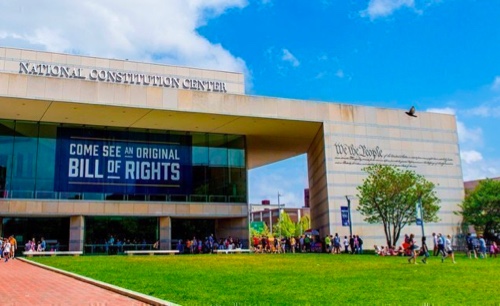

In celebration of Native American Heritage Month, the National Constitution Center is hosting a series of programs and activities highlighting the history of American Indians, tribal governments, and their relationship to the U.S. Constitution and American democracy. Join us for special artifact highlights, including a wampum belt and peace medals in Pennsylvania’s Founding: How a City and a Colony Shaped America’s Civic DNA and moccasins crafted by a Creek or Seminole artisan in Governing the Nation.
In Person
Native American Heritage Month
- Date
- Sunday, November 1 - Monday, November 30
- Time
- All Day

Share
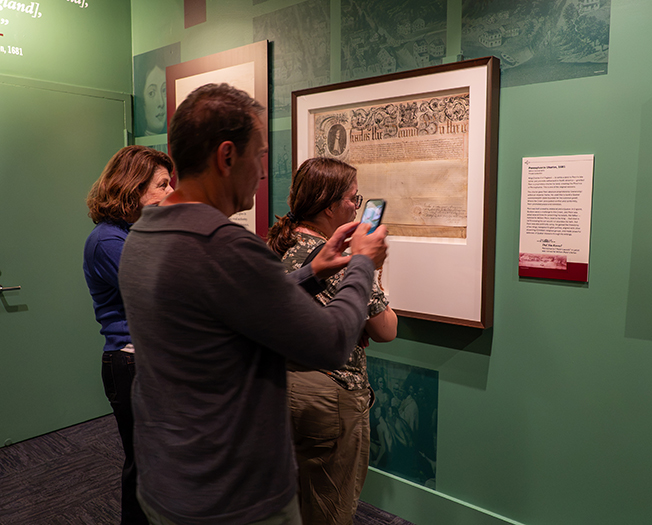
November Family Fun Night
Saturday, November 28 | 5-8 p.m.
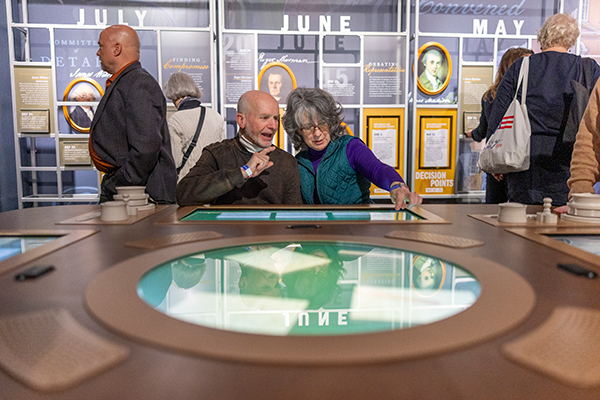
Join us at the National Constitution Center for an unforgettable evening of family-friendly activities, after-hours museum exploration, and hands-on fun. Kids and their families can explore Native American Heritage Month with special themed activities, story time, artifact chats, and more. Discover the Center’s galleries, including our newest exhibit, Pennsylvania’s Founding: How a City and a Colony Shaped America’s Civic DNA, then experience history in a whole new light with a Storytelling Tour of the exhibit.
Registration opening November 1
Programs at the Museum
Please see daily program guides for program times.
Artifact Highlight: Wampum Belt
Pennsylvania’s Founding: How a City and a Colony Shaped America’s Civic DNA
Wampum is an essential part of many Native American cultures and is considered a living record of agreements and history. Join a museum educator to examine the relationship between the Lenape people and William Penn through the symbolism of a wampum belt said to date to the 1682 Treaty of Shackamaxon, which sought to establish unity and equality. We’ll also explore the treaty between William Penn and the Lenape people and how the relationship changed after the Walking Purchase of 1737.
Indigenous Influence on the Constitution
Kenneth C. Griffin Great Hall Overlook
What intellectual sources did the founders use when drafting the Constitution? Join us as we examine the influence Indigenous peoples and tribal governments like the Iroquois Confederacy had on the founders and the ideas enshrined in the Constitution.
Gallery Talk: The Legacy of Indigenous Artistry
Governing the Nation
In the 1830s, several Indigenous nations were forced to relocate from their ancestral homelands in the southeastern United States. Despite these hardships, their cultural and artistic traditions have endured for generations. Join a museum educator for a discussion of the Indian Removal Act of 1830 and its impact as we also highlight a pair of moccasins crafted by a Muscogee (Creek) or Seminole artisan.
Speaking Out with the Suffragists: Zitkala-Ša
The 19th Amendment: How Women Won the Vote
In honor of Native American Heritage Month, join us in The 19th Amendment: How Women Won the Vote to learn about Zitkala-Ša. As an author, musician, and activist, she founded the National Council of American Indians, wrote the first opera by a Native American, and fought for equality and suffrage throughout the United States.
Lenape Language Activity
Kenneth C. Griffin Great Hall Lobby
The languages spoken by Native Americans are as diverse as the people themselves. Learn some words and phrases in Lenape/Delaware, the language spoken by the Lenape peoples who once inhabited this very land.
Tribal Mapping
Kenneth C. Griffin Great Hall Lobby
Explore a map of the United States centuries before the founders. Can you find your hometown? Which Native American tribe lived there?
Corn Husk Dolls
*Offered weekends, Kenneth C. Griffin Great Hall Lobby
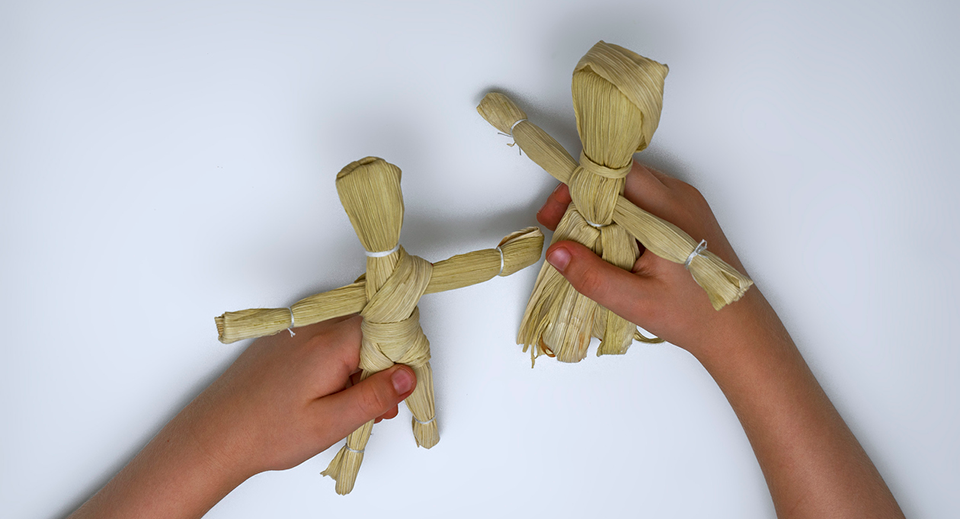
Travel back in time to the 17th century to see how the Wampanoag people made their own toys. Join us for a corn husk doll workshop, discover how the Wampanoag children learned through play, and create your own corn husk doll to take home.
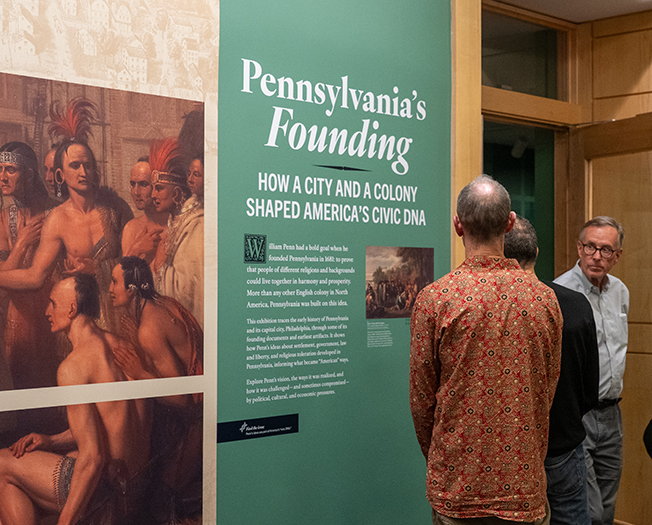
Live From the Museum: Indigenous History and Pennsylvania’s Founding
Tuesday, November 10, Noon
Discover the remarkable story of how Pennsylvania and Philadelphia helped shape the ideas that would become the foundation of America in a live virtual tour of this this special exhibition, Pennsylvania’s Founding: How a City and a Colony Shaped America’s Civic DNA. Together with a museum educator, explore the complex relationship between William Penn’s “Holy Experiment” of Pennsylvania and the Lenape people, whose ancestors had known the land for thousands of years. Featured artifacts include a wampum belt said to have been given to Penn by the Lenape to mark the 1682 Treaty of Shackamaxon as a symbol of hoped-for peace and cooperation.