As we commemorate the Declaration of Independence’s 250th anniversary, Americans are asking familiar questions. Who were the founders? What did they believe? How did this nation begin?
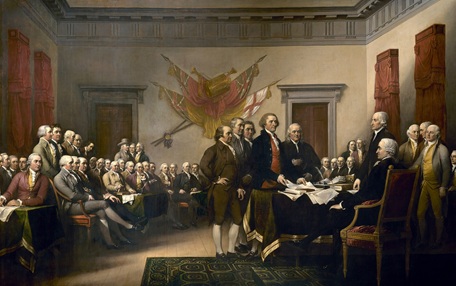 But there is another question that deserves just as much attention: Where do I fit into this story? For many people, the answer begins with family history.
Genealogy is often thought of as a personal hobby or a search for long-lost relatives. But it can also be a powerful way of understanding American history itself. Every family story is woven into larger stories of migration, community, work, faith, conflict, aspiration, and civic life. Exploring where we come from can help us better understand not only our own identities but also the nation we have inherited together.
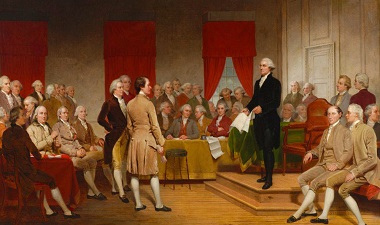
Recent historical research suggests that genealogy played a much more significant role in the founding era than is commonly recognized. Many founders, including George Washington, Benjamin Franklin, Thomas Jefferson, and John Adams, carefully documented and studied their own family histories, viewing genealogy as a way to better understand their inheritance and their place in a changing world. Family relationships influenced inheritance, citizenship, political power, religious life, and legal standing. Rather than being a side concern, genealogy helped shape the very structure of the society the founders were building.
Across early America, people of diverse backgrounds preserved their histories in countless ways: through family Bibles, letters, oral traditions, quilts, gravestones, church records, court documents, and stories passed from one generation to the next. Enslaved families fought to preserve family connections despite systems designed to erase them. Indigenous communities maintained rich traditions of kinship and ancestry. Immigrant families carried family histories across oceans and into new communities. Genealogy has always been both deeply personal and profoundly civic.
That insight feels especially important as we celebrate America's 250th.
The Declaration of Independence tells us that all people are created equal and speaks of "one people" coming together to dissolve the political bonds that once tied them to another nation. The Constitution begins with three simple words: "We the People." Those ideals have always been aspirational, inviting each generation to expand the circle of belonging and help the nation live more fully up to its founding promises.
Genealogy offers another way into that ongoing work It also reminds us why primary sources matter.
When we explore our own family histories, we rarely rely on secondhand accounts alone. We search for birth certificates, naturalization papers, census records, death certificates, marriage licenses, letters, photographs, family Bibles, and other documents created by the people who lived those lives. These records allow us to move beyond inherited stories and encounter the past on its own terms.
The same is true of our nation's history. The Declaration of Independence, the Constitution, letters between the founders, petitions, diaries, speeches, newspapers, and court records are, in many ways, America's genealogy. They are primary sources that reveal who we were, what we believed, what we debated, and how our constitutional democracy came to be. Just as discovering an ancestor's signature on a naturalization record can make family history suddenly feel real, reading the Declaration in its own words or encountering the voices of ordinary Americans who petitioned for greater liberty and equality can make our national story feel immediate and personal.
Whether we are exploring our family's genealogy or our nation's constitutional history, primary sources invite the same habits of mind: curiosity, close observation, empathy, and the humility to recognize that every story is richer and more complex than we first imagined.
Looking into our family histories often reveals journeys across oceans and borders, service to country, moments of hardship and resilience, and efforts to build new lives and communities. Sometimes we uncover histories we never knew. Sometimes we encounter difficult truths. Often, we find both. In every case, we are reminded that American history is not distant or abstract. It was shaped through millions of individual lives, each contributing another chapter to a story that continues today.
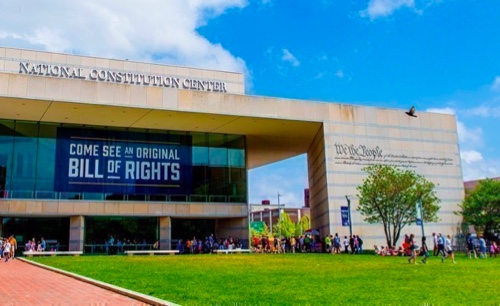
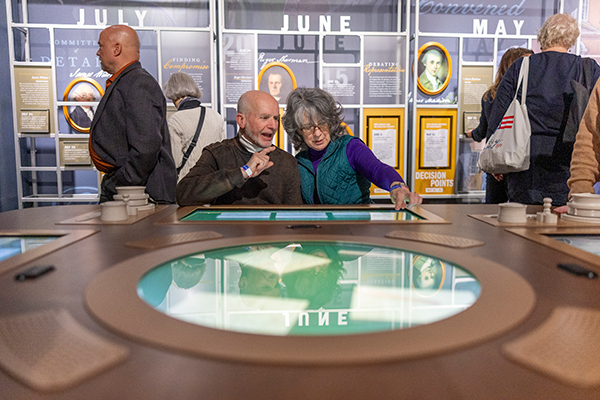
That perspective makes this a particularly meaningful moment to explore family history. Starting on July 4, 2026 and running through the end of August 2026, visitors to the National Constitution Center can experience The Stories of US Discovery Center, presented by Ancestry, where historical records and interactive experiences invite people to discover connections between their own families and the broader American story.
The experience also reflects a broader commitment to preserving our shared history. Through Ancestry's partnership with the City of Philadelphia, approximately 20 million historical records, including birth, marriage, death, naturalization, and property records, will be digitized over the next two years, expanding access to the stories of the people who helped shape both Philadelphia and the nation.
These efforts are about more than preserving the past. They invite us to see history as something we inherit together and continue to write together. That idea is at the heart of the National Constitution Center's Our Story Continues campaign, which encourages all of us to recognize our place in the nation's ongoing constitutional story.
Understanding the past helps us better understand one another and ourselves. It reminds us that every family has a story worth telling and that every community has helped shape the nation we have inherited.
Civic learning begins with connection. Sometimes that connection starts with reading the Declaration. Sometimes it begins with visiting a historic place. Sometimes it starts around a family dinner table. And sometimes it begins by discovering the name of a great-grandparent in a centuries-old record.
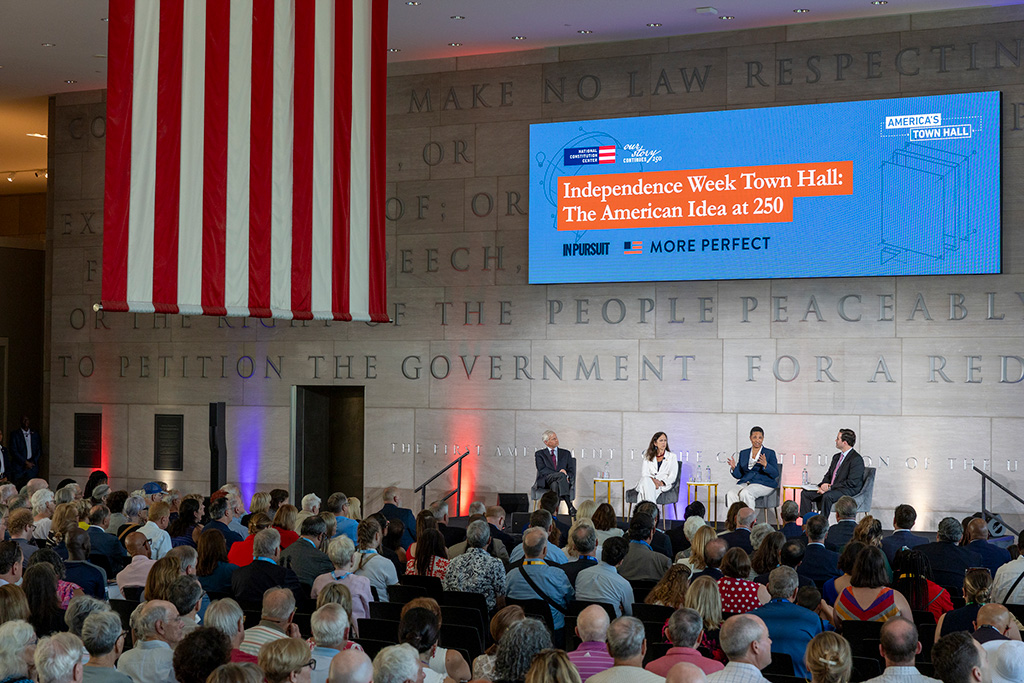
As Americans gather in Philadelphia during this historic anniversary year, I hope they will not only reflect on the nation's founding documents but also ask what stories brought their own families to this moment.
Because the American story has always been written not only by the extraordinary figures we remember, but by the countless ordinary people whose lives became part of something larger than themselves.
Julie Silverbrook is the Chief Content and Learning Officer of the National Constitution Center.