


Not all of the Supreme Court’s significant actions come in the form of merits case decisions after full briefing and oral argument. In recent years, orders of the Court on emergency actions and other matters have grown in frequency and importance.
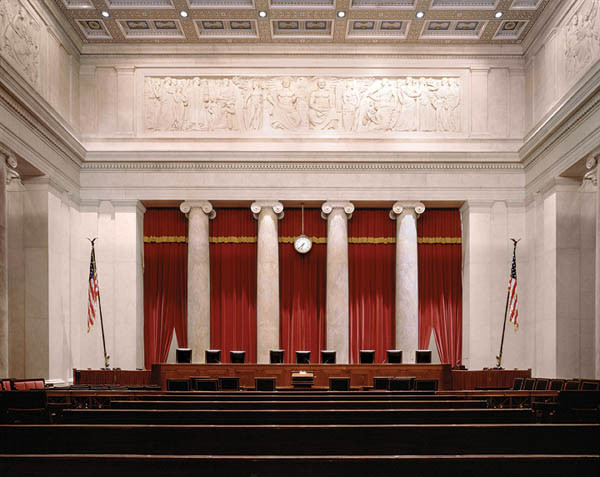 Currently, one case in front of the justices as part of its interim or emergency docket is the fate of mail-order access to mifepristone, a medication used as part of a regimen to end pregnancies. Two current emergency petitions, GenBioPro v. Louisiana and Danco Laboratories v. Louisiana, are under consideration this week on an expedited basis.
While merits cases at the Supreme Court take time to develop, the expedited mifepristone cases are typical of the current state of the emergency docket. Critics of the growing number of emergency applications to the Court refer to this set of cases as the Court’s “shadow docket,” a term coined by law professor William Baude in 2015 to describe what he called “a range of orders and summary decisions that defy its normal procedural regularity.” Not everyone agrees with that term and its definition, but the mifepristone cases will be front and center in the docket debate.
The GenBioPro v. Louisiana and Danco Laboratories v. Louisiana petitions come in the aftermath of the Supreme Court’s decision in Dobbs v. Jackson Women’s Health Organization (2022), which sent the issue of abortion regulation back to the states. After Dobbs, the Biden administration allowed the Food and Drug Administration (FDA) to expand access to mifepristone through online prescriptions without an in-person doctor visit. In October 2025, the state of Louisiana sued the FDA, claiming the medication had not been adequately tested and resulted in abortions considered as illegal in the state.
On May 1, 2026, the Fifth Circuit Court of Appeals issued a ruling in Louisiana v. FDA that agreed with Louisiana’s claims; however, three days later, the Supreme Court justice with responsibility for the Fifth Circuit, Samuel Alito, granted an administrative stay, which allowed continued mail access to mifepristone while the Court considered the matter. Two drugmakers, Danco Laboratories and GenBioPro, claimed various harms from the Fifth Circuit ruling.
Merits cases versus Non-Merits matters
Many people are familiar with what are considered “merits” cases as considered by the Supreme Court. These cases come from several different paths to the Court and typically involve a disagreement, or split, between decisions by federal circuits and state supreme courts, alleged violations of the Constitution and its precedents, or in some cases, disagreements between states. Public arguments are heard at the Supreme Court after briefs are filed by the parties involved and friends of the court. And the Court hands down its decisions after internal deliberations, with opinions attached.
Non-merits matters are all other appeals and requests considered by the Court that are not merits cases. The most common of these are petitions for writs of certiorari, or requests made to the Court to hear appeals. Various estimates of these “cert” petitions range from 4,000 to 8,000 per year, with 80 or so accepted by the Court for arguments each term. The Court also handles procedural orders about how cases are filed and time extensions for arguments.
The other major part of the Court’s non-merits matters docket are emergency orders involving requests for injunctive relief and stays. For parties seeking injunctions, they may seek a preliminary injunction, which is issued early in the legal process to preserve the status quo as a case makes its way through the courts and develops a record. A stay is an action taken by a court to pause a government action. Parties asking for a stay pending appeal often want the Supreme Court to pause an injunction issued by the lower courts while the appeals case is litigated. These are seen as temporary relief actions, unlike permanent injunctions that remain in place until a court decides a case on the merits.
According to the Congressional Research Service, the interim docket consists of cases involving preliminary injunctions and stays pending appeal. If parties on the interim docket seek expedited consideration claiming imminent practical harm, the cases are considered “emergency matters” that have been labeled as the "emergency docket or, by some scholars and commentators, the “shadow docket.”
Cases on the Interim Docket
One of the recent controversies over the interim or emergency docket is the increase of cases using that pathway to the Supreme Court.
In the current term, 51 significant emergency appeals were submitted to the Court, according to a list compiled by SCOTUSblog. As of May 12, 2026, seven applications were pending, including two appeals seeking “to pause a ruling from the U.S. Court of Appeals for the 5th Circuit preventing mifepristone from being prescribed by telemedicine and delivered by mail.” The remaining appeals are part of cases that were argued in front of the justices on the temporary protected status of immigrants, the use of presidential powers to remove executive officers, and the redistricting of congressional election maps.
On May 11, 2026, three interim docket cases involving Alabama’s redistricting maps were decided as moot by Justice Clarence Thomas. Among the other applications this term, per SCOTUSblog, the federal government prevailed in Trump v. Orr (about transgender and nonbinary identification language on passports) and Trump v. Boyle (about the firing of three Consumer Product Safety Commission members).
The frequent appearance of cases on the interim docket in the second Trump administration has been much discussed. In July 2025, Erwin Chemerisnky of UC Berkeley School of Law noted that the number of interim docket cases grew from 44 in the last year of the Biden administration to 113 during the first six months of the second Trump administration.
In his book, “The Shadow Docket: How the Supreme Court Uses Stealth Rulings to Amass Power and Undermine the Republic,” Steve Vladeck of the Georgetown University Law Center argued that the use of the interim docket has led to decisions from the Court with a significant impact on major cases with the benefit of full briefings, public arguments, and full written opinions from the justices.
In an online discussion with Vladeck in 2024, Trevor N. McFadden, a federal district judge of the United States District Court for the District of Columbia, noted that the use of the term “shadow docket” was problematic. “Using the term shadow docket when we’re really talking about the Court’s emergency docket is both confusing — because it’s over-inclusive — and misleading, because it conjures images of something sinister or foreboding. In reality, most courts have a docket to handle matters that require expedited treatment,” McFadden said.
To be sure, the debate over the interim docket, and the appropriate names of actions taken under its jurisdiction, will not be going away soon. In March 2026, Justices Ketanji Brown Jackson and Brett Kavanaugh spoke at an event in Washington when the subject of the interim docket came up, including in the context of the mifepristone cases.
According to an account from the New York Times, Kavanaugh said emergency requests were “not a new phenomenon” and had been growing during the Biden administration. Kavanaugh cited an emergency request by the Biden administration to keep mifepristone access in place during the appeals process.
Jackson believed the Trump administration was using the docket to approve new policies, citing the mifepristone cases. “I just feel like this uptick in the court's willingness to get involved ... is a real unfortunate problem," Jackson told an audience, according to various reports. “It's not serving the court or this country well.”
Scott Bomboy is the editor in chief of the National Constitution Center.