


On the first Monday in October, the Supreme Court will begin its new term with one of the biggest cases on its docket.
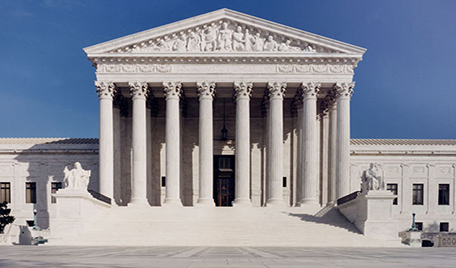 On October 5, the justices will hear arguments in Suncor Energy (U.S.A.) Inc. v. Commissioners of Boulder County (25-170), which it added to its docket in February 2026.
Energy giants Suncor Energy and Exxon Mobil Corporation have appealed a divided ruling from the Colorado Supreme Court in favor of the City of Boulder and Boulder County, Colorado. Boulder sued under state common law over claims relating to the local negative effects of greenhouse-gas emissions on their governments. Suncor Energy is arguing that federal precedents prevent Boulder from suing over damage caused by emissions from outside of the region.
The justices are considering two questions. First, whether the Court has statutory and Article III standing to consider the case. And second, whether federal law precludes state-law claims seeking relief for injuries allegedly caused by the effects of interstate and international greenhouse-gas emissions on the global climate.
The arguments will be closely watched with numerous similar environmental lawsuits in progress against energy producers from state and local governments making similar claims. Suncor stated that at least 60 state and local governments had brought similar lawsuits as of August 2025.
The Lawsuits from Boulder and the State Supreme Court
The legal fight from Boulder started in 2018 when Boulder brought various claims under Colorado law, alleging that Suncor’s worldwide conduct led to global climate change, which also caused a variety of negative effects in Colorado. Suncorp countered that the federal Clean Air Act (CAA) and federal common law precluded Boulder’s claims.
The case first went through the federal legal system. In 2021, the Supreme Court remanded the case to settle jurisdictional questions, and it then denied the case in 2023 over the objections of Justice Brett Kavanaugh, allowing it to proceed in state court.
On May 12, 2025, the divided Colorado state supreme court ruled in favor of Boulder. Judge Richard L. Gabriel wrote for the five-justice majority that Boulder could pursue its damages claims at state district court.
“Boulder asserts claims for public and private nuisance, trespass, unjust enrichment, and civil conspiracy, and it seeks damages for the role that defendants’ production, promotion, refining, marketing, and sale of fossil fuels has allegedly played in exacerbating climate change, which, in turn, has purportedly caused harm to Boulder’s property and residents,” Gabriel wrote. “Boulder’s claims are not preempted by either federal common law or the CAA. In so concluding, we are not persuaded by defendants’ myriad arguments to the contrary.”
Judge Carlos Samour, joined by Judge Brian Boatright, dissented. “Because state law remains incompetent to regulate interstate and international air pollution, I disagree that Boulder can prosecute its claims. Unlike the Blue Fairy that brought Pinocchio to life, the CAA did not magically breathe life into state-law tort claims that had been as lifeless as a wooden puppet,” he said. “I’m concerned that this decision will contribute to a patchwork of inconsistent local standards that will beget regulatory chaos.”
The Arguments at the Supreme Court
In its petition to the Supreme Court, Suncorp made several basic arguments under the Constitution’s Supremacy Cause, Article VI, Clause 2, which states, in releqant part, “[T]his Constitution, and the laws of the United States … shall be the supreme law of the land; and the judges in every state shall be bound thereby, anything in the Constitution or laws of any State to the contrary notwithstanding.”
“The {Supreme} Court has recognized for over a century, the structure of our constitutional system does not permit a State to provide relief under state law for injuries allegedly caused by pollution emanating from outside the State,” Suncorp said.
Suncorp also asked the Court to consider the widespread impact of the case. “There are few, if any, more consequential questions pending in the lower courts concerning the relationship between state and federal law,” it argued. Upholding the Colorado supreme court ruling would allow “state-law claims asserted by dozens of States and municipalities can [to] proceed—and to do so before the energy industry is threatened with potentially enormous judgments.”
Suncorp also cited the state court decision as affecting the federal government’s foreign-policy powers, and that the Supreme Court had final jurisdiction over the case.
In its initial response brief, Boulder supported the Colorado supreme court ruling and made several counterarguments. It pointed out the state court’s decision was correct and that the Supreme Court’s precedents barred the Clean Air Act from pre-empting the state’s legal jurisdiction over the dispute.
Boulder also argued that because courts had once created federal common law to regulate interstate air pollution, the Constitution required questions to be governed “exclusively” by a uniform rule of federal law. But none of their cases cited by Suncorp addressed what happened when Congress displaced a federal common law with a statute, as it did with the Clean Air Act, Boulder claimed.
After the Supreme Court accepted the case, Boulder made several other arguments and insisted the case should be dismissed for lack of jurisdiction. “How to allocate the cost of climate alteration is a matter of genuine debate. The structure of our Constitution assigns responsibility for resolving that debate to the states and the political branches of the federal government,” it reasoned, and not the Supreme Court at this time.
Boulder also said the case was not at the Court at the right time: “The Colorado Supreme Court has yet to resolve petitioners’ contention that respondents fail to state a claim, or even which state’s law answers that question.”
In its final brief to the Court, Suncorp insisted that state supreme court’s decision represented an overreach of powers and the Supreme Court had the power to hear arguments under Cox Broadcasting v. Cohn (1975).
Suncorp also labeled the Boulder lawsuit as novel: “This litigation is unlike any other in American history—with climate-change advocates seeking to bypass the political process and achieve sweeping policy objectives through state-law causes of action against arbitrary groups of defendants in handpicked forums.”
Deputy Solicitor General Sarah M. Harris also filed a brief in support of Suncorp and will take part in arguments. Harris argues that “state-law claims contravene the Constitution’s territorial limits on state authority and the federal government’s exclusive role over foreign affairs.”
Given the large financial stakes and the broad constitutional questions involved, Suncorp Energy v. Boulder should receive considerable attention as the first arguments in another active Supreme Court term.
On Sept. 28, 2026, Scott S. Harris, the clerk of the Supreme Court, said Justice Samuel Alito would not participate in the case.
Scott Bomboy is the editor in chief of the National Constitution Center.