


The Supreme Court will hear a dispute between the Trump administration and a watchdog group over public access to records of the Department of Government Efficiency (DOGE), which played a key role in the mass firings of federal workers and cancellation of billions of dollars in grants and contracts in the early days of President Donald Trump’s second term.
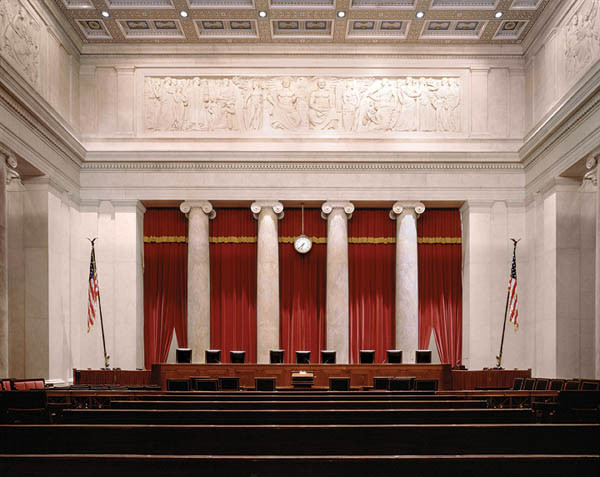 The case, U.S. DOGE Service v. U.S. District Court for the District of Columbia, 25-1103, will be argued early next year.
The administration is trying to keep the group, Citizens for Responsibility and Ethics in Washington, from obtaining the records by arguing that DOGE is not subject to the Freedom of Information Act (FOIA). The litigation concerns whether CREW should be able to obtain information, or discovery, to make its case that DOGE, formally known as the U.S. DOGE Service or USDS, falls under the federal sunshine law.
Lower courts have sided with CREW, with United States District Court for the District of Columbia Circuit Judge Christopher Cooper finding that USDS is “likely an agency subject to FOIA.” But the Supreme Court issued a preliminary ruling in the administration’s favor when the matter came to the justices last year on their emergency docket. With the three liberal justices in dissent, the court held that a lower court order allowing CREW to obtain discovery from USDS was too broad.
The new case will allow the high court to provide a more lasting resolution.
DOGE was the brainchild of billionaire Elon Musk, who once promised he could find $1 trillion in budget cuts in the Trump administration’s first year. Trump signed an executive order creating DOGE on the first day of his second presidential term in January 2025.
CREW requested records about DOGE a few days later, then filed a federal lawsuit when USDS said it would not comply.
The main dispute between CREW and the administration is over whether the agency wields independent authority or is merely a board that exists to advise the president.
FOIA states plainly that it applies to the Executive Office of the President, but subsequent court decisions have narrowed the applicability of FOIA to exempt entities within the Executive Office that exist solely to advise and assist the president.
In the Justice Department’s petition to the court, Solicitor General D. John Sauer wrote that USDS does not exercise independent authority. “The President has directed USDS to coordinate with agency DOGE teams on the President’s efficiency goals, but those teams operate under each agency’s authority, not USDS,” Sauer wrote.
CREW offered a starkly different assessment in its response urging the Court to stay out of the case. “USDS tore through the federal government, terminating billions of dollars in contracts and programs, shuttering agencies, and firing tens of thousands of public servants,” according to CREW’s brief. The lead author of the brief is Nathaniel Zelinsky of the non-partisan Washington Litigation Group, which is representing CREW in the case.
CREW narrowed what it was asking for and the U.S. Court of Appeals for the District of Columbia Circuit approved, but Sauer said neither got the Supreme Court’s message.
The appellate panel “has continued to approve intrusive discovery against a presidential advisory body without adequate consideration for the separation of powers, the FOIA statute, and this Court’s previous order,” Sauer wrote.
For its part, CREW argued that the administration was seeking a broad ruling that would frustrate the aims of the federal open-records law.
“The government’s proposed rule is impossible to square with statutory text, and it would be ripe for abuse. Indeed, it would allow the executive to establish hugely consequential entities like USDS, while sidestepping an important sunshine law, simply by placing those entities in EOP and obscuring the precise nature of their delegated authority,” lawyers for CREW said.
The administration relies heavily on the 2004 Supreme Court decision in Cheney v. US. District Court, which concerned efforts by watchdog groups to obtain records of an energy task force that was chaired by then-Vice President Dick Cheney.
The justices put the brakes on lower court rulings allowing discovery, saying in a 7-2 ruling that there was a “paramount necessity of protecting the executive branch from vexatious litigation.”
CREW argued that the current case is vastly different from Cheney, noting that the sitting vice president was part of the task force and that no similarly high-ranking official is involved in USDS.
The administration also objects to CREW’s desire to depose USDS Administrator Amy Gleason. Sauer wrote that allowing CREW’s lawyers to question Gleason under oath would intrude “into the autonomy and confidentiality of presidential advisors.”
But CREW responded that it is seeking Gleason’s testimony because the administration submitted her declaration in support of its argument that USDS is only an advisory body. “Only Gleason can testify about the personal knowledge underlying her assertions,” CREW’s lawyers said.
A decision in the case is expected by late June.
Mark Sherman is a regular contributor to Constitution Daily. Sherman covered the Supreme Court for the Associated Press for 20 years, and he has previously written about the Justice Department, health care, and national politics.
Editor’s Note: Blog posts written by contributors reflect the analysis and opinions of the authors, and do not represent the opinions or positions of the National Constitution Center.