

When do a city’s plans to redevelop a municipal park conflict with a Native American group’s use of part of the park for religious ceremonies?
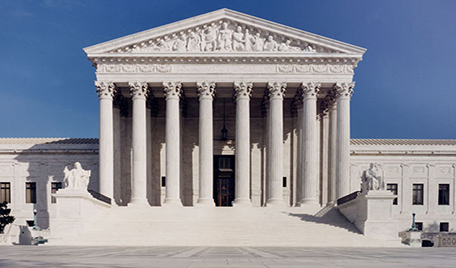 In Perez v. City of San Antonio, the Supreme Court has been asked to grant a petition for review from Gary Perez and Matilde Torres, members of the Lipan Native American Church, which has used a bend in the San Antonio River for decades for religious observances. Renovation plans from the city of San Antonio would remove a section of trees at the site used for nesting by migratory birds, including cormorants, that are considered sacred by the church and part of their religious ceremonies.
A federal district court allowed the church to continue to worship at the site, but it did not block the city’s plans to redevelop the same site. Then, the United States Court of Appeals for the Fifth Circuit held that the church failed to prove in four separate religious freedom claims that it would succeed in court.
On June 26, 2026, the church filed a petition for a writ of certiorari with the Supreme Court. After the city of San Antonio waived its right to respond, the justices considered Perez v. City of San Antonio in private conference. It then asked San Antonio to file a response by Sept. 30, 2026. About a dozen religious groups have filed amicus briefs with the Supreme Court that support the church as San Antonio prepares its own response.
A Conflict Between Public Policy and Religious Faith
Central to the Lipan Native American Church’s arguments are the First Amendment’s Establishment and Free Exercise Clauses, which read that “Congress shall make no law respecting an establishment of religion, or prohibiting the free exercise thereof.”
In its appeal to the United States District Court for the Western District of Texas, the church alleged San Antonio violated its rights under First Amendment’s Free Exercise Clause, Texas’s state Religious Freedom Restoration Act (TRFRA), and the Texas Constitution.
The federal district court agreed that the church had a “sincere religious belief,” allowing it limited group access to the river area, but unplanned, unsupervised individual access was seen as impractical. The district court said the city had “a compelling government interest for public health and safety” in removing the trees. It cited expert testimony that dissuading the cormorants to nest elsewhere was in the public’s interest.
On appeal, the Fifth Circuit affirmed the district court’s decision, and it agreed to a request from the petitioners for the Texas Supreme Court to respond to the church’s question about its freedom-to-worship claim under the state’s Texas Religious Services Clause. The clause reads: “This state or a political subdivision of this state may not enact, adopt, or issue a statute, order, proclamation, decision, or rule that prohibits or limits religious services, including religious services conducted in churches, congregations, and places of worship, in this state by a religious organization established to support and serve the propagation of a sincerely held religious belief.”
The state supreme court ruled the clause did not extend to the preservation and management of publicly owned lands, nor did it require preserving natural elements needed for religious services on public property.
The case returned to the Fifth Circuit, where the court issued a second opinion affirming the district court's decision. The appeals court noted that that the case record indicated that various areas of the Park had “become nearly unusable for 10 months of the year due to the bird density/habitat. The resulting feces caused damage to various park amenities, including picnic tables, water fountains, playground equipment, restrooms, and sidewalks.”
The appeals court also said that repairing river retaining walls, like the “amassed bird guano” situation, was a compelling interest, which was complicated when the “relocation or removal of even one, single tree” conflicted with the Migratory Bird Treaty Act.
It held the church did not experience a substantial burden because it continued “to have virtually unlimited access to the Park for religious and cultural purposes,” and San Antonio had met the requirements of the Free Exercise Clause.
The church filed two other en banc rehearing petitions that were denied, with a dissent from six judges, and a second dissent.
The Petition at the Court and Supporting Briefs
The church is presenting two questions to the Supreme Court. In the first question, the church asks if government action can override “a claimant’s sincere theological judgment of what the religious exercise requires” without violating its First Amendment rights.
The second is “whether the government can satisfy its burden to prove that its action is the least religiously restrictive means available when, after notice that its action would burden religious exercise, the government admits that it failed to consider any workable alternatives prior to litigation.”
The plaintiffs argue that there are two circuit splits that merit the Court’s attention. “The first split involves courts telling believers that their honest theological convictions are wrong,” they argue, pointing to a Supreme Court decision in Zubik v. Burwell (2016) that it claims left the question unanswered.
The second circuit split, the plaintiffs argue, is that San Antonio’s approach to the problem did not require it “to investigate or account for less-restrictive alternatives before claiming that none existed.” They argue that six federal circuit court precedents require more investigation, while five circuits don’t.
“Unless this Court intervenes, that split will remain, and some lower courts will continue to allow government to burden religious exercise without ever even considering less restrictive alternatives,” they conclude in their petition.
While San Antonio has yet to respond, the friends of the court briefs include filings from various religious organizations and other interest groups. In a brief from the Jewish Coalition for Religious Liberty, the group argues that the Supreme Court should take the case to “hold that, under the First Amendment, courts cannot make theological judgments disguised as substantial burden analysis.”
The Human Rights Defense Center makes a similar argument: “This case presents a question of profound importance not only for the Petitioners but for all individuals whose religious practices are subject to government interference: whether secular courts may make theological judgments about what a claimant’s religion requires.”
To be sure, there may be briefs supporting San Antonio’s position and the Fifth Circuit’s rulings as the case eventually returns to private conference at the Supreme Court. But the current Court has not been shy about accepting religious rights cases and only four of the nine justices are needed for the Court to accept the case for arguments.
Scott Bomboy is the editor in chief of the National Constitution Center.