


Last week in the Texas re-redistricting case, the Supreme Court had the opportunity to slow or stop what has been called a race-to-the-bottom between Democratic led and Republican-led states over more seats for political advantage in the 2026 mid-term elections. Few court watchers were surprised that the Court’s conservative majority, as it did in 2019, refused to seize the opportunity.
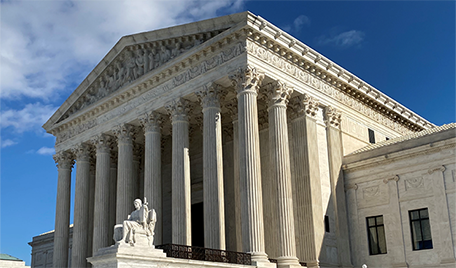 In 2019 in Rucho v. Common Cause, the then 5-4 conservative majority, led by Chief Justice John Roberts Jr., ruled that federal courts could no longer review claims that a state legislature had engaged in excessive partisan gerrymandering when redistricting after a census. The problem, according to the majority, was that there was no standard by which judges could measure how extreme a gerrymander was, even though some lower courts and states appeared to find ways to do so.
The Rucho majority opinion triggered what was likely the most important and strongest dissent by Justice Elena Kagan since she took her seat on the high court in 2010. Referring to the partisan gerrymanders in the Maryland and North Carolina cases, Kagan, writing for herself and Justices Ruth Bader Ginsburg, Stephen Breyer and Sonia Sotomayor, said:
“These gerrymanders enabled politicians to entrench themselves in office as against voters’ preferences. They promoted partisanship above respect for the popular will. They encouraged a politics of polarization and dysfunction. If left unchecked, gerrymanders like the ones here may irreparably damage our system of government.
“Now back to the question I asked before: Is that how American democracy is supposed to work? I have yet to meet the person who thinks so.”
In the Texas case last week, Abbott v. League of United Latin American Citizens, the justices acted on Texas’ emergency application asking them to block a three-judge district court’s ruling. That court, led by a Trump appointee, ruled that the GOP-led state legislature had created an unconstitutional racial gerrymander when, in an unusual mid-decade redistricting, it drew five new Republican majority districts at the behest of President Donald Trump and the U.S. Justice Department.
The Supreme Court’s conservative majority, in an unsigned order, overrode the district court’s ruling, despite the district court’s 160-page opinion outlining its analysis and findings of facts following a nine-day trial. The majority briefly noted errors by the lower court: the district court intervened too close to the 2016 mid-term election (despite it was 11 months away) and failed to hold it against the challengers for not producing a viable alternative map (although such a map was never required before when there was direct evidence of race-conscious map drawing, as the district court found).
Justice Samuel Alito wrote a concurring opinion in which he emphasized that the Texas legislature acted with purely partisan motives and drew a purely partisan map. But the issue for the district court was whether in doing so, the legislature used unconstitutional race-conscious measures to achieve its partisan goal.
Not surprisingly again, Justice Kagan wrote a stinging dissent to the majority’s order which was probably written by the Chief Justice. Kagan and Roberts have butted heads in the past over a shared interest in the structure of government and how democracy should work.
Their interest is shared, but their approaches may diverge as they did here and in 2019, and in cases involving separation of powers. In fact, it was clear from arguments Monday in Trump v. Slaughter, they likely will not agree on the president’s power to fire heads of multi-member commissions who have for-cause removal protection under law.
In her Texas dissent, Kagan accused the majority of “eagerness to play act” the district court by overturning its findings of racial linedrawing, which under court precedents were entitled to considerable deference. And, she challenged the majority's statement that its very brief evaluation of the case was “preliminary.”
“The results, though, will be anything but,” Kagan said. “This Court’s stay guarantees that Texas’s new map, with all its enhanced partisan advantage, will govern next year’s elections for the House of Representatives. And this Court’s stay ensures that many Texas citizens, for no good reason, will be placed in electoral districts because of their race. And that result, as this Court has pronounced year in and year out, is a violation of the Constitution.”
Another “result” is to encourage that race to the bottom.
One day after the majority’s order, the Indiana State House passed a congressional map that split the city of Indianapolis into four districts which could help the GOP win all nine congressional seats by ousting the only two Democratic-controlled seats. The map still must pass the state senate.
“If you launch a missile, the other side is going to launch as well,” said a Democratic Texas representative in a Washington Post interview. “Every blue state now has to do something. It is no longer acceptable to sit on your ass.”
Marcia Coyle is a regular contributor to Constitution Daily. She was the Supreme Court Correspondent for The National Law Journal and PBS NewsHour who has covered the Supreme Court for more than three decades.