


A challenge to a formula used by a county outside of Washington, D.C., to determine who can attend public magnet schools could have wider implications after the Supreme Court agreed to hear the dispute earlier this month.
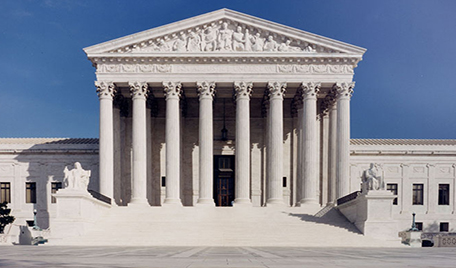 In Association for Education Fairness v. Montgomery County Board of Education, the Court will evaluate a lottery admissions program developed by the Montgomery County Public Schools system during the COVID-19 pandemic.
The Association for Education Fairness (AFEF) is an organization of Montgomery County parents formed to advocate for merit-based admissions to advanced academic programs. Its members have children who intend to apply to such programs. The AFEF alleged that the lottery program discriminated against Asian American students by limiting the group’s overall share of admissions to the magnet middle school programs compared with years prior to the new system.
Montgomery County insisted that the lottery system was race-neutral and race-blind and that it did not violate the 14th Amendment’s Equal Protection Clause. The Fourth Circuit Court of Appeals upheld a district court decision in favor of Montgomery County. The appeals court ruled that the AFEF failed to prove that the lottery had sufficient disparate impact on Asian American students as a group.
Courts find evidence of disparate impact when a seemingly neutral government policy or action causes disproportionate, unjustified negative harm to a group, regardless of intent.
The Supreme Court accepted the case on October 19, 2026, to settle the following question: “Whether a plaintiff challenging a facially neutral admissions policy as racially discriminatory must establish that the targeted racial group suffered an aggregate disparate impact relative to its share of the applicant pool.”
The path to the Supreme Court
In its petition to the justices, the AFEF wanted the justices to reconsider a benchmark twice rejected by the Supreme Court for arguments. The “aggregate disparate-impact benchmark” is a statistical measure used to determine discrimination as a policy outcome. In the case of school systems, the benchmark is used to establish that a policy designed to be neutral actually results in discrimination against a protected class. In this case, the protected class is Asian American students.
“Parent groups have twice before asked this Court to decide whether those challenging admissions criteria for competitive public schools must satisfy an aggregate disparate-impact benchmark before courts may consider evidence of discriminatory intent,” argued AFEF in its petition to the Supreme Court. The appeals in those two cases, Coalition for TJ v. Fairfax County School Board (2023) from the Fourth Circuit Court of Appeals and Boston Parent Coalition for Academic Excellence Corp. v. School Committee for the City of Boston (2023) from the First Circuit Court of Appeals, were not accepted by the Supreme Court, with dissents from Justice Samuel Alito with Justice Clarence Thomas joining.
Since then, the Second Circuit and Third Circuit have ruled that the aggregate benchmark test wasn’t needed to prove an intentional discrimination claim, and challengers could move forward making Equal Protection Clause claims alleging intentional discrimination.
In this case, the AFEF argued that the Montgomery County Public Schools system became concerned about a substantial increase in Asian American students’ enrollment in its magnet programs based on a merit-based admissions system centered on grades, testing, and teacher reviews. The school system, it claims, started implementing changes to achieve racial balancing in the admission process.
For the lottery program developed during COVID-19, AFEF cited that students who attended higher-poverty schools had their testing scores adjusted, or normed, based on income percentiles to become eligible for the lottery. The district court, however, determined that the AFEF failed to prove the share of Asian American students admitted under the lottery was lower than the Asian American total share of the applicant pool eligible for the magnet programs.
In a response brief, the Montgomery County Public Schools system stated that several factors led to the lottery admissions system now in place, instead of an in-person exam that was an important part of the process.
“In prior years, the admissions process had relied on an in-person aptitude exam. But the challenges of the pandemic, and the school district’s attendant shift away from in-person instruction, made it impossible for the district to use the exam,” the county claimed. “Instead, the school district decided to rely on a race-neutral, race-blind lottery to select students for admission.”
The school system stated it started to expand the pool of eligible students in 2017 by seeking out students to take the aptitude exam, which resulted in more admissions to the magnet schools from high-poverty schools. It also began a “local norming” program to “to select students for magnet programs by comparing their academic performance to the performance of other students in school communities with similar economic circumstances.”
The lottery system went into effect when the pandemic made it difficult to conduct in-person exams. The school system considered grades and comparing “performance to other students from elementary schools of a similar poverty level” As qualifying factors. Once students were entered into the lottery, their assignment to a magnet school or local school was random.
The larger questions at the Court
One basic question that will be considered as more briefs are submitted to the Court is its precedent in Village of Arlington Heights v. Metropolitan Housing Development Corp. (1977). In a case involving racial discrimination in zoning, a divided Court held in Arlington Heights that a finding of disparate impact by itself was not enough to prove unconstitutional intentional discrimination under the 14th Amendment’s Equal Protection Clause. "Disproportionate impact is not irrelevant, but it is not the sole touchstone of an invidious racial discrimination,” wrote Justice Lewis Powell in his majority decision.
The AFEF believes the Fourth Circuit decision undermines the Arlington Heights standard. “The result is a rule that marginalizes the Arlington Heights inquiry, permits racial balancing by proxy, treats equal protection as a group right rather than an individual one, and insulates some forms of intentional discrimination from judicial review,” it concluded.
Montgomery County presents the opposite view. “The District Court held that AFEF did not plausibly allege discriminatory intent, a necessary element of its claim under Arlington Heights,” it noted in its reply brief. “Under Arlington Heights, ‘[p]roof of racially discriminatory intent or purpose is required to show a violation of the Equal Protection Clause.’ Disparate impact alone is not enough.”
Another issue of note is the potential national impact of the Court’s decision. As noted in the AFEF’s petition, “the criteria used to admit students to competitive public schools are of substantial importance to many families, particularly in the Nation’s largest school districts. These schools provide exceptional educational opportunities to students who might otherwise lack access to comparable academic programs.”
If the Court does resolve the dispute in favor of the AFEF, the case could head back to the district court to consider the Equal Protection Clause claim. For now, arguments are expected to be held next year with a decision by late June 2027.
Scott Bomboy is the editor in chief of the National Constitution Center.