

What happens when local zoning laws are interpreted to prevent the construction of a religious site on a property associated with a church? The Supreme Court will decide that question in its new term in a case taken by the justices last week.
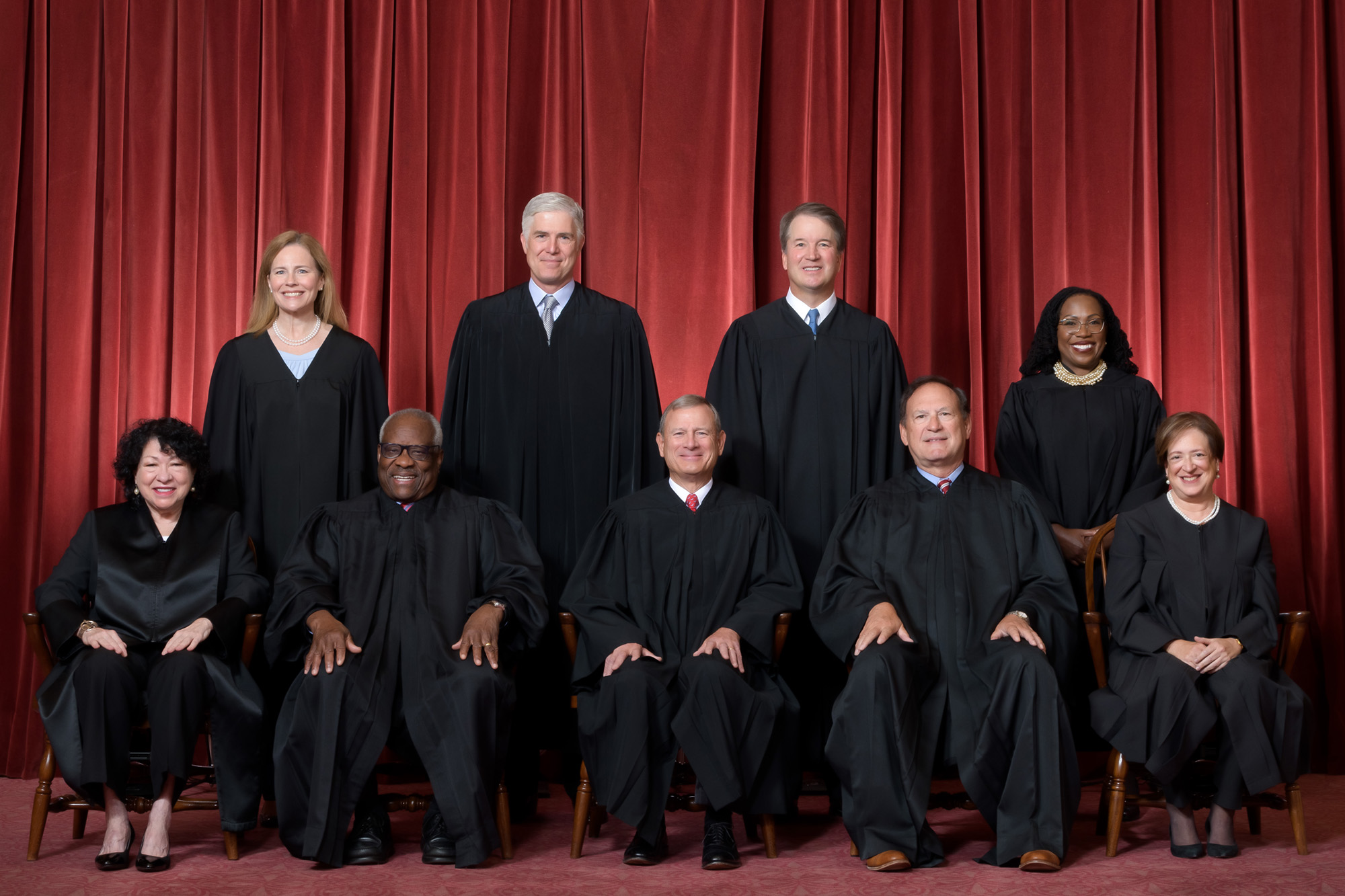 On Oct. 1, 2026, the Court granted a petition for a writ of certiorari in Missionaries of Saint John the Baptist v. Joel Frederic. St. John claims the zoning decision placed a “substantial burden” on its First Amendment free exercise rights, citing a provision under the Religious Land Use and Institutionalized Persons Act (RLUIPA).
In return, Joel and Elizabeth Frederic, neighbors to the proposed site, argue the Kentucky Supreme Court correctly interpreted the zoning regulations of Park Hills, Kentucky, to exclude the planned grotto honoring the Virgin Mary. The state court ruled St. John had alternative options for its grotto project, and the zoning regulations were not an unreasonable burden.
Now, the Supreme Court will review the project in the context of the federal RLUIPA statute and basic constitutional zoning powers.
Local Zoning and Federal Religious Protections
The ability of local governments to pass and enforce zoning laws was affirmed in the Supreme Court’s landmark decision in Village of Euclid v. Ambler Realty Co. (1926). Ambler Realty owned property targeted for industrial development in Euclid, a suburb of Cleveland. The Euclid council passed a zoning law that restricted such industrial developments, and Ambler sued on 14th Amendment due process and equal protection grounds.
Writing for a divided Supreme Court, Justice George Sutherland held that “the segregation of residential, business, and industrial buildings” had many public safety benefits. Sutherland said that before a zoning ordinance could be declared unconstitutional it had to be proven to be “arbitrary and unreasonable, having no substantial relation to the public health, safety, morals, or general welfare.”
These general police powers of state and local governments are affirmed by the principle of federalism and the Constitution’s 10th Amendment, which states that “[t]he powers not delegated to the United States by the Constitution, nor prohibited by it to the states, are reserved to the states respectively, or to the people.”
When Congress passed RLUIPA in 2000, the law contained language intended to protect the free exercise of religious rights in the context of state and local zoning laws.
According to the Justice Department, RLUIPA prohibits any land-use regulations that impose a “substantial burden” on the religious exercise of a person or religious assembly or institution except where justified by a “compelling governmental interest” and when the government pursues that interest in the least restrictive way possible. In legal terms, this is known as a strict security test that presents a very high bar for the government to overcome.
In its petition to the Supreme Court, St. John stated the Kentucky Supreme Court’s decision lacked adequate justification for the restrictions placed on the grotto project, and it was treated differently as a religious institution compared with a secular institution.
St. John owns a church, Our Lady of Lourdes, that was built in 1930. Although the church is located in a residential zone, the church existed before Park Hills had a zoning code, and it is permitted as a nonconforming use as a religious institution in the residential area. Under general zoning concepts, a property owner can continue with an unconforming use until the use is different or the property is abandoned.
The church later entered into a lease agreement with a trust for a property that adjoins the church. St. John planned to use the adjacent property for the grotto. St. John applied to the Park Hills Board of Adjustment for “permission to install a customary accessory structure (i.e. grotto) to the existing conditional use for a place of religious worship,” according to court records. After a public hearing, the Board of Adjustment granted a conditional use permit and setback variances on the condition the property was deeded to St. John.
The Frederics filed a complaint about the Board of Adjustment decision, noting that the grotto could only be situated on a property adjacent to an arterial street under the local zoning code, which the church was not on an arterial street. The Frederics were concerned about increased community traffic. The circuit court ruled in favor of St. John, but an appeals court unanimously reversed the lower court’s ruling. It held that the Board of Adjustment exceeded its statutory zoning authority in granting St. John a conditional use permit and variances since it expanded the scope of the church’s preexisting nonconforming use, an act that violated the local zoning code.
The Kentucky state supreme court agreed with the appeals court, and it held that the appeals court decision did not violate RLUIPA, although it came to that conclusion on different grounds. It cited the Sixth Circuit’s decision in Livingston Christian Schools v. Genoa Charter Twp (2017) as guiding precedent, stating that “the religious institution has a feasible alternative location from which it can carry on its mission.”
The Arguments on Both Sides
The Supreme Court only accepted one of two questions posed in St. John’s petition. It declined to consider if the church was treated differently than a secular institution. But it will consider arguments about RLUIPA’s Substantial Burden Provision.
“The Kentucky Supreme Court held that denying petitioner a permit to construct the shrine does not impose a substantial burden on petitioner’s religious exercise solely because petitioner could build a smaller shrine on a different plot and because petitioner was aware of a prohibitory ordinance before it sought a permit,” it argued.
St. John also stated that “well-recognized conflicts among circuits and state supreme courts” exist about RLUIPA’s Substantial Burden Provision and the lower courts were deeply divided on the statute’s guarantees.
“Because these questions recur in communities across the country wherever religious organizations seek to build or expand, this Court’s resolution of the conflicts is critical,” it concluded.
In a reply filing, the attorneys for the Frederics repeated the basic argument accepted by the Kentucky supreme court that the local zoning board lacked the power to allow the grotto on the adjacent lot and that St. John could build a similar grotto on its church property.
St. John in its most-recent filing noted that a recent Third Circuit Court of Appeals decision, Anash v. Borough of Kingston (2026), strongly supported its argument. In Anash, a divided court said that the municipality of Kingston, Pennsylvania, violated the religious rights of a rabbi protected under RLUIPA. The rabbi sought to use two buildings he owned in a commercial district for religious instruction, housing students, maintaining an office, and for prayers. The municipality issued two notices of zoning-ordinance violations.
“Unless land use regulation satisfies strict scrutiny, the choice of where the exercise of religion can take place should be left to persons with rights of access to and use of real property—not to zoning codes and landmarking laws promulgated by governments,” the Third Circuit concluded.
In taking St. John’s appeal, at least four Supreme Court justices at private conference agreed to consider the Substantial Burden Provision. So far, the Court has not considered the provision in detail, and any substantial ruling could have wide-ranging impacts on local zoning laws nationally.
Scott Bomboy is the editor in chief of the National Constitution Center.