


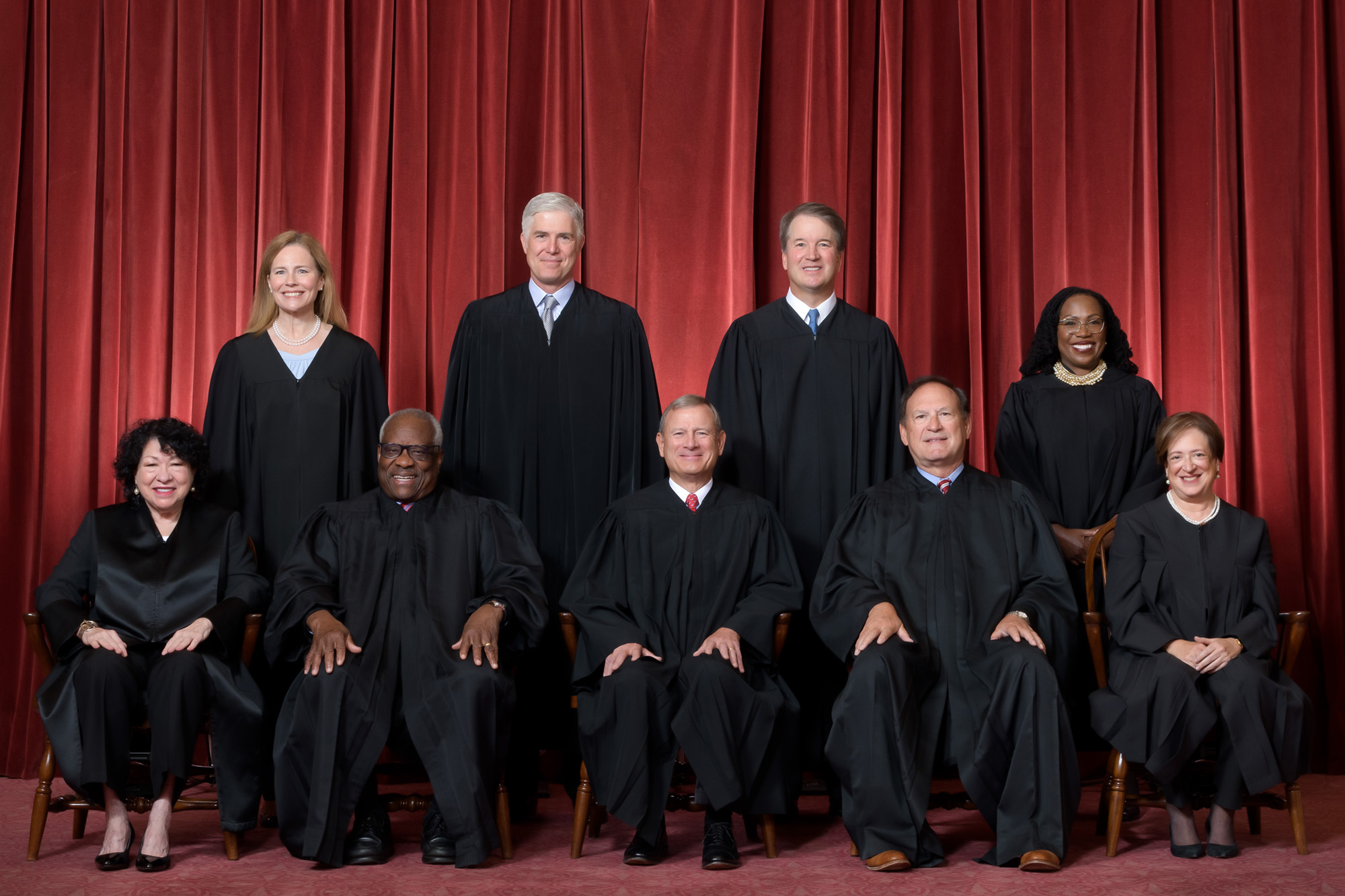
On the Supreme Court’s busy arguments schedule next month is an Eighth Amendment dispute over excessive fines, a subject until recent years that was rarely considered by the nation’s highest court.
 In this case, the justices are about to weigh whether the state of Alaska can take a bush pilot’s airplane, worth $95,000, over a six-pack of Budweiser that was bound for a remote, alcohol-free village.
That, in slightly simplified terms, is the basic argument raised in Jouppi v. Alaska, a case set for arguments on Dec. 1, 2026, that involves a lesser-known part of the Eighth Amendment. The amendment forbids “cruel and unusual punishment” but also excessive fines and bail.
Authorities’ seizure of property, known as forfeiture, has soared in recent decades under laws that have made it easier for law enforcement agencies to keep the proceeds when the property is later sold. The Alaska dispute could allow the justices to provide more guidance about proportionality, or tailoring the forfeiture to the severity of the crime.
The case reaches back to April 3, 2012, when Alaska state troopers armed with a search warrant found 72 beers on a Cessna airplane that pilot Kenneth Jouppi was readying to fly from Fairbanks to Beaver, on the banks of the Yukon River 14 miles below the Arctic Circle. At least one six-pack of beer was visible in a shopping bag among other groceries, the troopers said.
Beaver is among 71 “dry” villages that forbid the importation of alcohol under a state law that allows local communities to ban alcohol, according to the state’s Alcoholic Beverage Control Board.
Jouppi, now 83, is the owner of the AirKen taxi service. He had flown planes in Alaska since the 1970s and had no prior criminal record before a jury convicted him of knowingly transporting alcohol to a dry village. The crime was a misdemeanor for which he was sentenced to three days in jail and fined $1,500. AirKen also was fined $1,500.
Prosecutors also sought to take Jouppi’s Cessna, under a provision of state law that makes “aircraft, vehicles, or Vessels” used to carry alcohol to dry villages “subject to forfeiture.” That the beer belonged to a passenger who was visiting her husband, then-Beaver’s postmaster, didn’t matter. Nor did the quantity of beer Jouppi was transporting or his insistence that he was unaware of the alcohol.
After the case wound its way up and down state courts, the Alaska Supreme Court ruled last year that “the forfeiture of Jouppi’s airplane is not grossly disproportional to the gravity of the offense for which he has been convicted and, therefore, the forfeiture does not violate the Excessive Fines Clause of the Eighth Amendment.”
The quantity of beer was unimportant; the Alaska justices wrote. “It is clear to us that the legislature determined that the harm from even a six-pack of beer knowingly imported into a dry village is severe enough to warrant forfeiture of an aircraft,” they wrote.
The Supreme Court agreed in July to hear Jouppi’s appeal.
The high court has only rarely taken up cases over excessive fines. In 1998, Justice Clarence Thomas wrote for a 5-4 court in U.S. v. Bajakajian that “a punitive forfeiture violates the Excessive Fines Clause if it is grossly disproportionate to the gravity of a defendant’s offense.”
Then in 2019, the Supreme Court decided in Timbs v. Indiana that the ban on excessive fines applies to states as well as the federal government, as it had previously done for most of the rest of the Bill of Rights.
Timbs went to court to challenge the seizure of his $42,000 Land Rover after he pleaded guilty to selling $400 worth of heroin. He was given no jail time and the maximum fine he could have faced was $10,000, less than a quarter the value of the Land Rover.
Indiana courts eventually ordered the vehicle returned to Timbs, ruling that the seizure was disproportionate to the severity of the crime. The not-for-profit Institute for Justice, which represented Timbs, also is arguing on behalf of Jouppi at the Supreme Court.
The main issue at hand is how courts should evaluate whether a fine is excessive, by focusing on a specific defendant’s wrongdoing or taking a more abstract view of the situation.
State and federal courts are divided on this question. Alaska’s top court “examined the gravity of the defendant’s offense at a stratospheric level of abstraction,” Jouppi’s lawyers wrote. The U.S. Court of Appeals for the Ninth Circuit, which includes Alaska, has held that judges must “review the specific actions of the violator rather than by taking an abstract view of the violation.”
Jouppi is a first-time offender, and the value of his plane is more than nine times the maximum fine he could have paid, his lawyers wrote.
“Under the standard below, the gravity of the offense is the same whether you’re dealing kilos of cocaine or giving your spouse an Ambien. Or, in Alaska, whether your offense involves sixty pallets of whisky or a six-pack of Budweiser,” they noted.
Alaska has urged the Supreme Court to uphold the forfeiture. “The Alaska legislature made a reasonable judgment to mandate forfeiture to stop the scourge of alcohol-induced injuries and crimes in Alaska’s most isolated villages,” lawyers for the state wrote. “Jouppi fell within the class of defendants principally targeted by the law. And the alcohol he would have willingly flown to Beaver had the potential to cause the exact harms feared by the legislature.”
The Trump administration has joined the case on Alaska’s side. Among the arguments advanced by the Justice Department, the U.S. has a long history of authorizing forfeiture of vehicles used in the commission of crimes. The federal government also said there is a significant difference between monetary fines, where judges have a lot of discretion, and vehicle forfeitures that are required by law.
A decision is expected by early summer.
Mark Sherman is a regular contributor to Constitution Daily. Sherman covered the Supreme Court for the Associated Press for 20 years, and he has previously written about the Justice Department, health care, and national politics.
Editor’s Note: Blog posts written by contributors reflect the analysis and opinions of the authors, and do not represent the opinions or positions of the National Constitution Center.