


The Supreme Court is heading into its home stretch with the conclusion of oral arguments for its 2025-2026 term. With many major decisions due and three big cases already decided, all eyes will be on the nine justices as decisions are released through late June (and possibly early July).
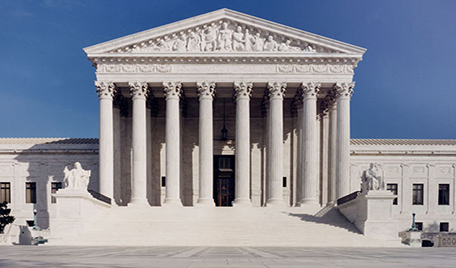 The Court started the current term on October 6, 2025, hearing arguments in Villarreal v. Texas, where the justices considered a Sixth Amendment case about an attorney from talking to his client during an overnight recess. It concluded on April 29, 2026, with Hikma Pharmaceuticals USA Inc. v. Amarin Pharma, Inc., a dispute over generic drug labeling and patent infringement.
The justices heard a total of 58 cases in seven months with 29 opinions released. The list of major cases already decided includes opinions on conversion therapy, the Voting Rights Act, and the president’s tariffs powers. Remaining are at least 10 major decisions, including birthright citizenship, mail-in voting, transgender athletes’ rights, campaign finance, the ability of the president to fire federal officers, the Fourth Amendment, and immigration. Here is a list of the major cases decided and those still to come.
Major Cases Decided
Tariffs
In a 6-3 decision, the Court ruled that the International Emergency Economic Powers Act (IEEPA) does not authorize the president to impose tariffs. In his majority opinion, Chief Justice John Roberts wrote that “against that backdrop of clear and limited delegations, the Government reads IEEPA to give the president power to unilaterally impose unbounded tariffs and change them at will. That view would represent a transformative expansion of the President’s authority over tariff policy.”
In the main dissent, Justice Brett Kavanaugh believed President Donald Trump could use IEEPA “in light of the statutory text, longstanding historical practice, and relevant Supreme Court precedents.”
Voting Rights Act
A divided Supreme Court in a 6-3 decision narrowed the ability of states to use race as a determining factor in creating election districts. The decision focused on Section 2 of the Voting Rights Act of 1965 (or VRA), a landmark achievement of the Civil Rights Movement.
In his majority opinion in Callais, Justice Samuel Alito wrote a Louisiana law went against the purpose of the VRA. “Because the Voting Rights Act did not require Louisiana to create an additional majority-minority district, no compelling interest justified the State’s use of race in creating SB8, and that map is an unconstitutional racial gerrymander,” Alito said.
In her dissenting opinion, Justice Elena Kagan was deeply skeptical of the majority opinion, which Kagan labeled as the “latest chapter in the majority’s now-completed demolition of the Voting Rights Act.”
Conversion Therapy
Colorado and 20 other states have laws prohibiting mental health professionals from using conversion therapy on minors because it is considered unsafe and ineffective. The purpose of conversion therapy is to change a person’s gender identity or sexual orientation. Talk therapy with that purpose fell under Colorado’s prohibition.
In an 8-1 decision, Justice Neil Gorsuch held that Colorado’s law regulated speech based on viewpoint, violating the First Amendment. “The First Amendment stands as a bulwark against any effort to prescribe an orthodoxy of views, reflecting a belief that each American enjoys an inalienable right to speak his mind and a faith in the free marketplace of ideas as the best means for finding truth,” he concluded.
In her dissent, Justice Ketanji Brown Jackson said “Colorado’s decision to restrict a dangerous therapy modality that, incidentally, involves provider speech is presumptively unconstitutional. In concluding otherwise, the Court’s opinion misreads our precedents, is unprincipled and unworkable.”
Cases Argued and Awaiting Decisions
Transgender Athletes
Little v. Hecox and West Virginia v. B.P.J.
In two cases scheduled heard separately on the same day, the Court considered the extent to which gender identity and biological assignment at birth can be used as factors in scholastic sports competitions. In Little, the Idaho Legislature enacted the Fairness in Women’s Sports Act, which bases competition on biological assignment at birth. The Ninth Circuit Court of Appeals ruled the law violated the 14th Amendment Equal Protection rights of “transgender women and girls.” In the case from West Virginia, a parent sued on behalf of her child, B.P.J., arguing that a state law banning biological boys who identify as girls from competing on girls’ teams was unconstitutional. The district court ruled in favor of the state on Equal Protection Clause and Title IX grounds. A divided Fourth Circuit Court of Appeals overturned the district court decision in favor of the student on the Title IX claim and ruled against the state on the Equal Protection questions.
The Second Amendment
The state of Hawaii passed a law making it a crime for a person with a concealed carry permit to carry a handgun on private property unless they have been "given express authorization to carry a firearm on the property by the owner, lessee, operator, or manager of the property." The Ninth Circuit Court of Appeals ruled in favor of the state. The petitioners cite a Second Circuit ruling on the same question regarding a similar law that the court struck down.
On a different Second Amendment question, the Fifth Circuit Court of Appeals invalidated a federal law that prohibits the possession of firearms by a person who “is an unlawful user of or addicted to any controlled substance,” concluding that the law violated the Second Amendment in most instances. The Solicitor General argued that the Supreme Court should uphold the law upheld because of “narrow circumstances in which the government may justifiably burden” firearms possession, including when “habitual illegal drug users with firearms present unique dangers to society.”
Presidential Removal Powers
The Court is considering a dispute over the ability of the president to fire Federal Trade Commission (FTC) members. In March 2025, President Trump removed Rebecca Kelly Slaughter from her position as a commissioner for the FTC. Slaughter countered by suing Trump and others, claiming her dismissal violated the terms of the Federal Trade Commission Act.
The U.S. District Court for the District of Columbia found that Slaughter’s firing violated a precedent set in Humphrey’s Executor v. United States (1935), which established the constitutionality of the FTC’s removal protections. The questions at the Court are:
1) Whether the statutory removal protections for members of the FTC violate the separation of powers and, if so, whether Humphrey’s Executor v. United States should be overruled.
(2) Whether a federal court may prevent a person’s removal from public office, either through relief at equity or at law.
The Supreme Court also will decide if it should stay a district court ruling preventing President Trump from firing Lisa Cook, a member of the Federal Reserve Board of Governors. Cook started serving a 14-year term in the board in 2023 and President Trump tried to fire Cook this year, alleging mortgage fraud by Cook before her appointment. Under the Federal Reserve Act, the president can only remove members of the Federal Reserve Board “for cause.”
Birthright Citizenship
In June 2025, the Supreme Court first considered the birthright citizenship question in the context of national injunctions related to President Trump’s executive order on birthright citizenship. The justices did not rule on the merits of Trump’s order then. But now the Court will consider the executive order’s claim that the Citizenship Clause of the 14th Amendment was adopted to confer citizenship on formerly enslaved people and their children, not on the children of aliens temporarily visiting the United States or of illegal aliens. Wong Kim Ark and other precedents have held that a child born in the United States is entitled to all the rights and privileges of citizenship regardless of their nationality, with limited exceptions.
Absentee Federal Election Ballots
Watson v. Republican National Committee
This case considers whether a federal law or a state law determines when absentee federal election ballots can be counted if they are mailed before election day and arrive late. Under Mississippi’s statute, it requires that ballots for federal offices be cast— marked and submitted to election officials—by that day. Mississippi allows mail-in absentee ballots to be counted if they are received by election officials within 5 business days after election day. The Fifth Circuit Court of Appeals held that the federal election-day statutes require ballots be cast by voters and received by election officials by election day and Mississippi’s law was pre-empted by the federal statute.
Cellphone Data Access
A Virginia man claims a detective did not reasonably obtain the search warrants required by the Fourth Amendment to track down his cellphone location data. The government later used this data to convict him of a crime. Law enforcement had asked for a geofence warrant from a magistrate. Geofence warrants set a distance from a certain physical point from which service providers must provide data to law enforcement about mobile phones users’ activities.
While the Court is only asked in Chatrie to consider the specific execution of the geofence warrant in the case, its decision could shape the Fourth Amendment protections established for cellphone users in Carpenter v. United States (2018).
Immigration
In the case, the Supreme Court will decide whether the Trump administration can end the Temporary Protected Status (TPS) program for approximately 6,100 Syrian and 350,000 Haitian nationals.
The administration argues that federal law bars courts from reviewing any Department of Homeland Security determination regarding TPS terminations. The Syrian challengers argued that the DHS needed to follow the rules set by Congress, while attorneys for the Haitian challengers argued that the decisions were based on “racial animus towards non-white immigrants and bare dislike of Haitians, in particular.”
Scott Bomboy is the editor in chief of the National Constitution Center.